Key facts: Dilworth
- Dilworth was developed from 1891 by Edward Dilworth Latta as Charlotte's first streetcar suburb [1].
- The Dilworth Historic District was added to the National Register in 1987, and its boundaries were enlarged in 2000 [1].
- The district's architecture dates mainly from 1891 to 1941, with Colonial Revival, Period Revival and bungalow styles most common [2].
- Building permits for fire repairs in Charlotte are issued by Mecklenburg County Code Enforcement [3].
Coverage
Dilworth streets and ZIP covered
Calls from Dilworth addresses in ZIP 28203 can be connected to an independent contractor. That includes streets around East Boulevard, Latta Park, Park Road's northern end and the blocks between South Boulevard and Kings Drive.
- ZIP 28203: Dilworth, plus neighboring South End blocks
- Nearby covered ZIPs include 28204 (Elizabeth area) and 28207 (Myers Park)
- If your address is outside these ZIPs, the call may not be connected; check the main page for coverage
Homes here
What Dilworth houses are made of
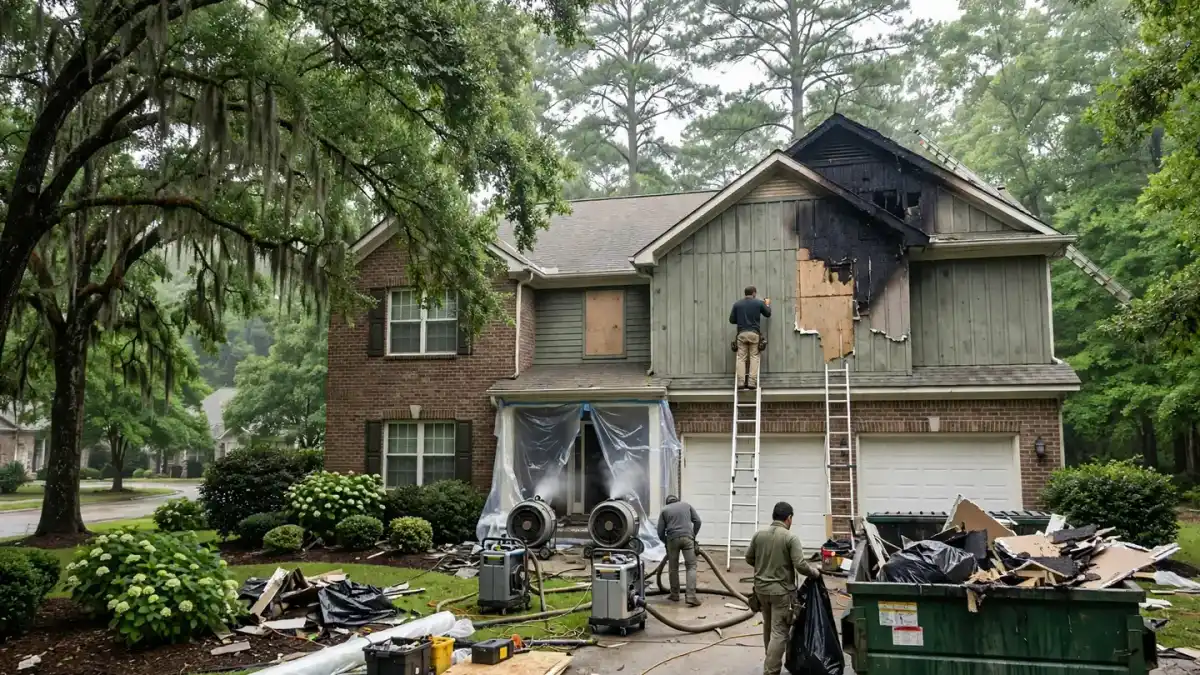
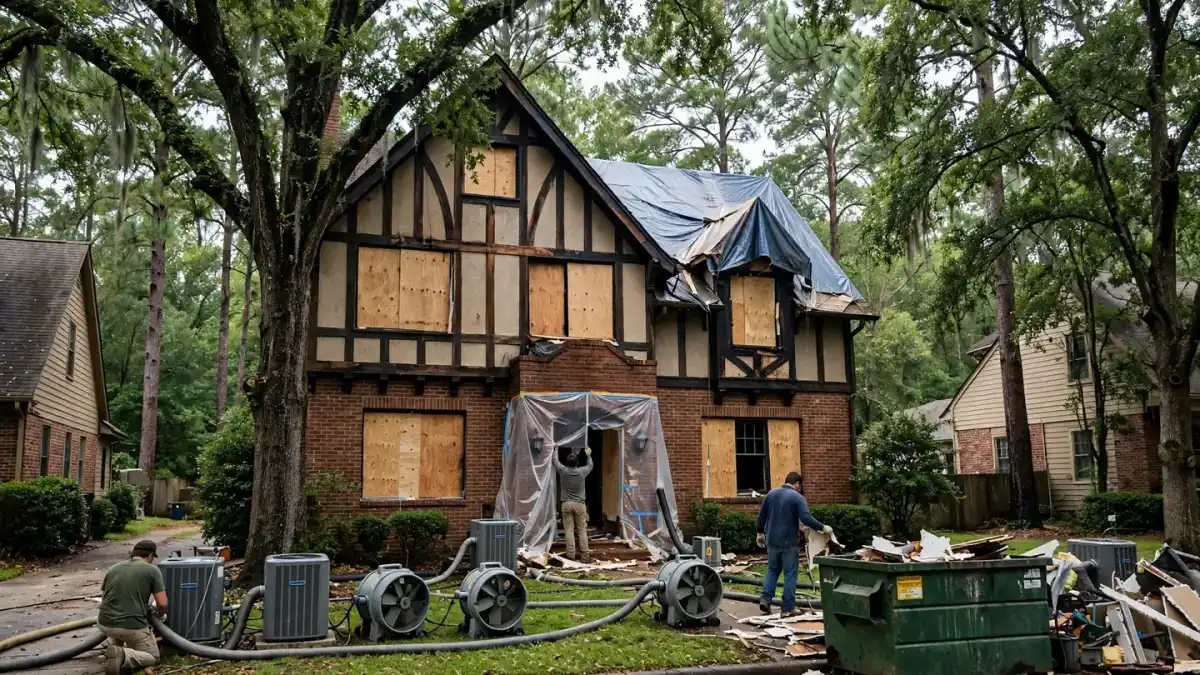
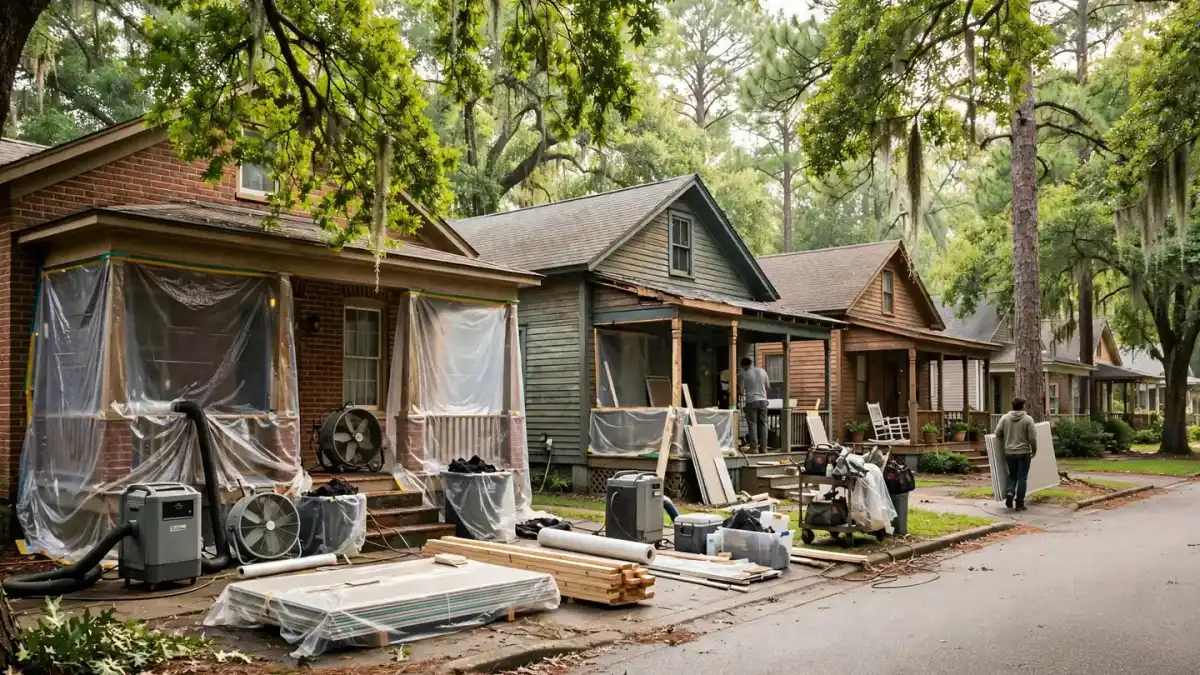
Dilworth began in 1891, when Edward Dilworth Latta opened lots along the new electric streetcar line running south from the center of Charlotte [1]. The earliest blocks follow a grid, and later sections added curving streets in the 1910s and 1920s. Most houses in the National Register district were built between 1891 and 1941 [2]. Walk down Euclid Avenue, Lyndhurst or East Kingston and you see bungalows with deep porches, foursquares, Colonial Revival homes and a scattering of Tudor and Spanish-influenced houses.
Those dates matter after a fire. Houses of this age were usually built with dimensional lumber cut thicker than modern framing, and many have wall cavities that run uninterrupted from the crawlspace to the attic, a style known as balloon framing. Interior walls are often plaster on wood lath rather than drywall. Floors are frequently heart pine or oak laid over plank subfloors, and the house sits on brick piers or a brick perimeter foundation over a crawlspace.
Many Dilworth houses have also been renovated more than once. It is common to find a 1920s plaster living room next to a 1990s kitchen addition with drywall and engineered flooring, a converted attic bedroom, and a mix of original and replacement windows. A fire can expose those layers, and each one needs its own approach during cleanup.
What pros see
Fire issues common in older Dilworth homes
Smoke in open wall cavities
Balloon-framed walls let smoke and heat climb from floor to attic without fire blocking, carrying residue into upper rooms and the attic.
Soot in plaster cracks
Hairline cracks in old plaster trap fine soot that is easy to miss and keeps releasing odor.
Heart pine floors under water
Old-growth pine is durable but cups when soaked by fire hoses; careful drying from above and below gives the best chance of flattening it.
Lead paint on trim and windows
Most pre-1978 homes have lead paint somewhere. Scraping and sanding during repairs follow lead-safe rules [4].
Knob-and-tube remnants
Some older houses still contain early wiring in walls or attics. Fire and water exposure is a good reason to have an electrician inspect it.
Fireplace and chimney damage
Many houses have original brick fireplaces. Soot and heat can stain the brick and damage flue liners.
Balloon framing
How balloon framing spreads smoke in Dilworth
In many houses built before the 1930s, exterior wall studs ran in one piece from the sill to the roof, and the floor joists of the second story were hung from them. That left a continuous open channel inside each wall. Modern codes require fire blocking to interrupt those channels, but older houses often lack it unless it was added during renovation.
During a fire, those open cavities behave like chimneys. Hot smoke enters at an outlet or a gap near the floor and rises straight into the attic, depositing residue on the back of the plaster and on the framing along the way. After the fire, the same channels carry odor between floors. A room upstairs can smell of smoke even though the fire was on the first floor in a different part of the house.
For a cleanup, this means checking cavities, not only surfaces. Restoration contractors may open small inspection holes, use cameras or check the attic plate where the wall cavities end. Treating the attic and sealing the tops of those cavities can stop the odor from returning. When framing is opened for repairs, adding fire blocking is something to discuss with the contractor and the permit inspector.
Plaster on wood lath behaves differently from drywall during smoke cle
Plaster walls
Cleaning smoke from plaster rather than drywall
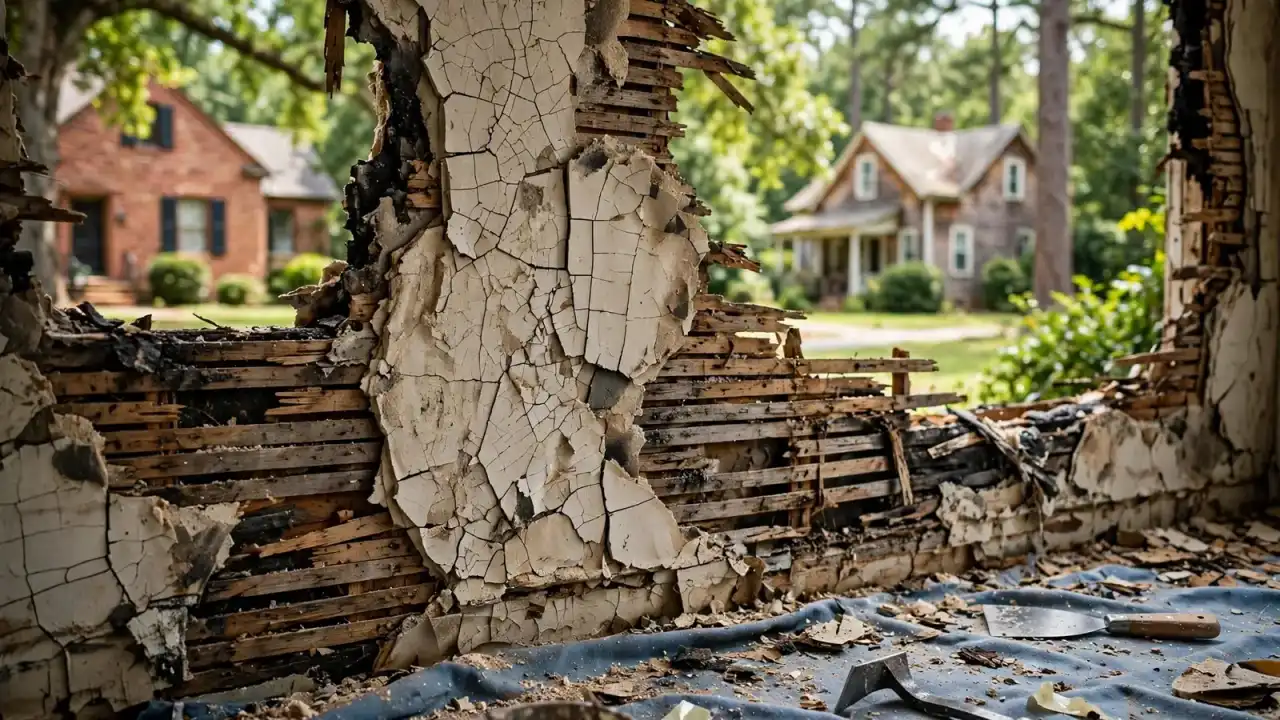
Plaster is harder and denser than drywall, which is good news after a fire. It absorbs less smoke, it does not have a paper face to stain, and it tolerates careful wet cleaning better. Many plaster walls in Dilworth come back well with dry soot removal followed by a detergent wash and a stain-blocking primer.
The challenges are elsewhere. Plaster in a century-old house usually has a network of fine cracks, and soot works into them. The wood lath behind the plaster is porous and can hold odor. If firefighting water soaked a plaster ceiling, the plaster can lose its grip on the lath, and a ceiling that looks intact may be loose and heavy. That is a safety issue as well as a repair issue.
Contractors who work on older homes tend to prefer cleaning and repairing plaster where possible rather than tearing it out, both because it suits the character of the house and because demolition releases more dust. Where sections must come out, matching repairs with new plaster or a veneer plaster system keeps the walls consistent.
Historic review
Historic designation and repair approvals in Dilworth
Dilworth appears on the National Register [1]. National Register listing on its own does not stop a private owner from making changes, but parts of Dilworth are also inside a Charlotte local historic district, where exterior changes visible from the street generally need approval before work starts. Interior cleaning and repairs are usually not reviewed.
After a fire, that matters for windows, doors, siding, porches and roofing. Replacing original wood windows with a different style, or changing porch details, may need review. Temporary board-up and tarping are normally treated as emergency protection, but permanent exterior repairs should be checked with the city's historic district staff before materials are ordered. The Charlotte-Mecklenburg Historic Landmarks Commission also keeps information on designated properties [6].
Building permits for structural, electrical, plumbing and mechanical repairs come from Mecklenburg County Code Enforcement, which handles permits and inspections for Charlotte [3]. Historic review and building permits are separate processes, so it helps to start both early.
Permits and boundaries
Who handles permits and approvals for Dilworth repairs
- Building, electrical, mechanical and plumbing permits: Mecklenburg County Code Enforcement [3].
- Exterior changes inside a local historic district: Charlotte historic district staff and the Historic District Commission.
- Designated landmark properties: Charlotte-Mecklenburg Historic Landmarks Commission [6].
- Lead-safe work practices on pre-1978 homes: EPA renovation, repair and painting rules for contractors [4].
- Possible asbestos in old flooring, pipe wrap or ceiling texture: test before disturbing it [5].
- Gas and electric reconnection: your utility and a licensed electrician or plumber after inspection.
Crawlspaces
Drying water under a Dilworth house
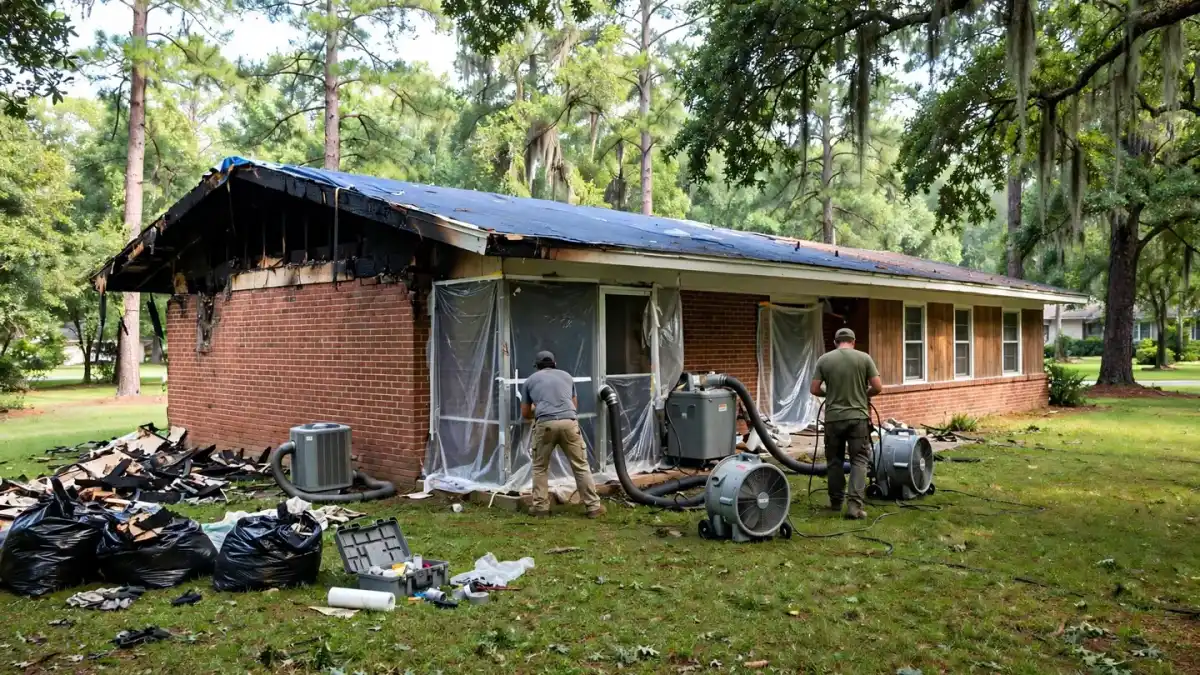
Most Dilworth houses sit on brick piers or a brick foundation wall over a crawlspace. When fire hoses soak the floors, water runs through the gaps between old floor boards and lands in the crawlspace. There it soaks insulation, if any was added, wets the joists from below and pools on the soil or vapor barrier.
Older crawlspaces tend to be shallow and tight, with low clearance and few access points, which makes drying slower and harder. Brick piers and foundation walls can wick moisture. Removing wet insulation, pumping standing water, and running dehumidifiers in the crawlspace are often needed alongside drying in the rooms above.
Heart pine and oak floors need to dry from both sides. If the crawlspace stays wet while the floor dries from above, boards may cup and then crown. A contractor who takes readings from the crawlspace as well as the floor surface gives the floor its best chance.
Wiring and heat
Old wiring, space heaters and heating systems
Dilworth houses have been rewired many times over their lives, but remnants of early wiring sometimes remain in walls or attics. Additions and conversions may have brought circuits that were extended in ways current codes would not allow. Fire and water can damage all of it. After a fire, an electrician should inspect before power is restored, and any old wiring found during demolition should be evaluated.
Heating systems vary too. Many houses have gas furnaces with ducts run through the crawlspace or attic; others have heat pumps added later; some still use radiators or have original fireplaces. Ductwork in a crawlspace can collect water and soot, and older ducts may be wrapped in materials that should be tested before removal. Fireplaces used for heat should be inspected by a chimney professional after any fire nearby.
If a portable heater or an older appliance was involved in the fire, mention that on the call. It helps the contractor and the adjuster understand how the fire spread.
Planning a visit
Getting ready for a contractor visit in Dilworth
- 1
Confirm access
Make sure the fire department has released the house and that one door is accessible or has a lockbox.
- 2
Plan parking
Many Dilworth streets are narrow with on-street parking. Equipment trucks may need a driveway or alley access; tell the contractor what is available.
- 3
Find the crawlspace entry
Locate the crawlspace door or hatch so the crew can check under the house.
- 4
Gather records
Note the year the house was built, known renovations and any past lead or asbestos testing.
- 5
Check historic status
If you think your house is in a local historic district, mention it so exterior work can be planned with review in mind.
- 6
List priorities
Identify rooms and belongings that matter most, such as original woodwork, family pieces or a home office.
Materials
Typical Dilworth materials and fire recovery approach
| Material | Common in Dilworth | Usual approach after fire |
|---|---|---|
| Plaster on wood lath | Original walls and ceilings | Dry soot removal, wash, seal; repair loose areas |
| Heart pine or oak flooring | Original floors | Dry from both sides; clean and refinish |
| Painted wood trim | Door and window casings, baseboards | Clean; lead-safe practices before sanding |
| Brick fireplace and chimney | Living and dining rooms | Masonry cleaning; chimney inspection |
| Wood windows with old glazing | Front elevations | Clean or repair; review before replacing in local districts |
| Drywall additions | Kitchens, baths, rear additions | Standard cleaning or replacement |
Trees and porches
Porches, mature trees and exterior protection
Dilworth's deep porches and mature tree canopy are part of its character, and both come into play after a fire. Porch ceilings, often painted beadboard, collect smoke that escapes through the front door and windows. Wooden porch floors and columns may be soaked or scorched. Cleaning and repainting a porch ceiling is a common part of exterior recovery.
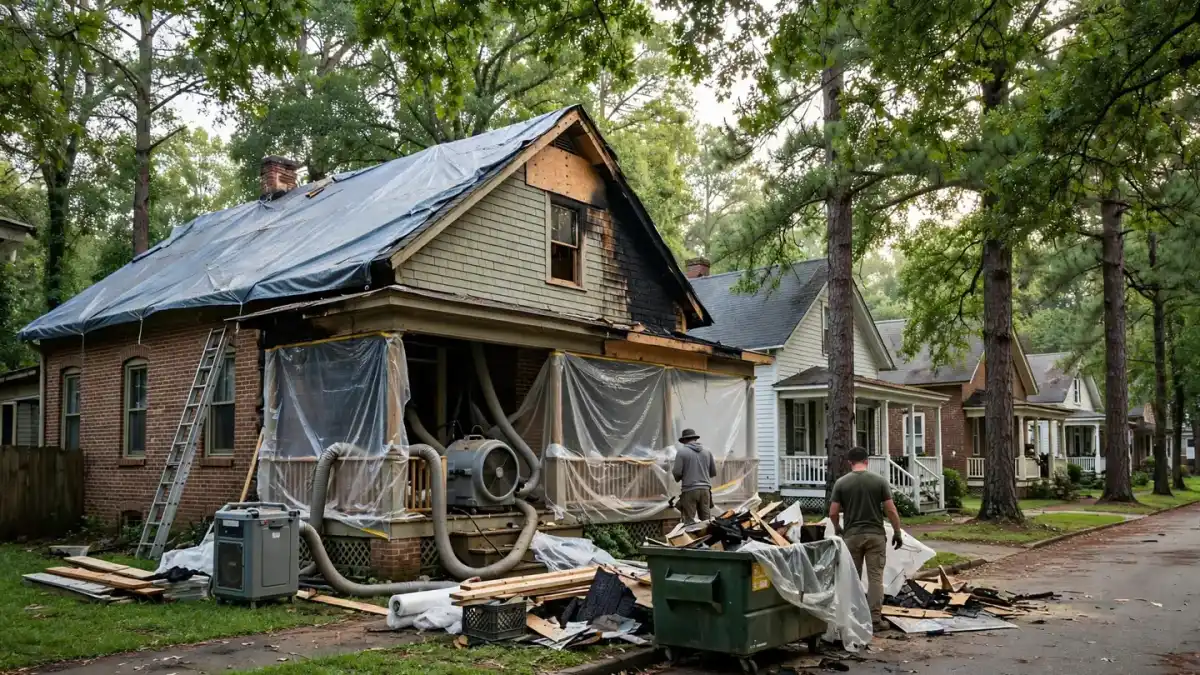
Large trees close to the house can make roof tarping harder, and branches damaged by heat may need an arborist's attention before crews work under them. Leaves and debris falling onto a tarped roof can block water runoff and need clearing after storms.
If you are planning the exterior work, remember the historic review step for visible changes, and ask the contractor to document original details before anything is removed.
Rentals and conversions
Duplexes, garage apartments and rentals in Dilworth
Some larger Dilworth houses have been divided into apartments over the years, and a number of lots have garage apartments or accessory units at the back. When a fire affects a building with more than one household, responsibilities divide. The owner usually handles the structure, systems and shared spaces, while each tenant's belongings fall under that tenant's own renters policy if they have one.
Shared attics and crawlspaces mean smoke and water can move between units even when the fire stayed in one apartment. A good inspection covers every unit in the building, not only the one where the fire started. If you are a tenant, put your concerns in writing to the owner or manager and keep copies, and photograph your own belongings before cleanup begins.
Contents
Antiques, built-ins and family pieces
Many Dilworth homes are furnished with older pieces: antique case goods, upholstered chairs, rugs, built-in bookcases and china cabinets. Finished hardwood furniture often cleans well once soot is lifted dry and the surface is gently washed. Pieces with shellac or older lacquer finishes can be sensitive to some cleaners, so test first and consider a furniture conservator for valuable items.
Built-ins are part of the house, so they are usually included in the structure portion of the claim rather than contents. Glass-front cabinets trap smoke inside; empty them, clean the interiors and let them air out before putting anything back. Rugs, especially wool and hand-knotted pieces, are best sent to a rug cleaner experienced with smoke and water.
Older-home claims
Insurance questions specific to older Dilworth houses
Claims on century-old houses raise a few questions newer homes rarely face. The first is matching. If a fire damages part of a heart pine floor or a run of original trim, replacing it with identical material may be difficult, and an adjuster may propose a modern substitute. Ask how the policy handles matching and whether reclaimed material can be used.
The second is code upgrades. When walls are opened, current code may require changes the original house never had, such as fire blocking in wall cavities, updated wiring or smoke alarm interconnection. Many policies include a limited amount of ordinance or law coverage for those upgrades, and some exclude them. Reading that section before repairs start avoids surprises.
The third is documentation of original features. Photograph mantels, trim profiles, door hardware, windows and built-ins before anything is removed. Those photos help carpenters reproduce details and support the claim for like-kind replacement.
Seasonal
How the season changes a Dilworth fire recovery
Charlotte's summers are hot and humid, and an older house without modern air sealing lets that humid air in easily. A summer fire with wet plaster and a soaked crawlspace needs aggressive dehumidification to stay ahead of mold. Winter fires bring a different problem: if the power or gas is off, an unheated older house can see frozen pipes in the crawlspace on the coldest nights, adding a second water loss.
Spring and fall are milder, but they bring frequent rain. A tarped roof on a steep, complex Dilworth roofline needs regular checks after storms, and leaves from the large street trees can clog gutters and valleys under or around the tarp.
Living nearby
Staying close to home during the work
Many Dilworth families want to stay near their house during repairs, close to schools, work and neighbors on the block. If your policy includes additional living expense coverage, ask your adjuster what kind of temporary housing it allows and for how long. Short-term rentals, extended-stay hotels and furnished apartments in nearby South End and Midtown are common options.
Being close lets you check on the house, meet the contractor, see the drying readings and catch problems early, such as a tarp loosened by wind or a board pried from a window. It also helps with mail, deliveries and keeping an eye on any belongings stored on site. If you will be farther away, ask a neighbor to watch the house and to call you if anything changes.
FAQ
Dilworth fire recovery questions
Does my Dilworth home need historic approval for fire repairs?
Interior cleaning and most interior repairs do not. Exterior changes visible from the street may need review if your house is inside a local historic district. Board-up and tarping are generally treated as emergency protection.
Can plaster walls be saved after a fire?
Often, yes. Plaster resists smoke better than drywall and can usually be cleaned and sealed. Areas that were soaked or loosened from the lath may need repair.
Why does my upstairs smell of smoke when the fire was downstairs?
Older Dilworth houses often have open wall cavities that let smoke rise from the first floor to the attic. Residue inside those cavities can keep releasing odor upstairs.
Do I need to test for lead before repairs?
If your house was built before 1978, assume lead paint may be present. Contractors disturbing painted surfaces must follow EPA lead-safe practices.
Who issues building permits for Dilworth?
Mecklenburg County Code Enforcement handles building permits and inspections for Charlotte, including Dilworth.
Can heart pine floors survive firefighting water?
Frequently. Heart pine is dense and stable, and with careful drying from above and the crawlspace below, cupped boards often settle back before refinishing.
Will insurance pay to match original trim and floors?
It depends on your policy's wording on matching and like-kind replacement. Photograph original details before removal and ask your adjuster early how they will handle materials that are hard to match.
Should original wood windows be replaced after smoke damage?
Not necessarily. Old wood sashes and glass usually clean well, and broken panes or damaged glazing can be repaired. In a local historic district, repair is generally favored over replacement, so talk with district staff before ordering new windows.
Is the attic in an older Dilworth house usually affected?
Often. Heat and smoke rise through open wall cavities and stairwells into the attic, so insulation and framing there should be checked even when the fire was on the first floor.
Sources and citations
- [1]Wikipedia: Dilworth (Charlotte neighborhood)
- [2]North Carolina State Historic Preservation Office: Dilworth Historic District nomination
- [3]Mecklenburg County Code Enforcement
- [4]U.S. EPA: Lead renovation, repair and painting program
- [5]U.S. EPA: Protect your family from asbestos
- [6]Charlotte-Mecklenburg Historic Landmarks Commission