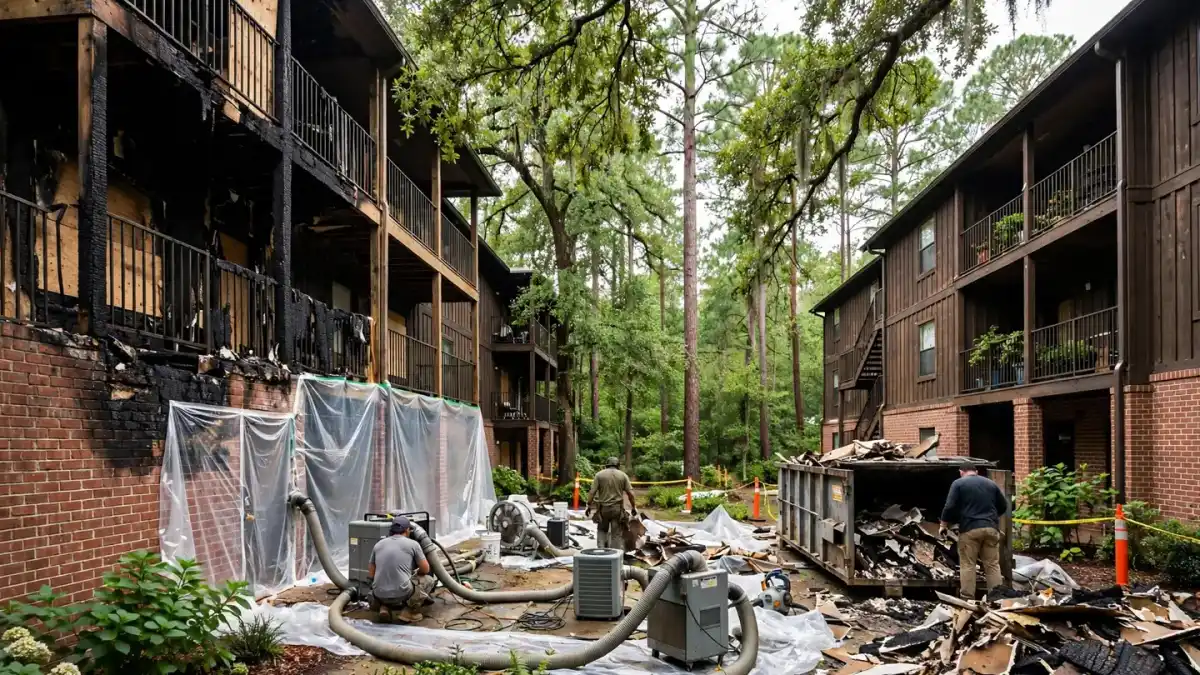
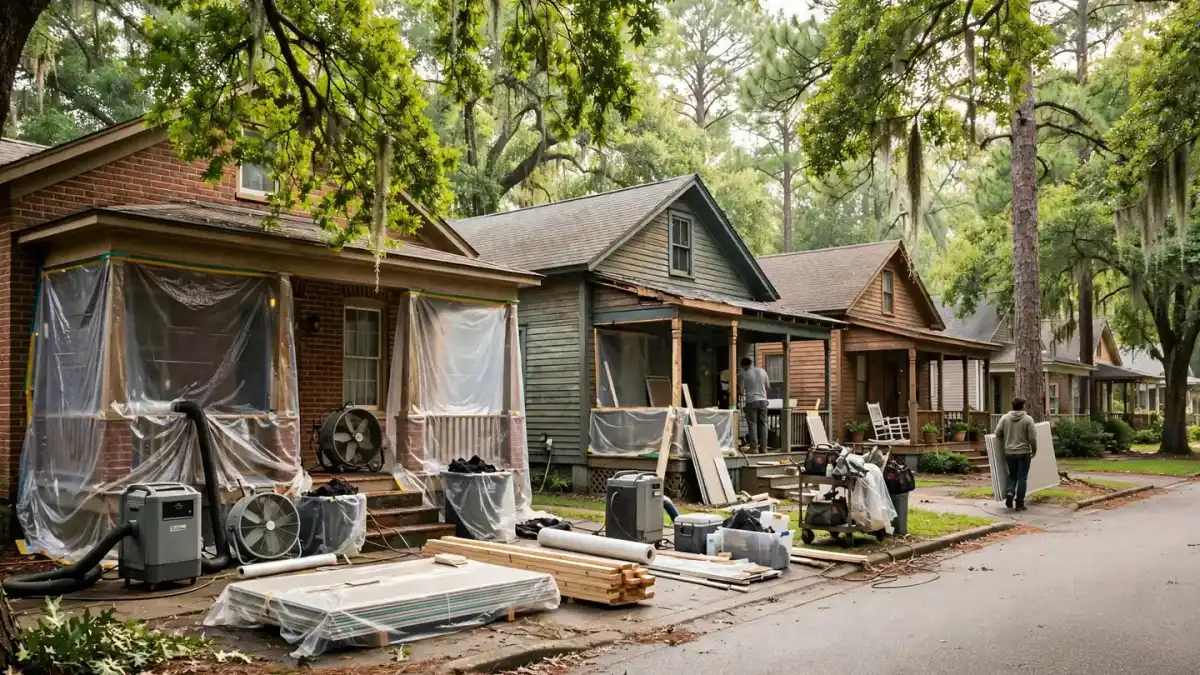
Key facts: Plaza Midwood
- Plaza Midwood developed in the early twentieth century as a streetcar-era suburb east of central Charlotte [1].
- Radiant heat from a burning house can melt vinyl siding and crack windows on homes several feet away, which matters on Plaza Midwood's narrow lots.
- Fire repairs that need permits in Charlotte go through Mecklenburg County Code Enforcement [3].
- Federal lead-safe rules apply when contractors disturb paint in homes built before 1978 [4].
Coverage
Plaza Midwood ZIP and streets covered
Calls from Plaza Midwood addresses in ZIP 28205 can be connected to an independent contractor, including streets off Central Avenue, The Plaza, Commonwealth Avenue and Thomas Avenue.
- ZIP 28205: Plaza Midwood and nearby east Charlotte blocks
- Neighboring covered ZIPs: 28204 (Elizabeth), 28206 (NoDa and Villa Heights side) and 28202 (Uptown)
- Addresses outside the covered ZIPs may not be connected
Homes here
Plaza Midwood's mix of old and new houses
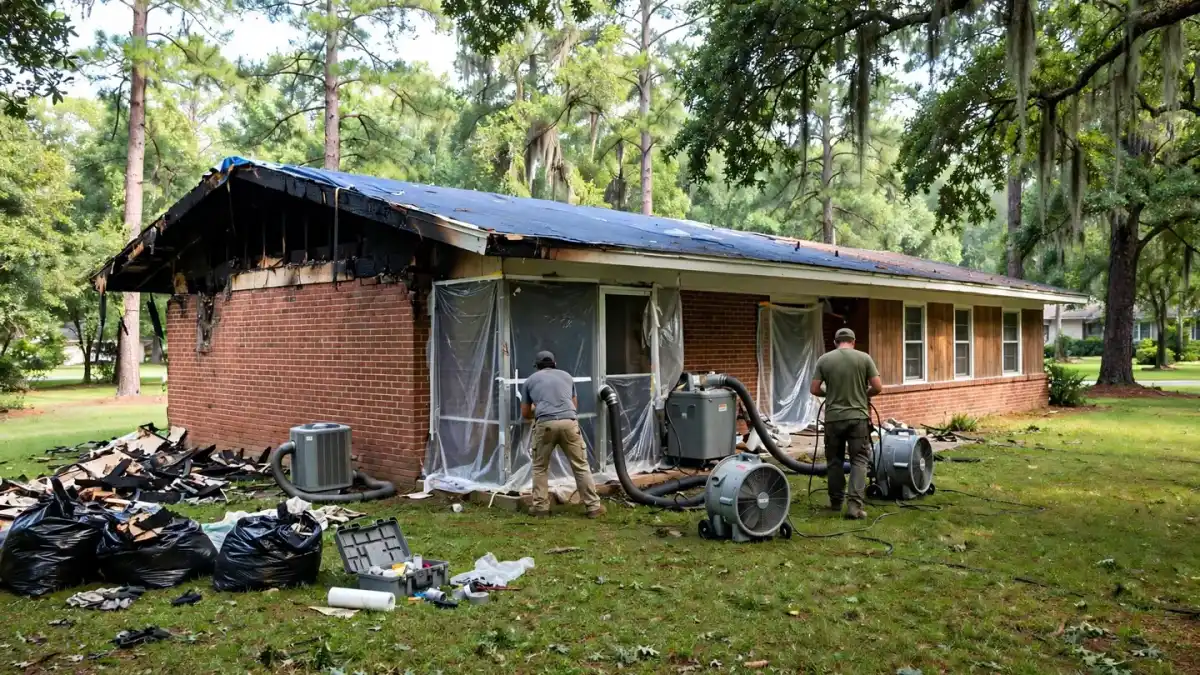
Plaza Midwood grew in the early decades of the twentieth century as streetcar lines and then automobiles opened the land east of the city center [1]. Many of its streets are lined with one- and one-and-a-half-story bungalows built from the 1910s through the 1940s, with deep porches, tapered columns, wood siding and low-pitched roofs. Scattered among them are foursquares, small cottages, brick ranches from the postwar years and a growing number of modern infill homes and townhomes.
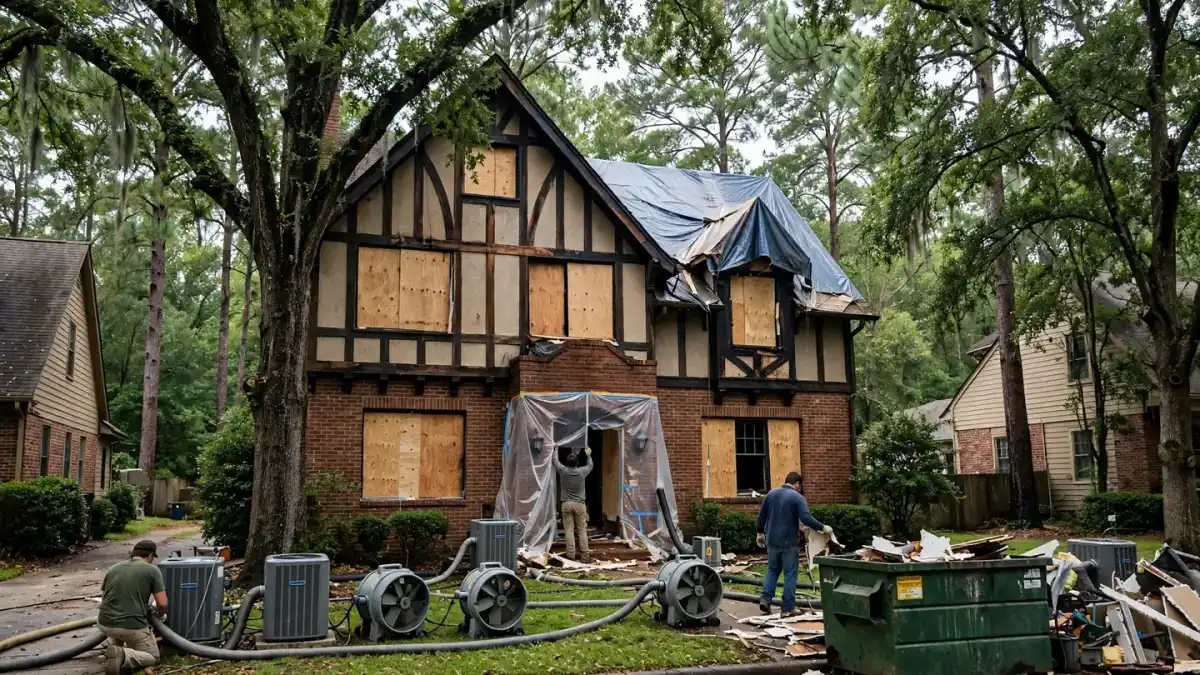
The infill often sits right next to the original houses. A 1920s bungalow on a crawlspace, with plaster walls and wood windows, may share a property line with a three-story townhome built in the last decade with drywall, engineered framing and vinyl or fiber cement siding. Those different buildings respond very differently to fire and to the water used to put it out.
Along Central Avenue and Commonwealth Avenue, restaurants, bars, shops and mixed-use buildings sit close to residential streets. That commercial edge brings its own fire risks, such as commercial kitchens, and its own smoke paths when wind carries smoke into nearby homes.
What pros see
Fire recovery patterns in Plaza Midwood
Exposure damage next door
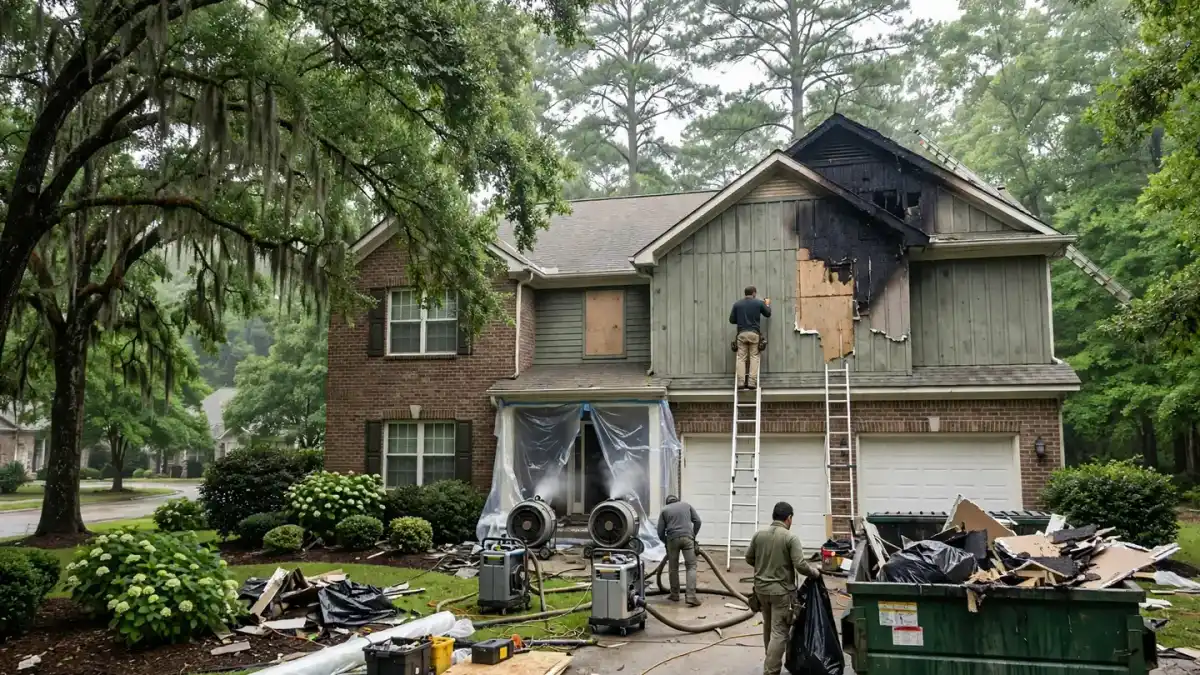
On narrow lots, radiant heat from one burning house can melt siding, crack glass and scorch eaves on the neighbor's house.
Smoke through old windows
Original wood windows and loose framing let smoke from a nearby fire drift into homes that did not burn.
Crawlspace water
Bungalows on piers and crawlspaces collect firefighting water under the floor.
Mixed construction
Renovated bungalows combine old plaster rooms with new drywall additions, each cleaned differently.
Attic conversions
Half-story bedrooms under bungalow roofs sit where heat and smoke collect.
Renter households
Many homes are rented, which divides responsibility between owner and tenant.
Close neighbors
When a fire next door damages your house
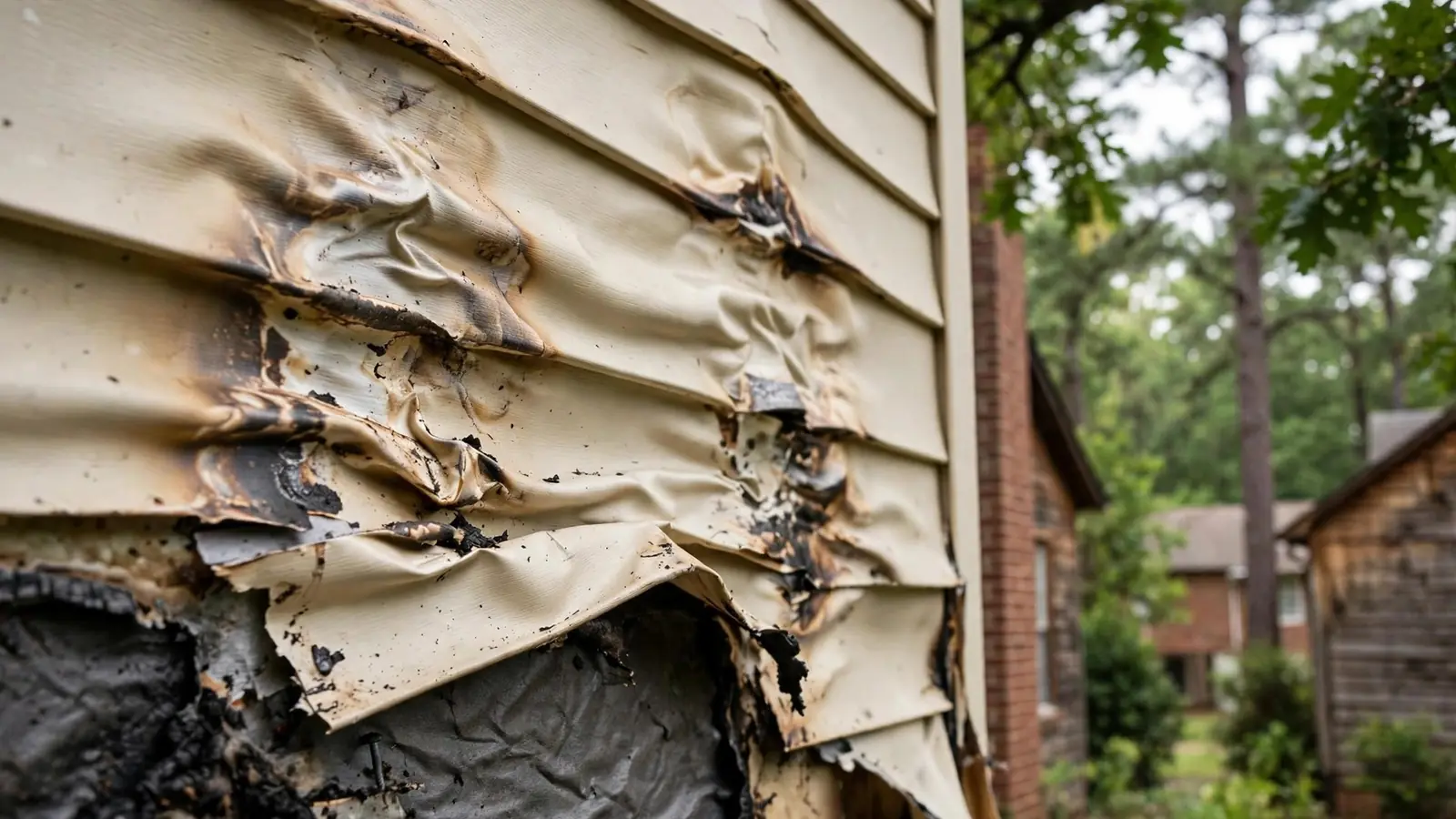
On many Plaza Midwood streets, houses sit only a few feet apart, and new infill is often built close to the side lot lines. In a serious fire, radiant heat travels across that gap. Vinyl siding on a neighboring house can warp or melt, windows can crack, wood trim can scorch, and the eaves can be damaged even though flames never touched the building. Smoke drifts into neighboring homes through windows, attic vents and crawlspace vents.
If your house was damaged by a neighbor's fire, it is generally your own homeowners policy that responds first, and your insurer may then seek recovery from others if appropriate. Report the damage promptly, photograph the side of your house facing the fire and any smoke inside, and keep the fire department's incident number if you have it. The North Carolina Department of Insurance provides consumer help with claims questions [5].
Exposure damage is easy to underestimate. Smoke inside a house that never burned can be enough to need professional cleaning of walls, ductwork and contents. Ask the contractor you're connected with to check the attic and crawlspace as well as the rooms on the side facing the fire.
Radiant heat can damage a house next to the one that burned
Bungalow details
How bungalow construction affects fire recovery
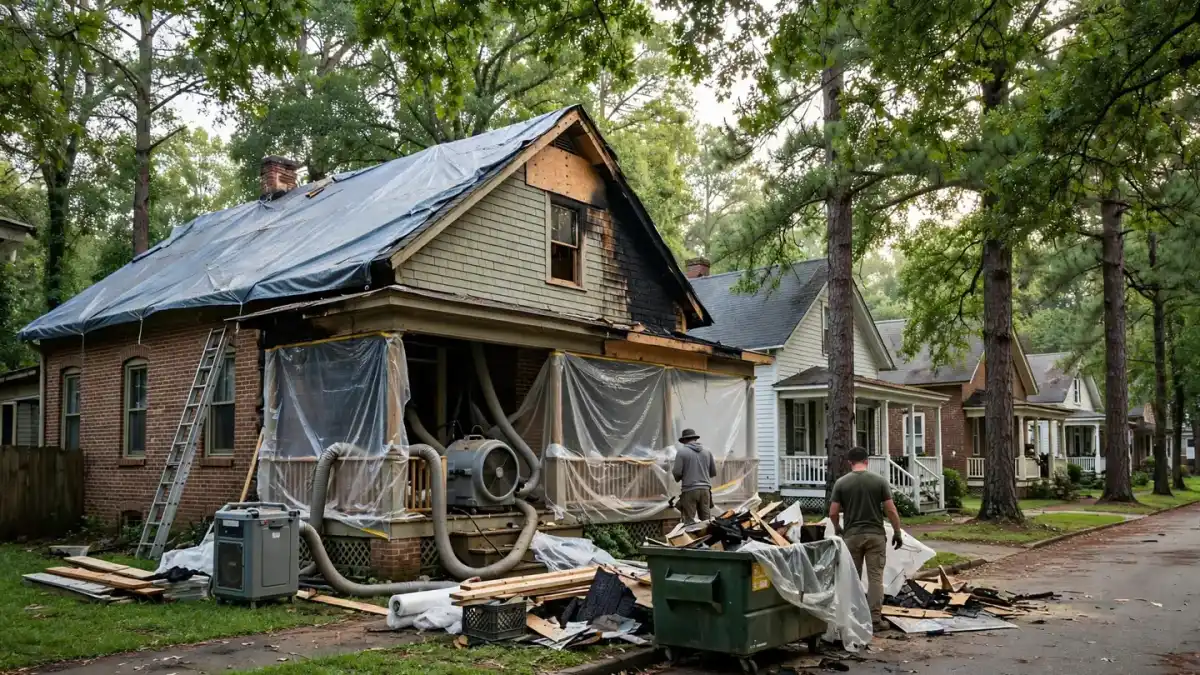
The classic Plaza Midwood bungalow is a one-story or story-and-a-half house with a low, broad roof, a front porch and a crawlspace below. Inside, original houses typically have plaster walls, wood floors, painted trim and, in many cases, a fireplace. The attic space under the roof is often finished into bedrooms with sloped ceilings and knee walls.
That layout affects smoke. Heat rises into the half-story rooms upstairs, and the unfinished spaces behind knee walls trap smoke against insulation and roof boards. Bungalows built before modern fire blocking can also have wall cavities open to the attic. Cleaning these homes well means opening the knee-wall spaces and checking the attic edges, not only cleaning finished rooms.
Original wood floors and trim usually respond well to careful cleaning and refinishing. Plaster tends to resist smoke better than drywall. Many bungalows have been updated more than once, so a single house may combine original and modern materials, and the cleanup plan should reflect that room by room.
Infill homes
Newer townhomes and infill houses
The newer homes and townhomes in Plaza Midwood are built very differently. Most use drywall throughout, engineered floor and roof framing, vinyl or composite windows and tall, open stairwells. Townhomes share walls with neighboring units, separated by fire-rated assemblies required by code, and they often share a roofline.
In these buildings, open plans and stairwells let smoke spread quickly across and between floors. Drywall absorbs smoke more readily than plaster, and plastics in windows, outlets and fixtures can discolor from acidic residue. Engineered wood products such as I-joists can lose strength more quickly when exposed to fire than solid lumber, so structural assessment after a fire is important.
In townhome communities, an owners association usually manages the exterior and shared elements. Coordination between the association, its insurer and the individual owner's insurer is needed early to avoid gaps in responsibility.
Comparison
Original bungalows and new infill after a fire
| Feature | Older bungalow | Newer infill |
|---|---|---|
| Walls | Plaster on lath | Drywall |
| Framing | Solid sawn lumber, sometimes without fire blocking | Engineered joists and trusses, fire blocked |
| Foundation | Brick piers or perimeter wall over crawlspace | Slab or crawlspace with sealed vents |
| Windows | Original wood sashes, single glazing | Vinyl or composite, double glazing |
| Smoke path | Wall cavities, attic knee walls | Open stairwells, shared ducts |
| Typical cleanup | Clean and refinish original materials | Clean or replace drywall and plastics |
Permits
Permits and historic review in Plaza Midwood
Building, electrical, plumbing and mechanical permits for fire repairs in Charlotte come from Mecklenburg County Code Enforcement [3]. Cleaning and cosmetic work generally do not need permits, but replacing framing, wiring, ductwork or equipment usually does.
Part of Plaza Midwood is a Charlotte local historic district, where exterior changes visible from the street generally require approval before work begins. If your house is inside the district, plan for that review when replacing windows, doors, siding, porch elements or roofing. Temporary board-up and tarping are typically treated as emergency protection. The Charlotte-Mecklenburg Historic Landmarks Commission also has information on historic properties in the area [6].
Houses built before 1978 may contain lead paint, and contractors disturbing painted surfaces must follow EPA lead-safe practices [4].
Permits list
Agencies involved in Plaza Midwood fire repairs
- Mecklenburg County Code Enforcement for building and trade permits [3].
- Charlotte historic district staff for exterior changes inside the local historic district.
- Owners associations for townhome and condo exteriors.
- Utilities and licensed trades for gas and power reconnection.
- EPA lead-safe practices for pre-1978 painted surfaces [4].
Commercial edge
Fires near Central Avenue businesses
The commercial strip along Central Avenue and nearby streets includes restaurants, bars, shops and mixed-use buildings with apartments above. A fire in a commercial building can send heavy smoke into neighboring homes, and restaurant fires in particular can produce greasy smoke. Residents living in apartments above businesses face both the smoke and the water from fighting a fire below.
If you live above or beside a business that had a fire, your renters or homeowners insurance usually handles your own losses, while the business and building owner deal with their insurers. Document smoke inside your unit with photos and keep a list of affected belongings. Ask the building owner or manager what their restoration plan is for shared spaces and when it will be safe to return.
The contractor you're connected with can explain what can be done for your unit or house, even when the fire started next door.
Crawlspaces
Crawlspace drying under Plaza Midwood homes
Most older homes in Plaza Midwood sit on crawlspaces with brick piers or perimeter walls. Firefighting water drains through floor gaps into the crawlspace, soaking any insulation, wetting joists and pooling on the ground or vapor barrier. Crawlspace vents let in humid outdoor air for much of the year, which slows drying.
Drying usually means removing wet insulation and debris, extracting standing water, closing vents and running dehumidifiers until readings show the wood is back to normal. Joists and subfloor near the fire may also need cleaning if soot came down through the floor. Leaving a wet crawlspace to dry on its own can lead to mold and odor in the rooms above.
Planning a visit
Getting ready for a contractor in Plaza Midwood
- 1
Confirm access and release
Make sure the fire department has released the property and decide who will let the contractor in.
- 2
Plan parking
Streets near Central Avenue can be busy. Let the contractor know about driveway space, alley access or parking restrictions.
- 3
Identify the house type
Tell them whether the house is an original bungalow, a renovated older home or newer infill.
- 4
Locate access points
Find the crawlspace entry and any attic access, including knee-wall doors.
- 5
Note neighbors
If the fire started next door or in a business, say so; it changes what the contractor looks for.
- 6
Owner or renter
If you rent, have the owner's or manager's contact details ready.
Renters
Renters and landlords after a Plaza Midwood fire
A good share of Plaza Midwood homes and apartments are rented. After a fire, the lease and state law shape who does what. The owner is generally responsible for the building, its systems and getting it back to a livable condition. Tenants are responsible for their own belongings, which renters insurance covers if they carry it, and for temporary housing only if their policy includes that benefit.
Tenants should notify the landlord in writing as soon as possible, photograph their belongings and keep receipts for any immediate needs. Landlords should arrange board-up, drying and cleaning promptly to protect the building. If the home is not livable, the lease and North Carolina landlord-tenant law govern what happens to rent and the tenancy; tenants with questions can seek legal aid or advice.
Clear communication matters. A short written plan from the owner about when crews will be on site and how long repairs may take helps tenants decide whether to wait or move.
Space heaters
Heating habits in older Plaza Midwood homes
Older bungalows were not built with today's insulation levels, and some rooms, such as converted sun porches and attic bedrooms, can feel cold in winter. That leads some households to rely on portable space heaters. Space heaters placed too close to bedding, curtains or furniture are a known cause of home fires, and older wiring can be strained by high-wattage heaters on a single circuit.
When repairing after a fire, it is worth asking the contractor and electrician about improving insulation in cold rooms and adding dedicated circuits where heaters or window air conditioners are used. Those changes reduce the temptation to overload outlets and make the house more comfortable after it is restored.
Porches
Front porches, columns and porch ceilings
The deep front porch is the signature feature of a Plaza Midwood bungalow. When smoke escapes through the front door and windows, it often stains the porch ceiling, the tops of the columns and the underside of the eaves. Porch floors may be soaked by water flowing out of the house. Painted beadboard ceilings usually clean well; heavily stained areas may need sealing and repainting.
Tapered wood columns and porch railings can hide rot that firefighting water makes worse. During repairs, check the column bases and the porch framing beneath the floor. If the house is in the historic district, keep the original porch profile when repairing or replacing elements.
Studios
Backyard studios, garages and accessory units
Detached garages, sheds and backyard studios are common behind Plaza Midwood houses, and some have become offices, art studios or small rental units. These buildings may store paint, solvents, fuel for lawn equipment and other flammable materials. A fire that starts in one of them can spread quickly and send dense, chemical-heavy smoke across the yard and into the main house.
If an outbuilding burned, tell the contractor what was stored inside before anyone enters. Debris from burned chemicals and fuel containers may need special handling. Detached structures are often covered under a separate limit in the homeowners policy, so list them and their contents separately in your claim. Check whether the main house's windows and vents on that side let smoke in, and have the attic and crawlspace inspected.
Wood windows
Original wood windows after smoke and heat
Many Plaza Midwood bungalows still have their original wood windows, often with wavy old glass and wood muntins. Smoke stains the glass and frames, and soot collects in the sash channels and on the sills. Heat close to a fire can crack old glass or soften glazing putty. These windows are usually repairable: glass can be replaced pane by pane, glazing renewed, and the sashes cleaned and repainted.
Old window sashes often have lead paint, so repairs that involve scraping or sanding should follow lead-safe practices. In the historic district, repairing original windows is generally favored over replacement. A window restoration specialist can advise whether each sash is worth repairing, and the contractor can include that in the scope for your adjuster.
First week
What to expect in the first week after a Plaza Midwood fire
| Day | Usual focus |
|---|---|
| Day of the fire | Safety, temporary housing, contacting your insurer, securing openings |
| Day one to two | Contractor walk-through, photos, water extraction and drying setup, crawlspace check |
| Day two to four | Daily moisture readings, debris removal, contents sorting and pack-out |
| Day four to seven | Soot and smoke cleaning begins as areas dry, HVAC inspection, adjuster visit |
| Later weeks | Odor treatment, sealing, permits for repairs, rebuild planning |
Community
Neighbors, notices and the block after a fire
Plaza Midwood is a close-knit neighborhood, and a house fire affects the whole block. Neighbors often notice smoke smell in their own homes, ash on cars and porches, and worry about the damaged house standing open. Letting neighbors know that the home has been secured and that cleanup is planned can ease concerns and bring offers of help.
Ask neighbors to report anyone entering the boarded house and to let you know if a tarp loosens in a storm. If their own homes picked up smoke odor, suggest they document it and contact their own insurers; even light exposure can call for cleaning of HVAC filters and soft furnishings. Debris piles and dumpsters should be placed so they do not block sidewalks or driveways, and removed as soon as the work allows.
FAQ
Plaza Midwood fire recovery questions
My neighbor's house burned. Is my home damaged?
Possibly. Radiant heat can damage siding, windows and eaves several feet away, and smoke can enter through vents and windows. Have the side facing the fire, the attic and the crawlspace checked.
Who pays when a fire next door damages my house?
Usually your own homeowners insurer handles your claim first and may seek recovery from others later. Report it promptly and document the damage.
Do I need historic approval for repairs in Plaza Midwood?
If your house is in the local historic district, exterior changes visible from the street generally need approval. Interior work and emergency board-up typically do not.
Can a bungalow's original floors survive firefighting water?
Often. Solid wood floors can be dried from both above and the crawlspace below, then refinished. Floors that were badly burned or stayed wet too long may need sections replaced.
I rent my home. What is my responsibility?
The owner generally handles the structure and systems. Your belongings fall under your renters insurance if you have it. Put concerns in writing to the owner and photograph your items.
Are townhomes cleaned differently from older houses?
Yes. Townhomes have drywall, engineered framing and shared walls, and the owners association is often involved. Older bungalows have plaster, solid wood and crawlspaces that call for different methods.
Can old wood windows be repaired after a fire?
Usually. Broken panes can be replaced one at a time, glazing renewed and sashes cleaned and repainted. Lead-safe practices apply to old painted sashes, and repair is generally favored in historic districts.
Should my backyard studio be inspected after a house fire?
Yes. Outbuildings can be damaged by heat and smoke, and they often stored flammable materials. Report them separately on your claim and tell the contractor what was inside.
How long will a dumpster sit in front of my house?
That depends on the scope of the work. Debris removal is usually concentrated in the first days or weeks. Ask the contractor where it will be placed, whether a city right-of-way permit is needed, and when it will be removed.