
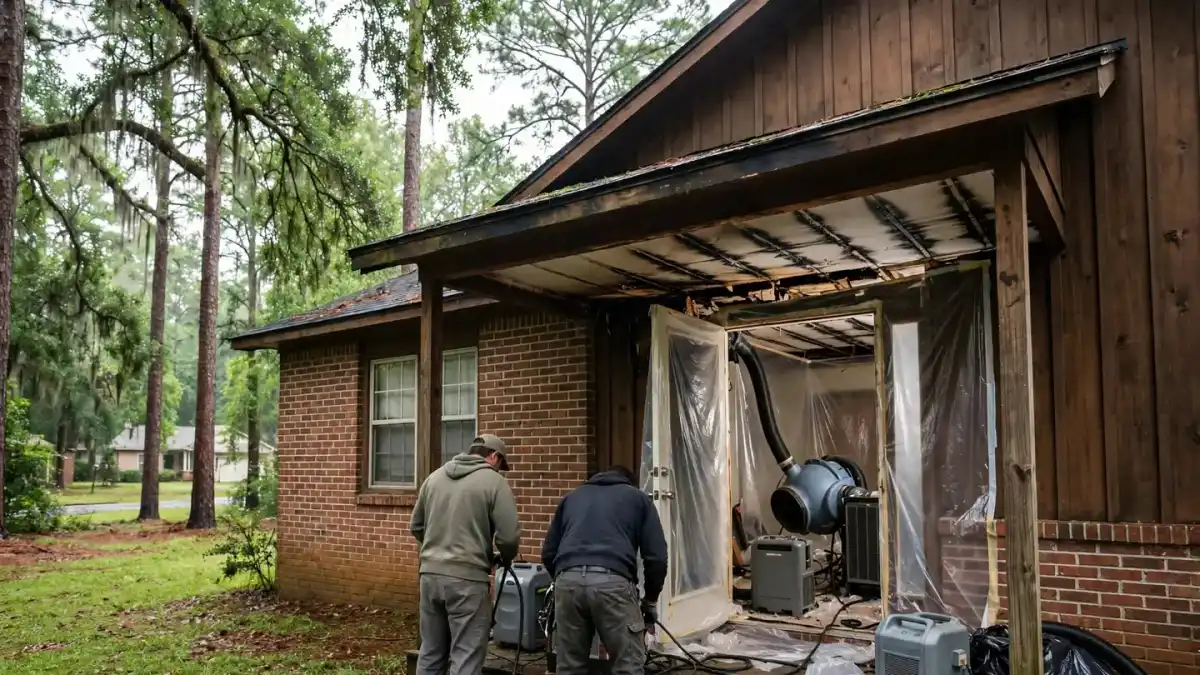
Key facts: Soot on walls and ceilings
- Soot collects most on cooler surfaces, so exterior walls, ceilings above joists and areas behind furniture often show it first.
- Wiping soot with water often smears it into paint; dry removal comes first.
- Fine soot particles can affect breathing, so wear an N95 respirator around heavy soot [1].
- In homes built before 1978, sanding painted surfaces requires lead-safe practices [2].
Short answer
What soot on walls means: the short answer
Soot on walls and ceilings means smoke reached that surface and cooled enough to drop its particles there. Heavy black soot is usually near the fire; a thin gray film farther away shows how smoke traveled. Patterns such as streaks along ceiling joists, outlines around pictures and dark lines above doors reveal where air was moving and where surfaces were cooler.
Do not wipe it with a wet cloth. Dry removal with a HEPA vacuum and dry chemical sponge comes first, then cleaning with the right product, then sealing if staining remains. See soot removal for the full process.
At a glance
Soot patterns and what they mean
| What you see | Likely cause | What to do |
|---|---|---|
| Dark lines along ceiling joists | Cooler surface over framing attracts particles | Dry removal, clean, seal before painting |
| Clean outline where a picture hung | Wall behind the picture was protected | Shows how much soot is on the open wall |
| Black marks above doors | Smoke pushed through the gap at the top | Shows the path smoke took between rooms |
| Gray halo around supply registers | HVAC carried smoke | Have the ducts and system cleaned |
| Streaks around outlets on outside walls | Air leaking through wall cavities | Check cavities and insulation |
| Heavy, oily black film | Burned plastics or grease | Degreasing cleaners; professional help |
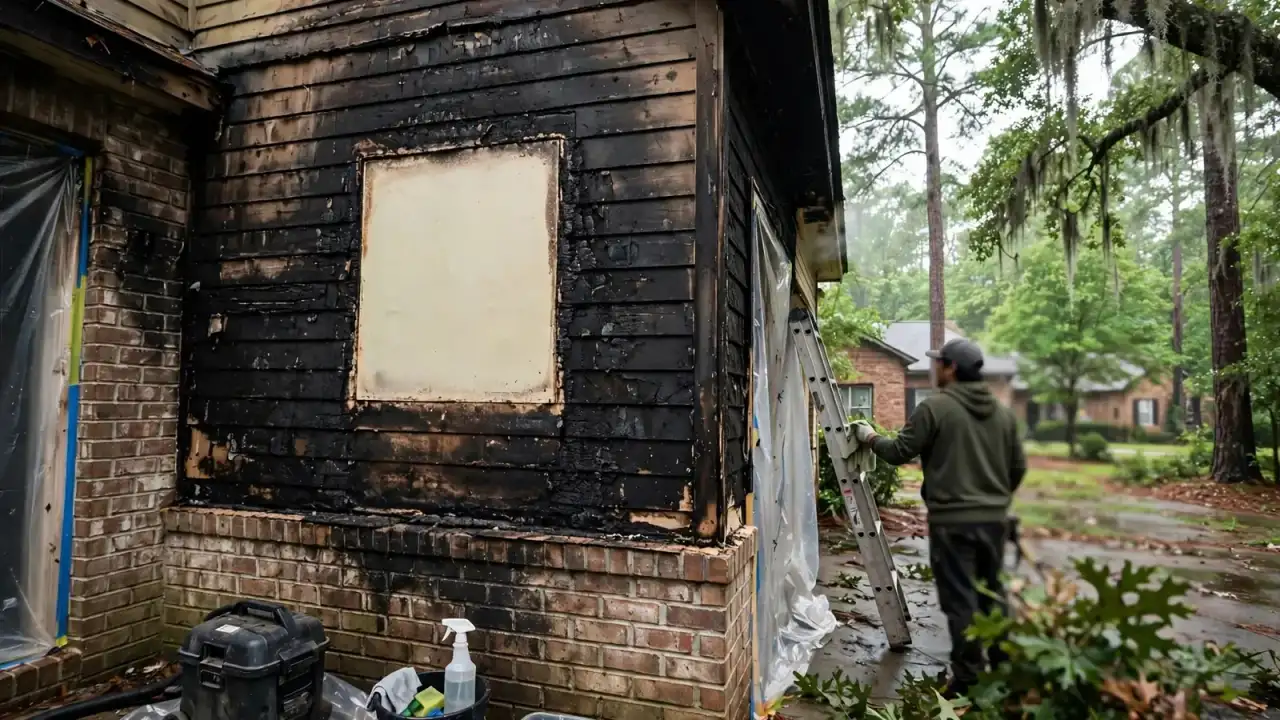
Protected areas show how much residue covers the rest of a wall
Safe checks
Safe ways to assess soot yourself
- Wear an N95 respirator and gloves in sooty rooms [1].
- Gently press a white tissue on a wall; any smudge shows residue.
- Note whether soot feels powdery, oily or sticky.
- Look above doors, around vents and along ceiling lines.
- Do not wipe or scrub; photograph instead.
- Keep fans and the HVAC off so soot does not spread.
Ghosting
Why soot follows joists and studs
One of the most striking soot patterns is ghosting: dark lines that trace the joists above a ceiling or the studs behind a wall. They appear because those framing members conduct heat differently than the insulated spaces between them, so the surface over the framing is slightly cooler. Particles move toward cooler surfaces, a process called thermophoresis, and collect along those lines.
Ghosting can also show up years later from candles, fireplaces or furnace issues, but after a fire it simply confirms that residue is on the surface. It usually cleans along with the rest of the ceiling, though a sealing primer helps stop the lines from bleeding through new paint.
Oily soot
Oily soot from plastics and kitchen fires
If the soot feels greasy or smears into dark streaks, it likely came from burning plastics, foam or cooking grease. This type needs degreasing cleaners and patient work. Household cleaners and wet rags tend to spread it. On cabinets, appliances and painted walls near a kitchen fire, testing a small area first protects the finish.
How a pro handles it
How soot on walls and ceilings is removed
- 1
Seal off sooty rooms
Seal off sooty rooms and run HEPA air scrubbers.
- 2
Dry removal
HEPA vacuum and dry chemical sponge, ceiling first, in single strokes.
- 3
Test clean
Try cleaners on a hidden area to choose the right one.
- 4
Wet clean
Wash surfaces with the chosen product and rinse.
- 5
Seal and paint
Apply a stain- and odor-blocking primer, then repaint.
Repair or replace
When walls and ceilings need replacing
Most sooty walls and ceilings can be cleaned and sealed. Replacement makes sense when drywall is charred, bubbled, soft from heat or soaked with firefighting water, or when textured ceilings cannot be cleaned without damage. Older ceiling textures may contain asbestos and should be tested before removal. In older homes, sanding painted surfaces calls for lead-safe practices [2].
Prevention
Preventing soot from spreading further
- Keep doors closed between sooty and clean rooms.
- Leave the HVAC off until it has been inspected.
- Avoid walking through sooty rooms more than necessary.
- Cover furniture and floors with plastic if you must move through.
Plaster or drywall
Soot on plaster versus drywall
In older Charlotte homes with plaster walls, soot sits mostly on the painted surface and in fine cracks. Plaster is dense and tolerates careful washing well, so cleaning and sealing usually restores it. Drywall has a paper face that absorbs residue and can tear or fuzz if scrubbed. Light soot on painted drywall cleans well; heavy soot, heat bubbling or water damage often means replacing the affected sheets.
Ceilings are a special case. Flat painted ceilings clean much like walls, but textured or popcorn ceilings trap soot in their surface and can fall apart when cleaned. Sealing and repainting, or removing and refinishing the ceiling, may be the more practical choice.
Exterior walls
Soot heavier on outside walls
Soot often looks heavier on exterior walls and in corners because those surfaces are cooler, especially in winter. Behind furniture against an outside wall, residue may form a sharp outline where air could not circulate. These patterns are useful clues: they show where cold spots and air leaks are, which can also guide insulation and air-sealing improvements during repairs.
FAQ
Soot on walls: questions
Can I just paint over soot?
No. Paint does not stick well to soot and the stain and odor bleed through. Clean first, then seal with a stain-blocking primer before painting.
Why are there dark lines on my ceiling?
Those lines often trace the joists above. Framing makes the surface slightly cooler, and soot particles collect on cooler surfaces.
What removes soot from walls?
A HEPA vacuum and dry chemical sponge remove loose soot. A suitable detergent or degreaser cleans what remains. Water alone tends to smear it.
Is soot on walls dangerous?
It is made of fine particles that can irritate the lungs. Wear a respirator around heavy soot and keep sensitive people away.
Do textured ceilings need replacing?
Not always, but they are hard to clean without damage. Older textures may contain asbestos and should be tested first.
How long does it take to clean soot off a room?
A lightly affected room may take a few hours. Heavy soot with sealing and repainting can take several days per room, plus drying time between coats.
Does soot come off brick and stone the same way?
No. Masonry is porous, so soot sinks into it. It is vacuumed first, then treated with masonry cleaners or gentle blasting suited to the material.