
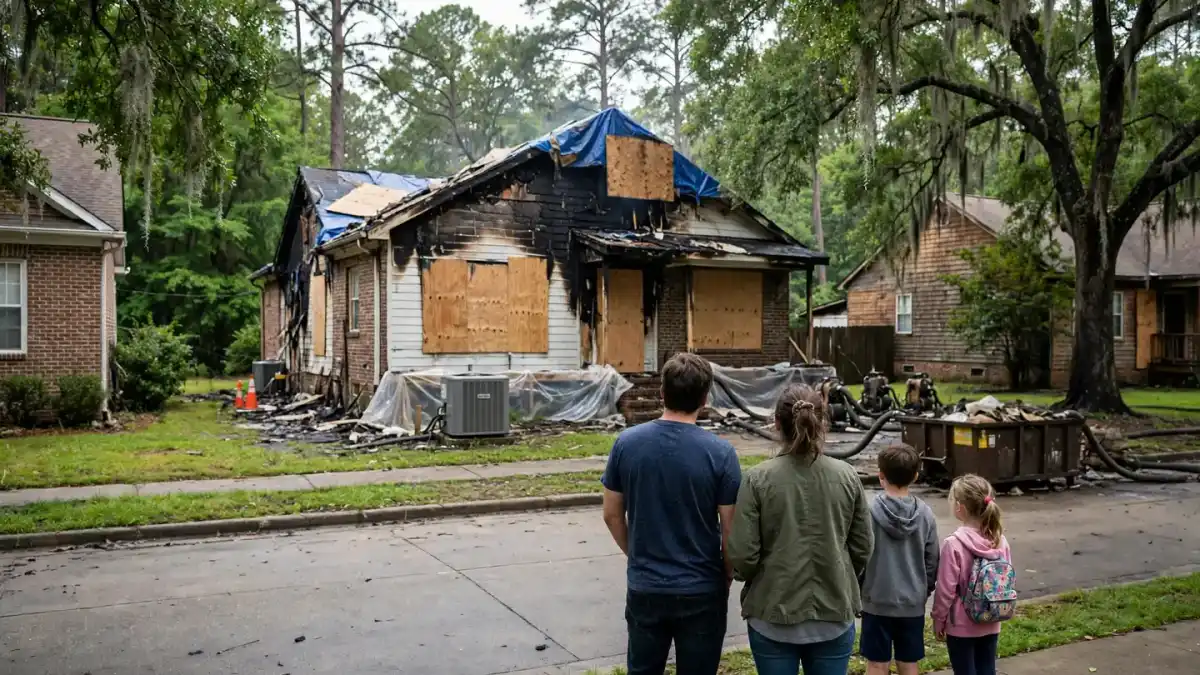
Key facts: What to do after a house fire
- Do not reenter a fire-damaged home until the fire department says it is safe [1].
- Contact your insurance company as soon as possible and ask what they need before cleanup starts [2].
- Throw away food, drinks and medicines exposed to heat, smoke or firefighting water [1].
- Drying water-damaged areas within 24 to 48 hours helps prevent mold [3].
Short answer
The short answer: people, shelter, insurer, protection
After a house fire, the right order is: make sure everyone is safe and accounted for; find a safe place to stay; call your insurance company; and then protect the house from further damage by securing openings and starting drying. Cleaning and rebuilding come after those steps. Do not go back inside until the fire department says it is safe [1].
It is normal to feel overwhelmed. You do not have to solve everything on the first day. Focus on the next step, write things down, and ask for help from family, neighbors and organizations such as the American Red Cross, which often helps families displaced by home fires [1].
At a glance
What you see after a fire and what to do about it
| What you see | Likely issue | What to do |
|---|---|---|
| Windows broken, roof opened | House exposed to weather and intruders | Arrange board-up and tarping |
| Water on floors, sagging ceilings | Firefighting water soaking the structure | Stay out from under ceilings; start professional drying |
| Gray film in rooms far from the fire | Smoke residue spread through the house | Do not wipe; plan professional cleaning |
| Strong smoke smell | Residue in porous materials and ducts | Keep HVAC off; ventilate if safe |
| Power or gas shut off | Utilities disconnected for safety | Do not restore yourself; call utility and electrician |
| Belongings wet or sooty | Contents damaged | Photograph before moving; list for claim |
Keeping notes from the first day makes the claim easier later
Safe checks
Safety checks before anyone goes back inside
- Wait for the fire department to release the property and confirm it is safe to enter [1].
- Look for sagging ceilings, soft floors, cracked walls or a roof that looks unstable; stay out of those areas.
- Do not turn on lights, appliances or the HVAC system until an electrician or the utility says it is safe.
- If you smell gas, leave immediately and call the gas utility from outside.
- Wear sturdy shoes, gloves, long sleeves and an N95 respirator if you must go in briefly.
- Keep children and pets away from the damaged house.
Shelter
Finding a place to stay tonight
If the home is not livable, the first practical question is where to sleep. Family and friends are often the first option. The American Red Cross may provide emergency help with lodging, food and essentials for families displaced by fire [1]. Your homeowners or renters policy may include additional living expense coverage that pays for temporary housing while your home is repaired; ask your insurer at the first call and keep every receipt.
Take medications, glasses, phone chargers, identification and a change of clothes if you can retrieve them safely. If you cannot, tell your insurer and pharmacist; replacement prescriptions and documents can usually be arranged.
Insurance
Calling your insurance company
Call your insurer or agent as soon as you can. Ask for a claim number, the name of your adjuster and what they need from you before cleanup begins. Ask whether you have additional living expense coverage and how it works. The North Carolina Department of Insurance has consumer resources if you need help understanding your policy or the claims process [2].
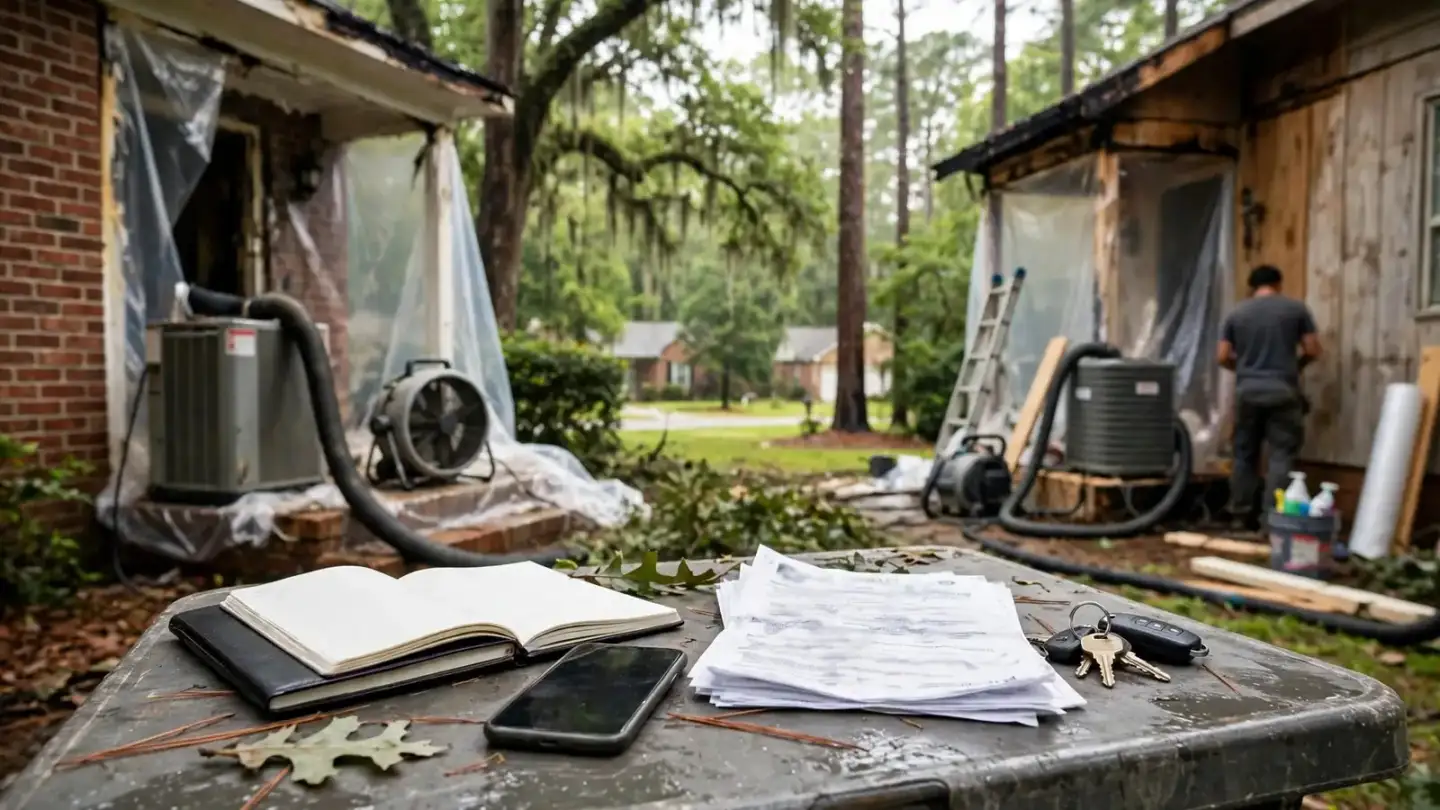
Before anything is moved or thrown away, take photos and video of every room, the outside of the house and damaged belongings. Keep a notebook or phone log of every call: who you spoke with, when and what they said. Our guide to working with your insurance adjuster covers the claim in more detail.
Protect the house
Protecting the house from more damage
Most policies expect you to take reasonable steps to prevent further damage. That usually means boarding broken windows and doors, tarping roof openings and starting to dry out water from firefighting. See board-up and tarping and water damage from firefighting for how those jobs work.
Drying is time sensitive. EPA advises drying water-damaged materials within 24 to 48 hours to help prevent mold growth [3]. If the fire department released the house in the evening, a call that night or early the next morning to arrange drying can make a real difference.
How a pro helps
How a restoration contractor typically handles the first days
- 1
Walk-through and photos
The contractor inspects every room, the attic and the crawlspace or basement, and documents the damage.
- 2
Emergency protection
Openings are boarded, roof holes tarped and the house secured.
- 3
Water removal and drying
Standing water is extracted, wet materials removed where needed and drying equipment set up.
- 4
Contents sorting
Belongings are sorted into items to clean, items to pack out and items that cannot be saved.
- 5
Cleaning plan
A scope for soot, smoke and odor work is written for you and your adjuster.
Rebuild or restore
Restoring versus rebuilding
Many fires damage only part of a house, and the goal is restoration: cleaning what can be cleaned, replacing what cannot, and repairing the structure. Larger fires may mean the house needs major reconstruction. In Charlotte, structural, electrical, plumbing and mechanical repairs generally need permits from Mecklenburg County Code Enforcement.
Whatever the scale, the same principle applies: decisions should follow inspection, documentation and a written scope, not guesswork. Ask questions until you understand what is planned for each room.
Prevention
Preventing the next fire once you are home
- Install smoke alarms in every bedroom, outside sleeping areas and on every level, and test them monthly.
- Stay in the kitchen while frying, grilling or broiling.
- Keep space heaters at least three feet from anything that can burn.
- Have heating equipment and chimneys inspected each year.
- Make and practice a home escape plan with two ways out of every room.
What to tell the pro
What to tell the restoration contractor on the call
- Where the fire started and what burned.
- Whether the fire department has released the home.
- Whether there is standing water or sagging ceilings.
- Whether windows, doors or the roof are open.
- Whether power and gas are on or off.
- Your insurance company and claim number, if you have one.
FAQ
After a house fire: common questions
Can I go back into my house after a fire?
Only after the fire department says it is safe. Even then, avoid damaged areas, wear protective gear and limit your time inside until the home is assessed.
What should I take from the house?
If it is safe: medications, identification, insurance papers, glasses, phones and chargers, and a few days of clothing. Leave anything that requires entering damaged areas.
Should I clean up myself to save time?
Avoid wiping soot or throwing items away before they are documented. Light tasks such as bagging clothes are fine, but heavy cleaning is best done after the insurer has seen the damage.
How soon should drying start?
As soon as possible. Mold can begin within a day or two in wet materials, so arranging drying promptly protects the home.
Who pays for a hotel after a fire?
Many homeowners and renters policies include additional living expense coverage. Ask your insurer and keep every receipt.
Who should I call first after the fire department leaves?
Your insurance company, to open a claim and learn what they need. Then arrange board-up and drying so the house is protected while the claim moves forward.