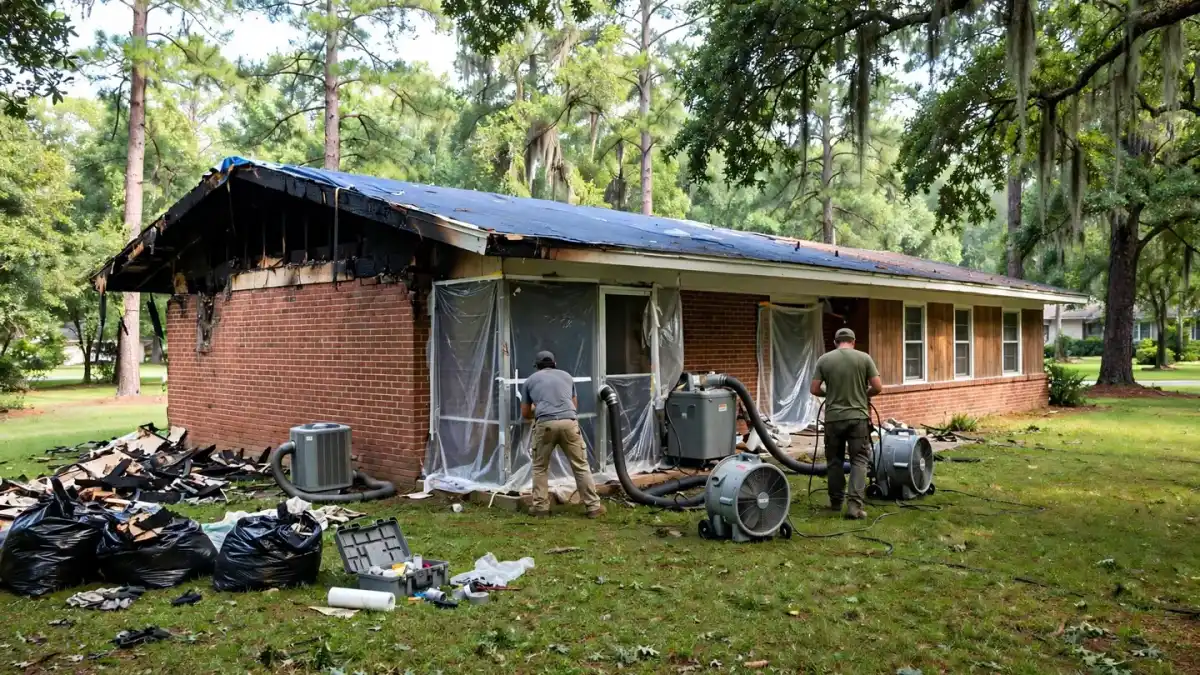
Key facts: University City
- University City is a district of northeast Charlotte that developed around UNC Charlotte and University Research Park [1].
- Renters insurance generally covers a tenant's belongings and, in many policies, additional living expenses; the landlord's policy covers the building [2].
- In garden apartment buildings, smoke can spread between units through shared attics and breezeways.
- Permits for fire repairs in Charlotte come from Mecklenburg County Code Enforcement [3].
Coverage
University City ZIP covered
Calls from University City addresses in ZIP 28262 can be connected to an independent contractor, including apartments and homes off University City Boulevard, W.T. Harris Boulevard, Mallard Creek Church Road and North Tryon Street near the campus.
- ZIP 28262: University City, the UNC Charlotte area and nearby neighborhoods
- Nearby covered ZIP: 28269 (Highland Creek and Mallard Creek side) and 28213 (east of campus)
- Addresses outside the covered ZIPs may not be connected
Homes here
University City's housing at a glance
University City is the area of northeast Charlotte that grew around UNC Charlotte and the nearby University Research Park [1]. The university traces its roots to a 1946 center for returning veterans and moved to its current campus in the early 1960s [6]. In the decades since, the surrounding farmland and woods filled with apartment communities, townhomes, shopping centers, offices and subdivisions of single-family homes.
Much of the housing dates from the 1980s, 1990s and 2000s, with a wave of newer apartment buildings near the light rail stations that opened later. The most common building types are two- and three-story garden apartments with exterior breezeways or interior corridors, townhome rows, mid-rise apartment buildings with structured parking, and two-story single-family homes in subdivisions.
Many residents rent. Students, university staff and people working in the research park and nearby hospitals make up a large share of households. That mix shapes how a fire recovery unfolds, because so many decisions depend on the relationship between tenants, landlords and property managers.
What pros see
Fire recovery patterns in University City housing
Cooking fires in apartments
Kitchen fires are a leading cause of home fires, and small apartment kitchens spread smoke quickly into living areas [5].
Smoke in neighboring units
Shared attics, breezeways and wall chases carry smoke to units that did not burn.
Water from above
Firefighting or sprinkler water in an upper unit soaks ceilings and floors in units below.
Renter belongings
Tenants need to document and claim their own contents under renters policies.
Vinyl siding and plastics
Newer buildings use vinyl siding and plastic fixtures that discolor or melt near heat.
Engineered framing
Trusses and engineered joists need a structural check after heat exposure.
Garden apartments
How fire and smoke behave in garden apartment buildings
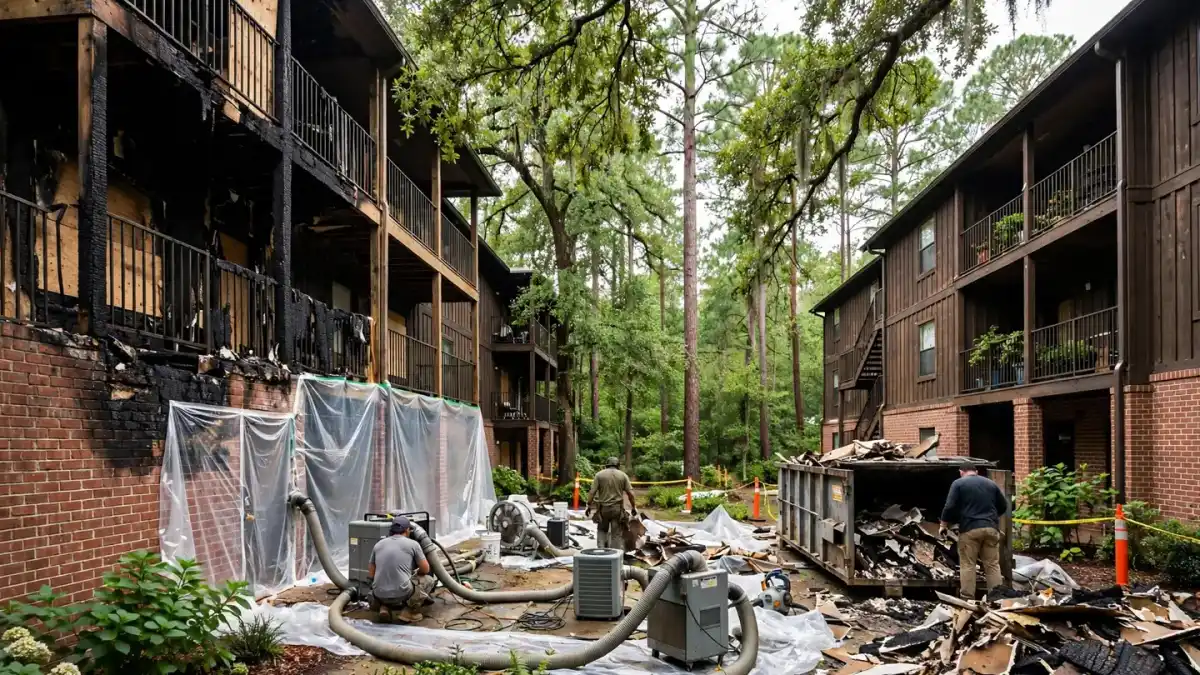
A typical University City garden apartment building has two or three floors of units arranged around a central stair or breezeway, under one continuous roof. Fire-rated walls and floors separate units, and newer buildings often have sprinklers. These features slow a fire and protect neighbors, but they do not completely stop smoke.
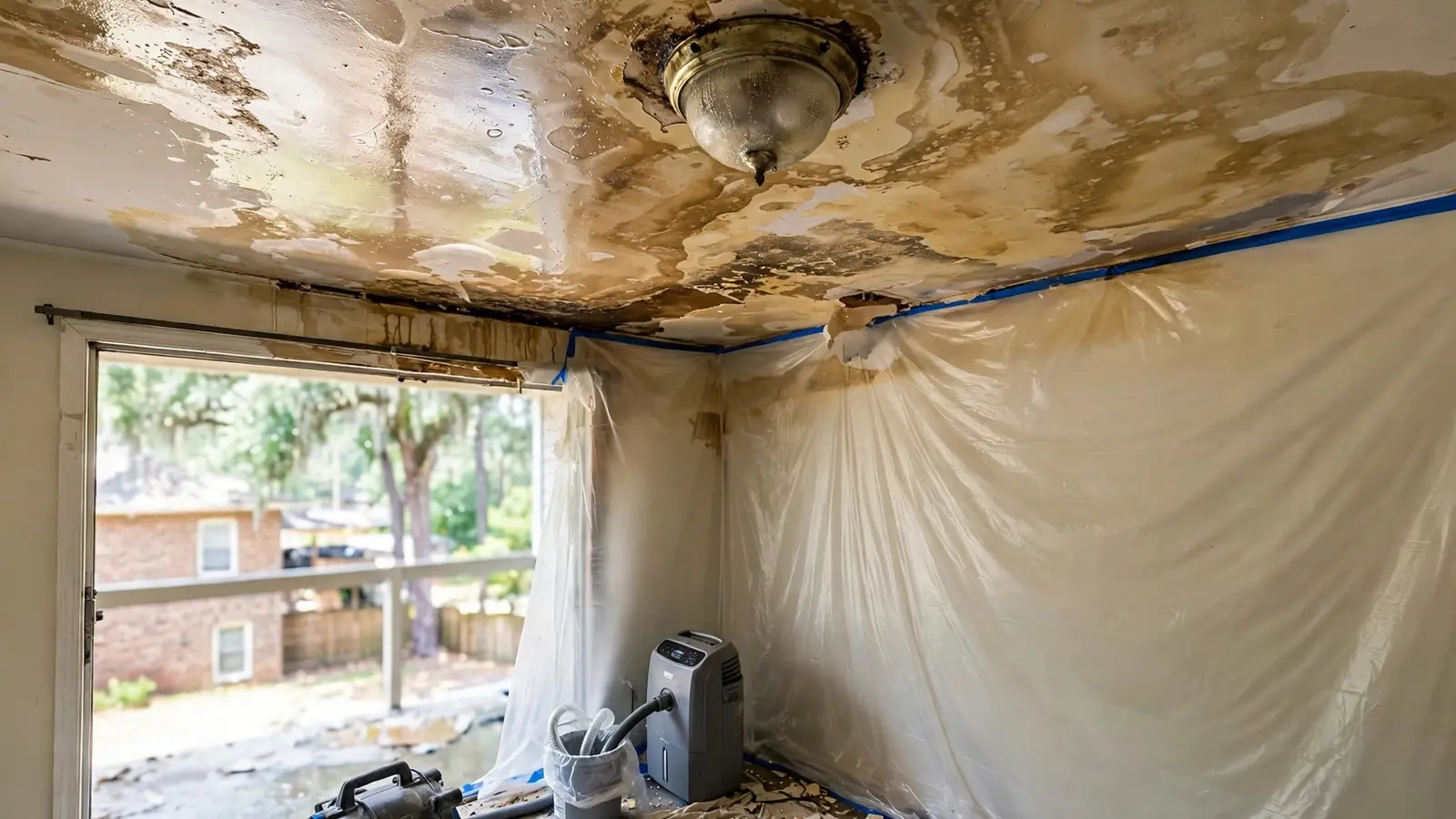
Smoke finds paths through attic spaces above the top-floor units, through plumbing and electrical chases that run between floors, around doors that open onto shared breezeways and through bathroom and kitchen exhaust ducts. As a result, units next to, above and across from the fire unit often have smoke odor and a light film of residue. Units below usually see water, from firefighting hoses or sprinklers, coming through ceilings and light fixtures.
Property managers usually arrange a building-wide assessment after a fire. If you live in a neighboring unit and notice smoke smell or water stains, report them in writing so they are included.
Units below a fire often take on water through ceilings and fixtures
Renters
What renters should do after an apartment fire
If you rent your apartment or house, the landlord or management company is generally responsible for the building: walls, floors, ceilings, cabinets, appliances they provided, and building systems. Your own belongings, such as furniture, clothing, electronics and personal items, are your responsibility, and renters insurance covers them if you have a policy. Many renters policies also cover additional living expenses if the unit is not livable [2].
Start by making sure everyone is safe and has somewhere to stay. The American Red Cross often assists families displaced by home fires with immediate needs [4]. Then contact your renters insurer, photograph your belongings in place if you can safely enter, and make a list of what was damaged. Keep receipts for hotel stays, meals, clothing and other necessities.
Ask the property manager for the fire report number, a timeline for repairs and whether you will be moved to another unit. Put requests and concerns in writing. If your lease or living situation raises legal questions, local legal aid organizations can help.
Responsibilities
Typical responsibilities after a rental fire
| Item | Usually handled by |
|---|---|
| Building structure and roof | Owner or property management |
| Walls, floors, cabinets, provided appliances | Owner or property management |
| Restoration contractor for the building | Owner or property management |
| Tenant's furniture, clothing and electronics | Tenant, through renters insurance |
| Tenant's temporary housing | Tenant's renters policy, if it includes it |
| Cleaning tenant belongings | Tenant, often through renters insurance |
Students
Fires in student housing near UNC Charlotte
Many students live in off-campus apartments and shared houses near the university. Student households often include roommates on separate leases, each with their own belongings and sometimes their own renters policies, and some students are covered under a parent's homeowners policy for property away from home. After a fire, each person should check their coverage separately.
Laptops, textbooks and class materials are often the first concern. Back up files from any device that still works, contact professors and the university's student services about missed work, and ask whether emergency assistance funds are available. Smoke-exposed electronics should be inspected before use, since soot can damage circuits.
Shared houses near campus are frequently older single-family homes converted to student rentals. They may have extra space heaters, extension cords and window air conditioners, all of which are worth reviewing for safety after repairs.
Townhomes
Townhome rows and owners associations
Townhome communities in University City range from older two-story units to newer three-story designs with garages on the ground floor. Owners usually belong to an association that manages exterior walls, roofs and common areas. A fire in one unit can send smoke through shared attic spaces into adjoining units, and water from firefighting can pass through party walls.
If you own a townhome, contact the association and your insurer right away, and check the association documents to see which parts of the building you are responsible for. Owners of adjoining units should check for smoke and water too. Coordinated cleanup across affected units is usually more effective than each owner working separately.
Single-family homes
Subdivision homes around University City
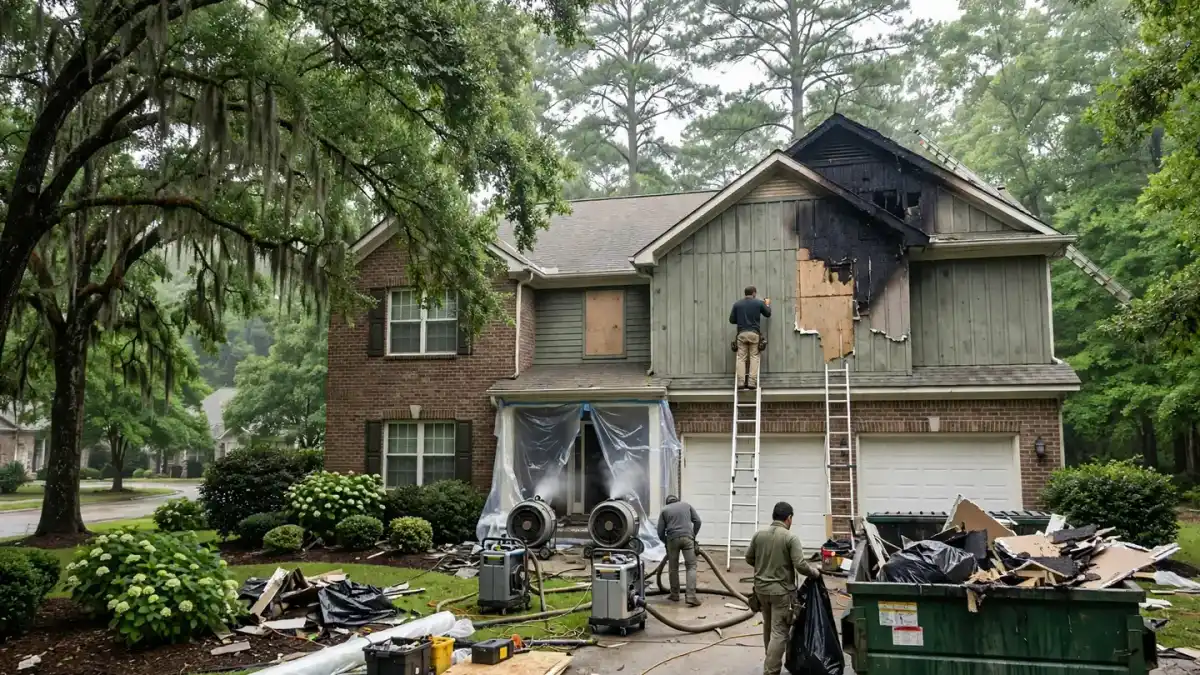
Beyond the apartments, University City and nearby areas such as Highland Creek and Mallard Creek include subdivisions of two-story homes built mainly from the late 1980s through the 2000s. These houses typically have drywall interiors, open two-story foyers and family rooms, vinyl siding, attached garages and slab or crawlspace foundations.
In these homes, smoke spreads quickly through the open foyer to second-floor hallways and bedrooms. Attached garages are a common point of origin, and a fire there can reach the bonus room often built above the garage. Engineered roof trusses and floor joists should be assessed for heat damage, because they can lose strength faster than solid lumber.
Permits
Permits and building approvals in University City
Building, electrical, plumbing and mechanical permits for fire repairs in Charlotte, including University City, come from Mecklenburg County Code Enforcement [3]. For apartment and townhome buildings, the owner or management company usually handles permits for the structure and shared systems.
Sprinkler and fire alarm systems in multifamily buildings must be restored by licensed fire protection contractors after a fire. Until they are, the building may need a fire watch, which the property manager arranges with the fire department's guidance.
Permits list
Who handles approvals for University City fire repairs
- Mecklenburg County Code Enforcement for building and trade permits [3].
- Property management for apartment building structure, systems and common areas.
- Owners associations for townhome exteriors and roofs.
- Fire protection contractors for sprinkler and alarm restoration.
- Utilities and licensed trades for reconnecting gas and power.
Planning a visit
Arranging a contractor visit in University City
- 1
Owner or tenant?
If you rent, the owner or manager usually hires the restoration contractor for the building. You can still call about cleaning your own belongings.
- 2
Building access
Arrange gate codes, building entry and parking with management.
- 3
Describe your unit
Say which floor you are on and whether the fire was in your unit, next door, above or below.
- 4
List damaged items
Make a quick list of furniture, electronics and clothing affected by smoke or water.
- 5
Share policy details
Have your renters or homeowners policy number and the claim number ready.
- 6
Ask about timing
Ask how long the unit may be out of service and whether contents can be packed out for cleaning.
Kitchen fires
Preventing a second kitchen fire after repairs
Cooking is the leading cause of home fires nationally, and unattended cooking is a frequent factor [5]. In apartments, where kitchens are small and open to the living room, a pan fire can fill the whole unit with smoke in minutes. After repairs, it is worth taking a few steps to reduce the chance of another fire: keep a lid nearby to smother a pan fire, stay in the kitchen while frying or broiling, and keep towels and packaging away from burners.
Ask the property manager to confirm that the smoke alarm in your unit works and is placed correctly, and that the range hood or exhaust fan is clean. A small kitchen fire extinguisher, kept where you can reach it without passing the stove, is a sensible addition.
Contents cleaning
Cleaning apartment contents after smoke
In a small apartment, smoke reaches nearly everything: the couch, the bed, the clothes in the closet and the dishes in the cabinets. Hard items such as dishes, glassware and sealed plastics can usually be washed. Clothing and linens often come back with laundering designed for smoke. Mattresses, pillows and upholstered furniture absorb smoke deeply and are often replaced.
If your renters policy covers it, a restoration contractor can pack out your belongings, clean them in a facility and return them once your unit is ready, with an inventory for your claim. If you are cleaning items yourself, wear gloves and a mask, work outdoors or with good ventilation, and keep cleaned items away from smoky ones.
Light rail
Living near the light rail and new apartment buildings
Newer mid-rise apartment buildings near the light rail stations in University City are built with sprinklers, fire-rated corridors, alarm systems and, often, structured parking. In these buildings, a fire is usually controlled quickly, but sprinkler water and smoke can still affect several units and the corridors around them.
Management companies in these buildings typically have restoration contractors they call first. If your unit was affected, ask management for the restoration plan and timeline, and keep your own photos and notes for your renters claim.
Pets
Pets, service animals and fire recovery
Many University City apartments allow pets, and pets are often overlooked in fire plans. Smoke harms animals quickly, especially birds and small mammals. After a fire, have pets checked by a veterinarian if they were exposed to smoke, and keep them out of the home until cleaning and odor treatment are complete.
Temporary housing can be harder to find with pets. Ask your insurer whether additional living expense coverage includes pet boarding, and check whether nearby hotels or short-term rentals accept animals. Service animals have legal protections in housing; let temporary housing providers know if you rely on one.
Breezeways
Breezeways, stairs and safe exits after a fire
Open-air breezeways and exterior stairs are common in University City's older garden apartment communities. After a fire, these shared spaces may be blocked by debris, wet and slippery, or closed while the structure is assessed. Do not use a stairway or walkway that management or the fire department has taped off, even to retrieve belongings quickly.
When the building reopens, check the path from your door to the parking lot: lighting may be out, handrails may be damaged and smoke alarms in common areas may need replacing. Report any hazards to management in writing. If you have a disability or mobility needs, ask management how they will keep an accessible route open during repairs.
Moving out
Deciding whether to stay, move units or end a lease
After a serious apartment fire, tenants face a hard choice: wait for repairs, move to another unit in the same community, or leave. The lease, the extent of damage and North Carolina landlord-tenant law all affect the options. If the unit is not livable, many leases address what happens to rent and the tenancy, and management may offer a transfer to another available unit.
Before deciding, ask management for a realistic repair timeline and get it in writing. Check whether your renters policy will cover temporary housing for the full period. If you move to another unit, document the condition of the new unit at move-in and confirm in writing how your deposit and lease terms carry over.
Odor in units
Smoke odor in units that did not burn
Tenants in neighboring units sometimes find that their apartment smells of smoke for weeks after a fire elsewhere in the building. The source may be residue that came in through shared attics, wall chases, exhaust fans or the gap under the front door, or odor that settled in carpet, curtains and furniture.
Simple steps help: replace the HVAC filter, wash curtains and bedding, run a HEPA and carbon purifier, and air the unit out when weather allows. If the smell persists, ask management to have the unit assessed. Lingering odor can mean residue on surfaces or in ducts that needs professional cleaning, and the assessment helps decide whether the building owner's or your own policy should respond.
Documents
Documents to gather after a University City fire
| Document | Why you need it |
|---|---|
| Fire department incident number | Insurers and landlords ask for it |
| Lease or association documents | Shows who is responsible for what |
| Renters or homeowners policy | Defines your coverage and limits |
| Photos and video of damage | Supports your contents claim |
| Receipts for hotel, meals, clothing | Needed for additional living expense claims |
| Written messages with management | Records requests, promises and timelines |
Bonus rooms
Garage fires and bonus rooms in subdivision homes
A common floor plan in University City's subdivision homes places a bonus room or bedroom directly above an attached two-car garage. Building codes require fire-resistant separation between a garage and the living space, typically fire-rated drywall on the garage ceiling and walls. That separation buys time, but a garage fire involving vehicles, fuel and stored materials can still push heat and heavy smoke into the room above through gaps, attic connections and the door into the house.
After a garage fire, the garage ceiling drywall, the floor framing of the bonus room and the attic over the garage should all be inspected. Replacing fire-rated drywall in the garage restores the separation, and that work usually needs a permit and inspection.
FAQ
University City fire recovery questions
The fire was in another apartment. Who cleans my unit?
Usually the building owner arranges cleaning of the structure. Your own belongings are covered by your renters insurance if you have it. Report smoke or water in your unit to management in writing.
Does renters insurance cover a hotel after a fire?
Many renters policies include additional living expense coverage, which can pay for temporary housing when your unit is not livable. Check your policy and keep receipts.
Can my belongings be cleaned instead of replaced?
Often. Clothing, linens, hard furniture and many household items can be professionally cleaned. Electronics and soft furniture depend on how much smoke or water they absorbed.
I'm a student without renters insurance. What can I do?
Check whether a parent's homeowners policy covers your belongings away from home. Contact the university's student services about emergency assistance, and the Red Cross may help with immediate needs.
How do I know if my townhome was affected by a neighbor's fire?
Look and smell for smoke in rooms that share a wall, check the attic if you can, and watch for water stains near the party wall. Have it inspected if you notice anything.
Who fixes the sprinkler system after a fire?
The building owner arranges a licensed fire protection contractor to restore sprinklers and alarms. Until then the building may be under a fire watch.
Can I break my lease after an apartment fire?
It depends on the lease terms, the damage and North Carolina landlord-tenant law. If the unit is not livable, many leases address rent and termination. Ask management in writing and seek legal advice if needed.
Should I throw away food after a fire in my building?
Discard food that was exposed to heat, smoke or firefighting water, including items in the refrigerator if the power was off for a long time. Sealed cans that are swollen, dented or rusted should also go.
Is the room above my garage safe after a garage fire?
Not until the garage ceiling, the floor framing above it and the attic have been inspected. Heat can weaken framing and smoke can enter through gaps, so have a contractor check before using the room.
Do I need to be home when the restoration crew works?
Not always. Many crews work with management access or a lockbox. Being present for the first walk-through helps, so you can point out belongings and concerns and ask questions about the plan.