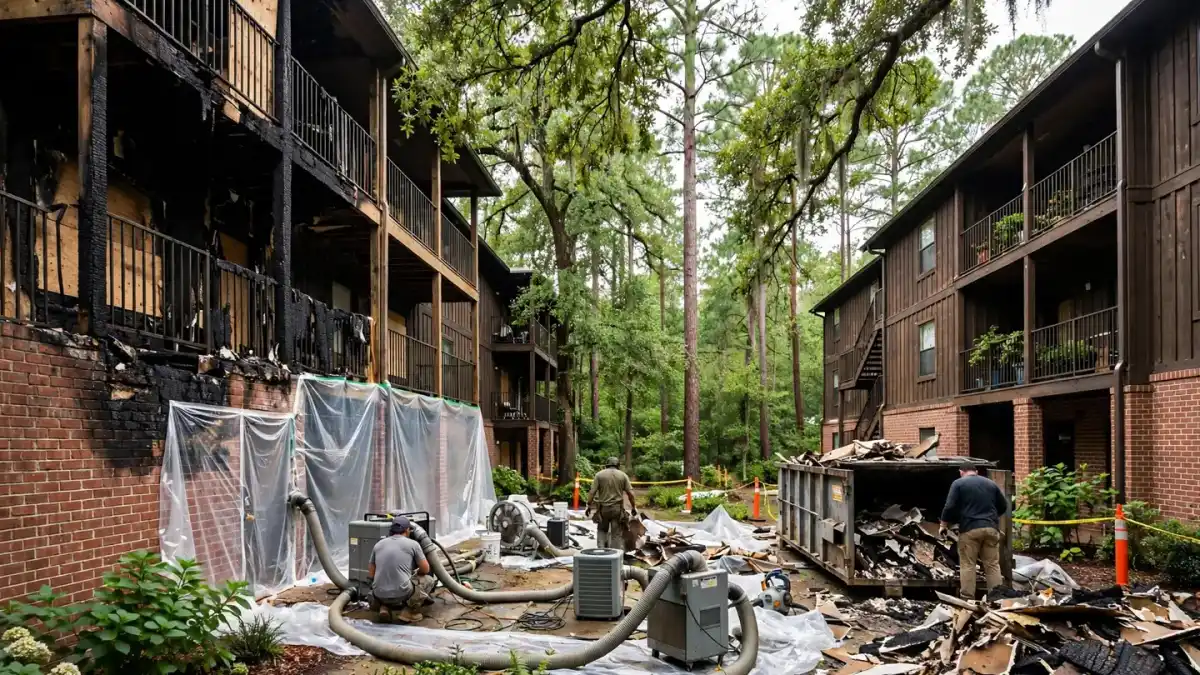
Key facts: Myers Park
- Myers Park was planned beginning in 1911 by landscape architect John Nolen, with later work by Earle Sumner Draper [1].
- The Myers Park Historic District appears on the National Register [2].
- Bungalow, Colonial Revival and Tudor Revival houses are among the district's notable styles [1].
- Fire repairs that involve structure, wiring, plumbing or HVAC in Charlotte are permitted through Mecklenburg County Code Enforcement [3].
Coverage
Myers Park addresses covered
Calls from Myers Park addresses in ZIP 28207 can be connected to an independent contractor, including streets off Queens Road, Selwyn Avenue, Providence Road and the area around Queens University.
- ZIP 28207: Myers Park and Eastover
- Neighboring covered ZIPs: 28209 (Selwyn and Montford areas), 28204 (Elizabeth) and 28203 (Dilworth)
- Addresses outside the covered ZIPs may not be connected
Homes here
The houses of Myers Park
Myers Park was planned from 1911 on former farmland southeast of central Charlotte. Developer George Stephens brought in planner John Nolen, whose design used curving streets, wide planted medians and generous lots, and Earle Sumner Draper continued the work [1][4]. Today the neighborhood is known for its tree canopy, especially the rows of oaks along Queens Road, and for houses that range from modest bungalows to large estates.
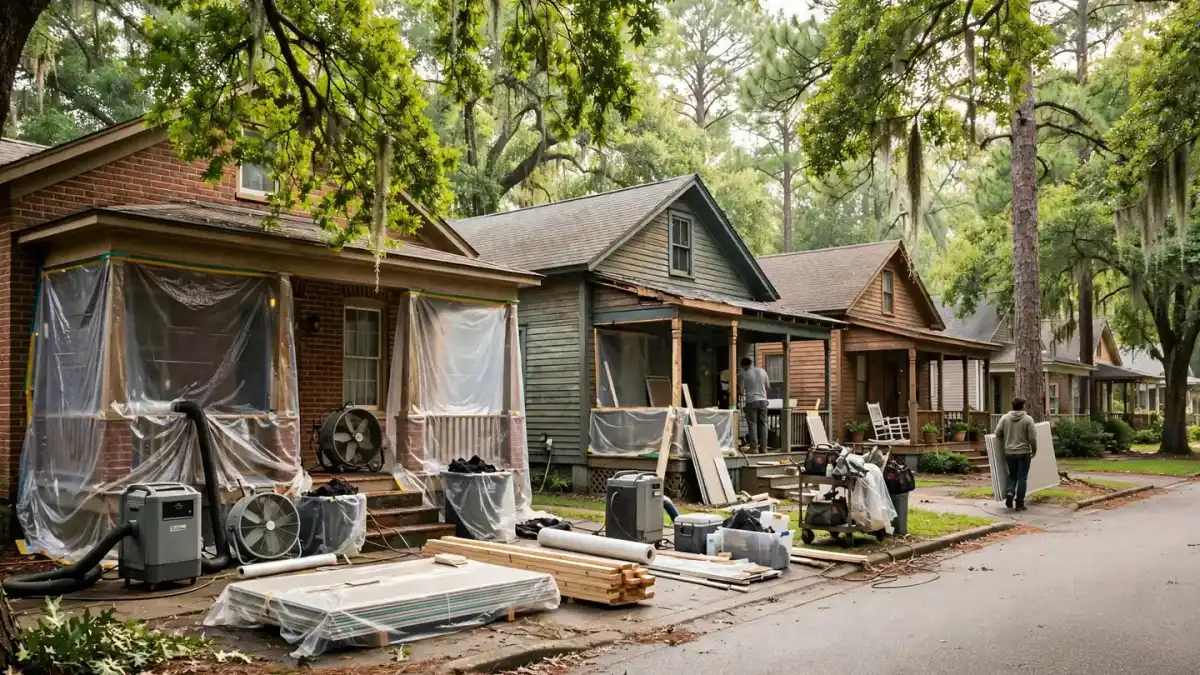
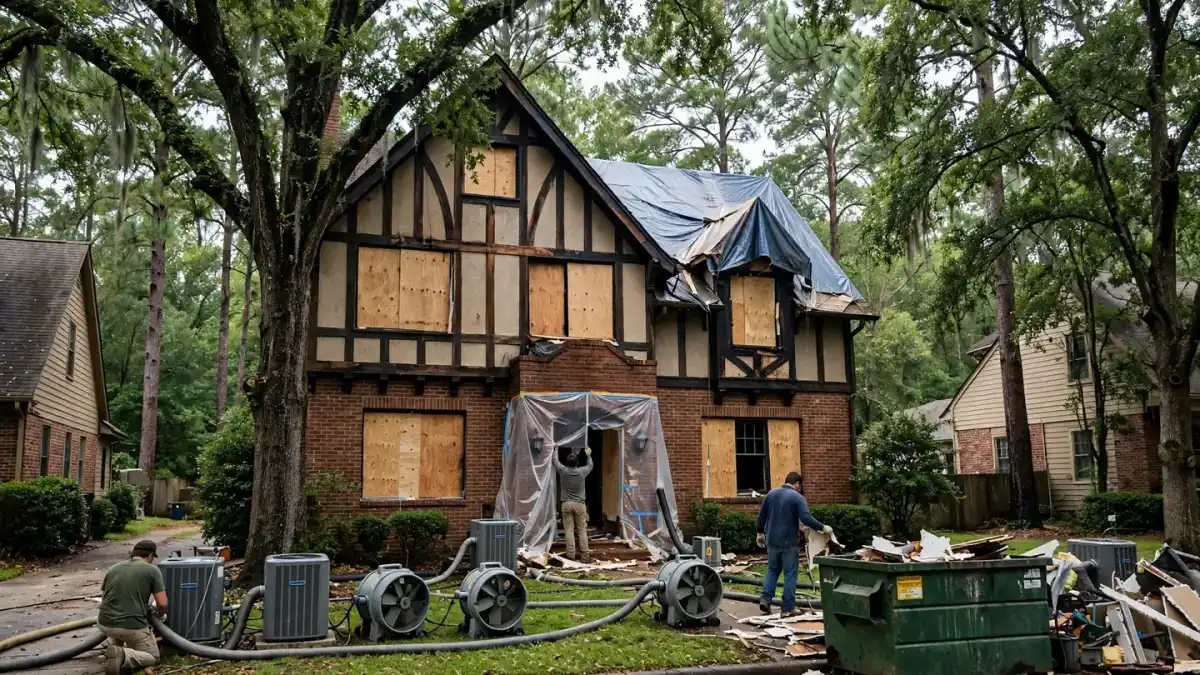
The architecture leans toward revival styles popular in the 1910s through the 1930s: Tudor Revival with steep gables, half-timbering and brick or stone; Colonial and Georgian Revival with symmetrical brick facades and slate roofs; and smaller numbers of Mediterranean and Craftsman designs [1]. Later decades added mid-century homes and, more recently, large new houses on subdivided or redeveloped lots.
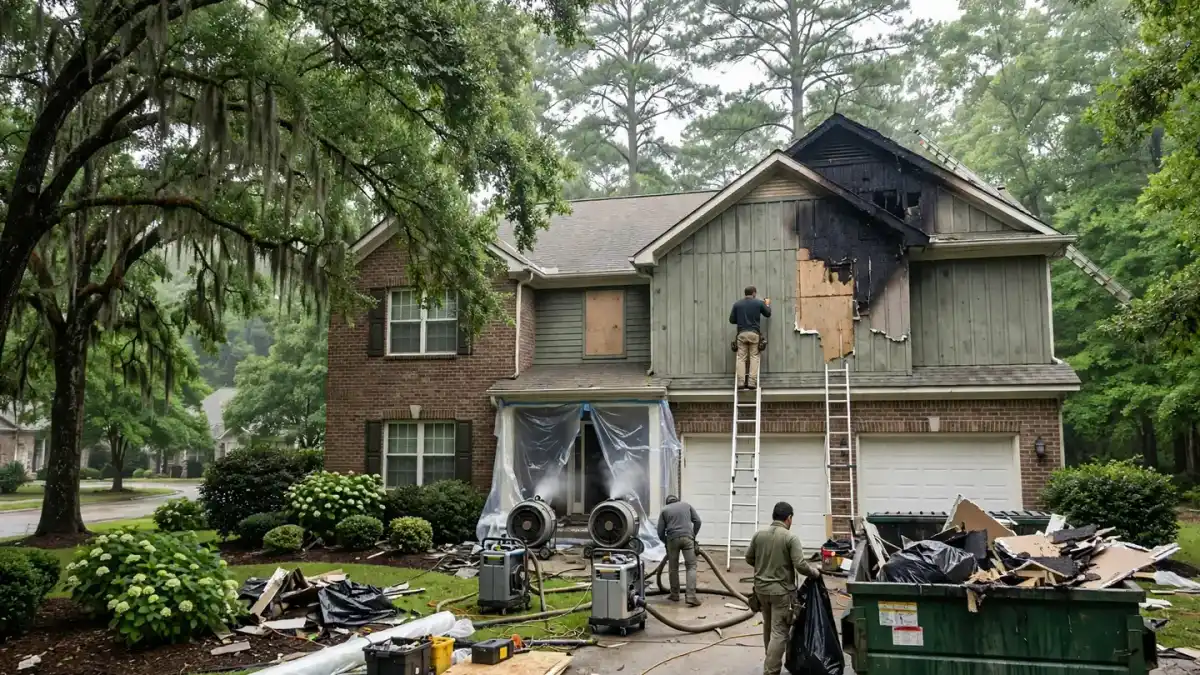
Many of the older houses have been expanded with rear additions, sunrooms, finished attics and basements, and modern kitchens. A fire in one of these homes can move between very different construction types under one roof, from plaster and old-growth wood in the original rooms to drywall and engineered materials in the additions.
What pros see
Fire recovery issues typical of Myers Park homes
Complex roofs
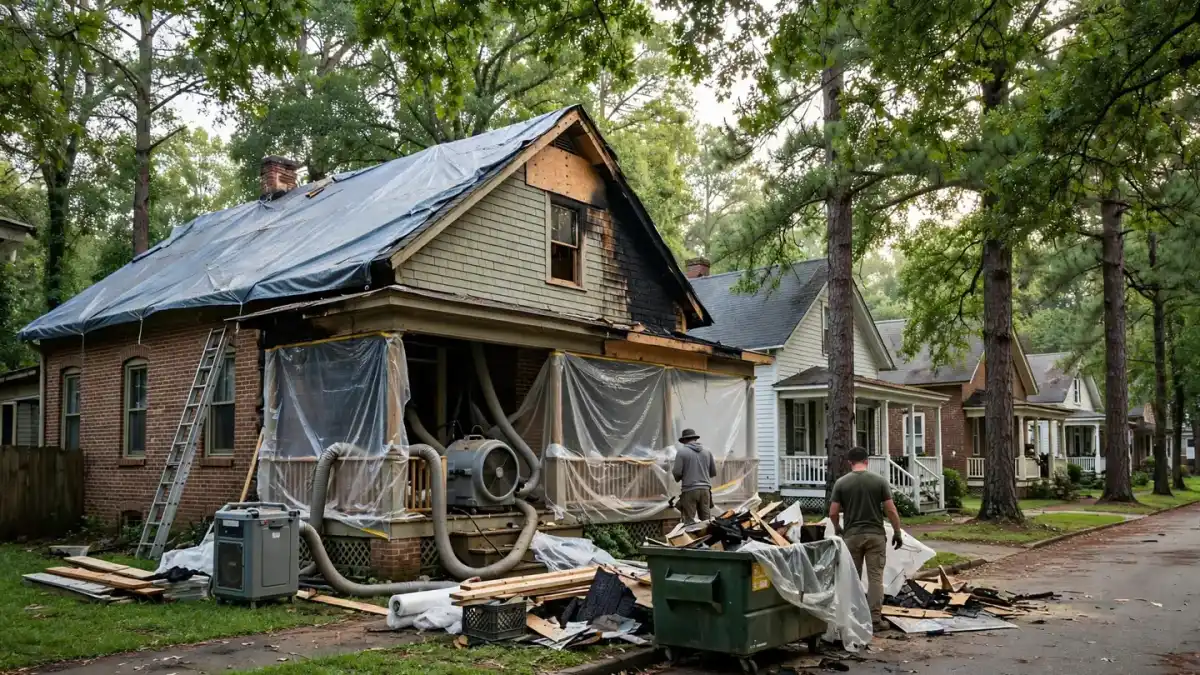
Steep gables, dormers and valleys covered in slate, clay tile or wood shakes make tarping and roof repair slow, careful work.
Several chimneys
Many houses have two or more chimneys. Heat and soot can damage flues and masonry even when the fire was elsewhere.
Multiple HVAC systems
Large houses often have separate systems for each floor or wing, which can carry smoke to areas far from the fire.
Finished basements
Basements and lower levels catch water from fires above and need their own drying plan.
Fine finishes
Paneled libraries, plaster moldings, hardwood floors and custom millwork reward careful cleaning rather than replacement.
Valuable contents
Art, antiques, rugs, books and collections usually need specialist cleaning and careful inventory.
Roofing
Slate and tile roofs after a fire
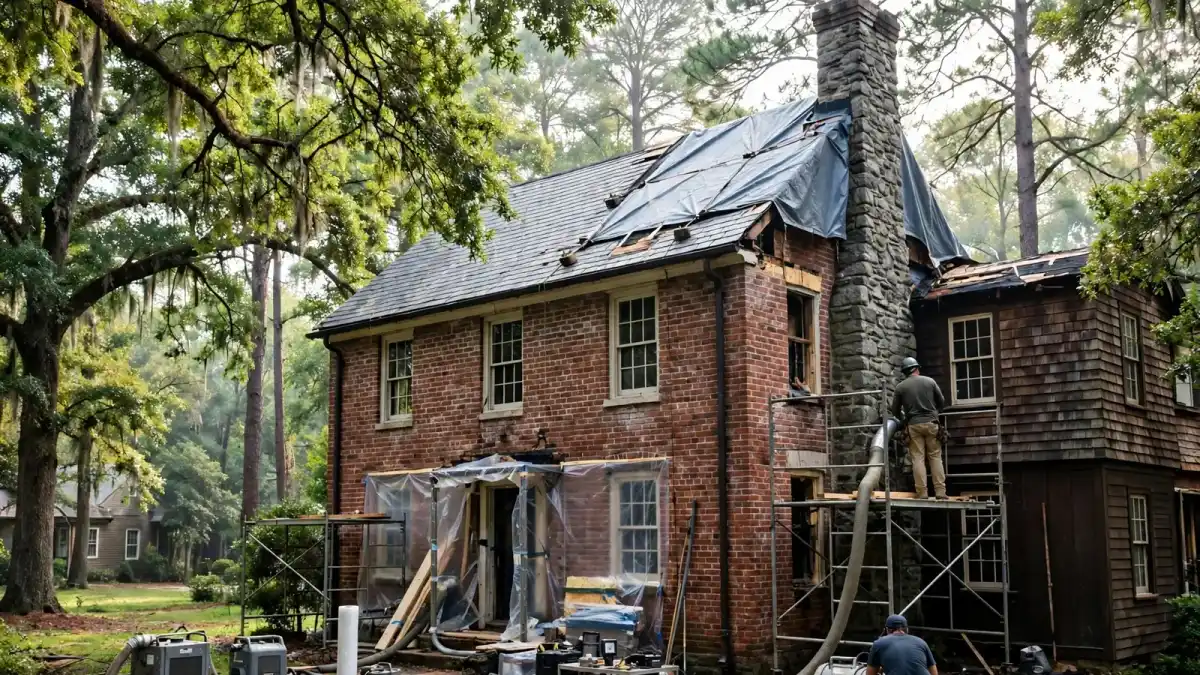
Slate and clay tile roofs are common on Myers Park's older houses, and they behave differently from asphalt shingles. Both are durable, but individual pieces are brittle and break when walked on without care. After a fire, firefighters may have broken slates to open the roof, and heat can crack slate or tile near the fire.
Temporary protection on these roofs needs a light touch. Crews may use roof ladders, hooks or lifts to avoid standing directly on slate, and they plan tarp placement to avoid crushing intact pieces. Fasteners should go into damaged areas or onto battens set over the tarp rather than through undamaged slate.
Permanent repairs call for roofers experienced with slate or tile. Matching the color and size of a century-old slate roof can take time, and salvaging intact slates from the damaged area for reuse is common. Ask the contractor you're connected with whether they coordinate with slate specialists for the permanent work.
Slate roofs need careful handling during tarping and repair
Smoke travel
How smoke moves through a large house
In a large home, smoke has more places to go and more time to settle before the fire is out. Grand stairways, open foyers and back stairs act as vertical shafts. Laundry chutes, dumbwaiters and old servant passages in some older houses provide more paths. If any of the HVAC systems were running, their return grilles drew smoke in and their supply registers distributed it.
Multiple systems complicate things further. A fire in a first-floor kitchen might be served by one system, while the second floor and the finished attic are on others. Smoke can still reach those areas through stairways and floor openings, and each system may need inspection and cleaning. A careful assessment maps which rooms are on which system and checks every return.
Large houses also have many closets, cabinets and storage rooms, each a small pocket where smoke odor can linger. Inspecting them all takes time but avoids a smell that returns weeks later from an overlooked linen closet.
Fine interiors
Paneling, plaster detail and custom millwork
Some of the most valuable features of Myers Park homes are inside: paneled libraries, plaster crown moldings and ceiling medallions, built-in cabinetry, carved mantels and hardwood floors in wide planks. These are hard and sometimes impossible to replace exactly, which makes careful cleaning the priority.
Wood paneling with an intact finish usually cleans well with appropriate products after dry soot removal. Finishes such as shellac or older lacquers can react to some cleaners, so testing in an inconspicuous spot comes first. Ornamental plaster can be cleaned gently and, if damaged, repaired by plaster specialists who can run new moldings to match.
If you have architectural features you are particularly concerned about, point them out on the call and again during the walk-through. Ask the contractor how they protect features that are not being cleaned yet from further soot and dust during the work.
Contents
Common Myers Park contents and how they are handled
| Item type | Typical approach |
|---|---|
| Fine art and framed works | Removed early; art conservator for smoke or water exposure |
| Antique furniture | Dry soot removal, gentle cleaning; furniture restorer for finish damage |
| Oriental and wool rugs | Rug specialist cleaning and drying |
| Books and papers | Deodorizing chamber; freeze-drying if wet |
| Silver and metal pieces | Prompt cleaning before acidic residue tarnishes them |
| Clothing and linens | Smoke-specialist laundering or dry cleaning |
| Electronics and AV equipment | Unplugged; specialist cleaning before use |
Basements
Lower levels and water from above
Many Myers Park houses have basements, some original and some excavated or finished later. Water from firefighting on the main or upper floors finds its way down through stairwells, floor penetrations and wall cavities. Finished basements with carpet, drywall and built-in shelving absorb that water quickly.
Drying a basement usually means removing wet carpet and pad, cutting out wet lower drywall, and running dehumidifiers sized for the space. Older basements may have stone or brick walls that hold moisture and need longer to dry. If the basement has a sump pump, make sure it is working once power is safe. Mold can begin within a day or two in wet conditions, which is why drying should start promptly [6].
Wine cellars, media rooms and storage areas often hold valuable items. Move them out of wet areas as soon as it is safe and document their condition.
Permits and review
Permits and historic status in Myers Park
The Myers Park Historic District appears on the National Register [2]. National Register listing recognizes the district's importance but does not by itself regulate what private owners do with their homes. Whether a particular address also falls within a local historic district or is a designated landmark, which can bring design review for exterior changes, depends on the property; check with the city's historic district staff if you are unsure.
Building permits for structural, electrical, mechanical and plumbing repairs come from Mecklenburg County Code Enforcement [3]. For large homes with multiple systems and complex framing, the permit scope can be substantial, and inspections may be needed at several stages. Many homeowners prefer to have the restoration contractor or a general contractor manage that process.
Lead paint is common in houses built before 1978. Contractors disturbing painted surfaces must follow EPA lead-safe work practices [5].
Permits list
Agencies and checks for Myers Park repairs
- Building, electrical, plumbing and mechanical permits: Mecklenburg County Code Enforcement [3].
- Exterior review if the property is in a local historic district or is a designated landmark: Charlotte historic district staff.
- Lead-safe practices for painted surfaces in pre-1978 homes [5].
- Asbestos testing for old flooring, pipe and duct insulation before removal.
- Gas and electric restoration after inspection by the utility and licensed trades.
- Tree work near the house: an arborist if heat damaged large trees.
The tree canopy
Working around the Myers Park tree canopy
The oak canopy that defines Myers Park also affects fire recovery. Heat from a house fire can scorch branches and bark on trees close to the structure. Damaged limbs over a roof or driveway can fall, so crews may need an arborist to assess trees before working under them.
Large trees complicate roof tarping and equipment access. Bucket trucks, roll-off dumpsters and drying equipment trailers all need space, and the city protects many street trees. Plan where equipment will sit so it does not damage roots or low branches. After storms, leaves and twigs collect on tarps and in gutters; clearing them keeps water moving off the roof.
Planning a visit
Preparing for a contractor visit in Myers Park
- 1
Confirm release and access
Make sure the fire department has released the house, and arrange access for the contractor and adjuster.
- 2
Map the systems
List the HVAC systems and which areas each serves, if you know, along with the location of every attic and basement access.
- 3
Note special features
Identify paneling, plaster detail, original floors and other features you want handled with extra care.
- 4
Flag valuable contents
Point out art, antiques, collections and documents that need priority handling.
- 5
Plan driveway space
Clear room for trucks and a dumpster, and mention any gate codes or narrow access.
- 6
Gather house records
Note the year built, major renovations and any lead or asbestos testing already done.
Carriage houses
Garages, carriage houses and guest quarters
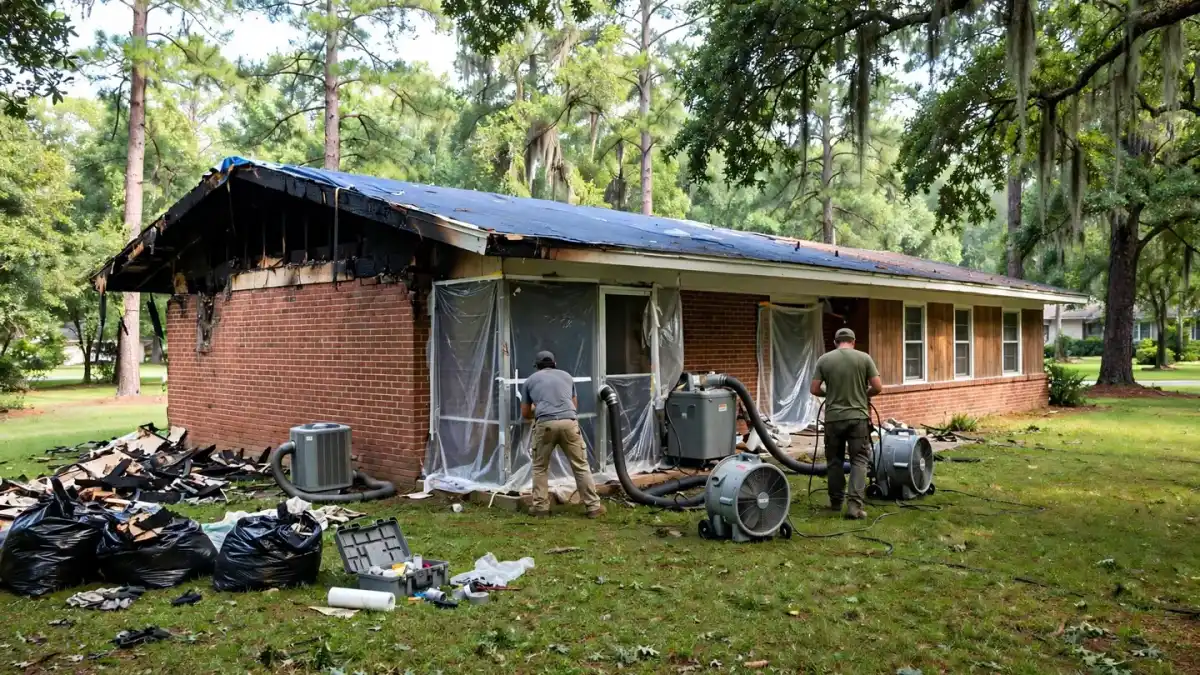
Many older Myers Park properties have detached garages, carriage houses or guest cottages at the back of the lot. Some have been converted into apartments, studios or home offices. A fire in one of these buildings can spread smoke to the main house through open windows, and a fire in the main house can send smoke and embers toward the outbuildings.
Each building should be assessed on its own. Detached structures are often covered under a separate part of the homeowners policy, sometimes with lower limits than the main dwelling. Read that section and list the outbuildings and their contents separately when you report the claim. If a garage stored gasoline, paint, pool chemicals or lawn equipment, tell the contractor before anyone goes in.
Smoke alarms
Upgrading alarms and detection during repairs
Older homes were built long before interconnected smoke alarms were standard, and large houses often have many bedrooms on several floors. When walls and ceilings are opened for fire repairs, it is a natural time to add hardwired, interconnected smoke and carbon monoxide alarms so that an alarm on one floor sounds throughout the house. Current code may require it when work is permitted.
Ask the electrician working on the repairs about alarm placement, and whether a monitored system makes sense for a house that may sit empty during travel. These changes do not undo the fire, but they make the restored home safer than it was before.
Insurance limits
High-value homes and policy limits
Homes with custom finishes, slate roofs and fine contents can test the limits of a standard policy. Some Myers Park owners carry policies designed for high-value homes, which may handle matching, specialty trades and contents differently from standard forms. Others find that reproducing original materials runs up against their dwelling limit.
Early in the claim, ask your agent or adjuster how the policy treats extended replacement, matching of undamaged areas, and scheduled items such as jewelry, art and collections. A clear understanding at the start helps you and the contractor plan the scope of work.
Kitchens
Large kitchens and smoke from cooking fires
Kitchens in many Myers Park homes have been rebuilt and enlarged, often opening into family rooms and breakfast areas. Professional-style ranges, large hoods and long runs of custom cabinetry are common. A cooking fire in that setting can coat a wide area with greasy residue, and an open plan lets it drift into adjoining living spaces.
Range hood ducts carry heat and grease and should be inspected and cleaned after any kitchen fire. Custom cabinets with painted or glazed finishes need gentle, tested cleaning; aggressive degreasers can dull or lift them. Stone countertops are usually durable but some, such as marble, can etch from acidic residue and cleaning products, so the contractor should choose products suited to the stone.
Built-in appliances such as refrigerators, wine coolers and wall ovens may have ventilation openings that pulled in soot. Leave them off until a technician confirms they are safe and clean.
Attic spaces
Finished attics and third floors
Steep roofs on Tudor and Colonial Revival houses often enclose large attics, and many have been finished into bedrooms, playrooms or offices. These rooms sit at the top of the house where smoke and heat collect, and their knee walls and sloped ceilings hide unfinished attic space behind them.
After a fire, those hidden spaces behind the knee walls deserve as much attention as the finished rooms. Insulation there may be full of soot and odor, and ductwork serving the upper floor often runs through them. Opening access panels, removing affected insulation and cleaning the framing prevent smell from seeping back into the finished rooms later.
Communication
Keeping a large project organized
A fire in a large home can involve many trades: restoration crews, electricians, HVAC technicians, slate roofers, plasterers, painters, floor finishers and contents specialists. Without a clear plan, work overlaps or stalls. Ask early who will coordinate the trades and serve as your single point of contact.
Weekly updates with photos, moisture readings and a list of what is finished and what is next help you and your adjuster stay aligned. Keep your own file of every document, invoice and email related to the claim. Large projects can stretch over months, and organized records make the final stages of the claim smoother.
Pools and grounds
Pool houses, terraces and landscape lighting
Myers Park lots often include terraces, garden walls, pool areas and outdoor kitchens. Smoke and soot from a house fire can settle on stone terraces and pool water, and debris can land in the pool. Ash and debris should be skimmed out and the pool chemistry checked before anyone swims. Stone terraces usually clean with gentle washing; avoid high-pressure washing near the house where water could be driven into walls that are already wet.
Landscape lighting, irrigation controllers and outdoor electrical outlets may be on circuits damaged in the fire. Leave them off until an electrician has checked the system. Irrigation should be paused so sprinklers do not spray onto open windows or a tarped area.
FAQ
Myers Park fire restoration questions
Can a slate roof be tarped without breaking more slates?
With care, yes. Crews use roof ladders or lifts, avoid walking on intact slate, and place fasteners in damaged areas or through battens. Some additional breakage is still possible on an older roof.
Do I need historic approval to repair my Myers Park home?
Myers Park is on the National Register, which does not by itself require review. If your property is inside a local historic district or is a designated landmark, exterior changes may need approval. Check before ordering exterior materials.
Why are rooms far from the fire covered in smoke?
Large homes have stairways and multiple HVAC systems that carry smoke widely. Returns and supply registers spread residue into rooms the fire never touched.
Can paneled walls be cleaned after smoke damage?
Usually. Finished wood paneling often cleans well after dry soot removal and a test of the cleaning product. Damaged finishes may need refinishing by a woodworker.
What happens to art and antiques after a fire?
They are usually removed early and cleaned by specialists such as art conservators and furniture restorers. Keep a detailed inventory with photos for your claim.
How long does restoration take for a large house?
Larger homes with complex roofs and fine finishes generally take longer than average. The scope, permits and availability of specialty trades such as slate roofers all affect the timeline.
Should the outbuildings on my lot be inspected too?
Yes. Detached garages, carriage houses and guest cottages can be affected by smoke or embers. They are often covered under a separate part of the policy, so report and document them separately.
Can stone countertops be damaged by smoke?
Most stone is durable, but some, such as marble and limestone, can etch from acidic residue or strong cleaners. Ask the contractor to use products suited to your stone.
Will every HVAC system in my house need cleaning?
Each system should be inspected. Systems serving the fire area almost always need cleaning; others may need it if smoke reached their returns through stairways or open doors. Filters on every system should be checked.
Is it worth repairing original plaster moldings?
Usually. Plaster specialists can clean, repair and even run new moldings to match the old profile, which preserves the character of the house better than modern substitutes.
Sources and citations
- [1]Wikipedia: Myers Park (Charlotte)
- [2]North Carolina State Historic Preservation Office: Myers Park Historic District nomination
- [3]Mecklenburg County Code Enforcement
- [4]The Cultural Landscape Foundation: Myers Park
- [5]U.S. EPA: Lead renovation, repair and painting program
- [6]U.S. EPA: A brief guide to mold, moisture and your home