Key facts: Is it safe to stay after a fire
- Do not stay in a home after a fire until the fire department says it is safe to enter [1].
- Utilities that were shut off should only be restored by the utility or a licensed professional [2].
- Soot and smoke residue are fine particles linked by EPA to breathing and heart problems [3].
- Fuel-burning appliances damaged in a fire can leak carbon monoxide; working CO alarms are essential [4].
Short answer
Can you stay in a house after a fire? The short answer
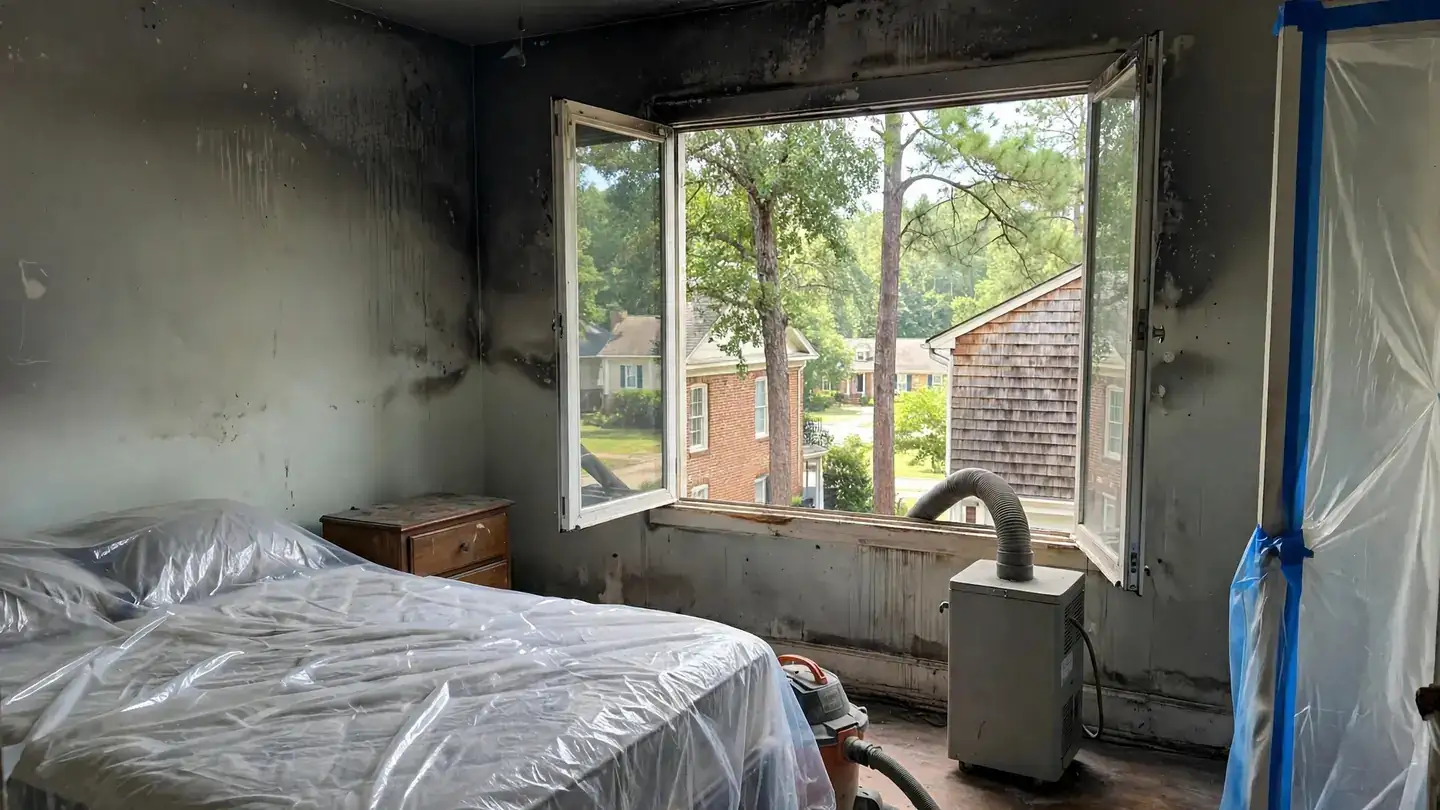
Only if the fire department has released the house, the structure is sound, the electricity and gas have been checked, there is no standing water or sagging ceiling in the rooms you will use, and the air is not heavy with smoke or soot. If any of those conditions is not met, it is safer to stay elsewhere [1][2].
For a very small fire, such as a contained stovetop flare-up, staying may be reasonable once the area is ventilated and cleaned. For anything larger, the residue and hidden damage usually make the home unsuitable to sleep in until it has been assessed and cleaned. People with asthma, heart or lung disease, pregnant women, young children and older adults should be especially cautious.
At a glance
Warning signs that mean stay elsewhere
| What you notice | Why it matters | What to do |
|---|---|---|
| Sagging ceiling or soft floor | Structural failure risk | Stay out of the area; have it assessed |
| Power or gas still off | Systems may be damaged | Wait for utility or electrician |
| Heavy smoke smell or visible soot | Fine particles in the air | Stay elsewhere until cleaned |
| Standing water or wet carpet | Electrical and mold risk | Start drying; avoid wet rooms |
| Broken windows or doors | Security and weather exposure | Board up before staying |
| Headache or dizziness indoors | Possible carbon monoxide | Leave and get fresh air; call for help |
Working smoke and CO alarms are essential before anyone sleeps in the
Safe checks
Checks before sleeping at home after a fire
- Confirm the fire department has released the house.
- Make sure an electrician or the utility has cleared the electrical system.
- Do not relight pilot lights or restore gas yourself; call the gas utility [2].
- Test smoke and carbon monoxide alarms, and replace any damaged by heat.
- Keep everyone out from under stained or sagging ceilings.
- Ventilate and run a HEPA purifier in the rooms you plan to use.
- Throw out food, drinks and medicine exposed to heat, smoke or water [1].
Air quality
Breathing in a smoky house
Soot and smoke residue are made up of fine particles. EPA explains that fine particle pollution can aggravate asthma, reduce lung function and affect the heart [3]. In a home with visible soot or a strong smell, those particles are stirred up by walking, sitting on furniture and running fans. Sleeping in that environment means hours of exposure.
If the smoke stayed in one room, keeping that room closed, ventilating, and using a HEPA purifier in bedrooms may be enough for healthy adults for a short time. If smoke reached the whole house or the HVAC system ran during the fire, it is better to stay elsewhere until the house is cleaned. See smoke damage cleanup for how that work is done.
Utilities
Electricity, gas and carbon monoxide
Fire and firefighting water can damage wiring, outlets, panels and appliances. Power should only be restored after a qualified electrician has checked the system. Gas appliances such as furnaces, water heaters and ranges may have damaged connectors or venting. A damaged vent can let carbon monoxide into the house, and carbon monoxide has no smell [4].
Make sure you have working CO alarms near sleeping areas before staying overnight. If anyone develops headache, dizziness, nausea or confusion inside the house, get everyone outside into fresh air and call for help.
Water and mold
Firefighting water and mold risk
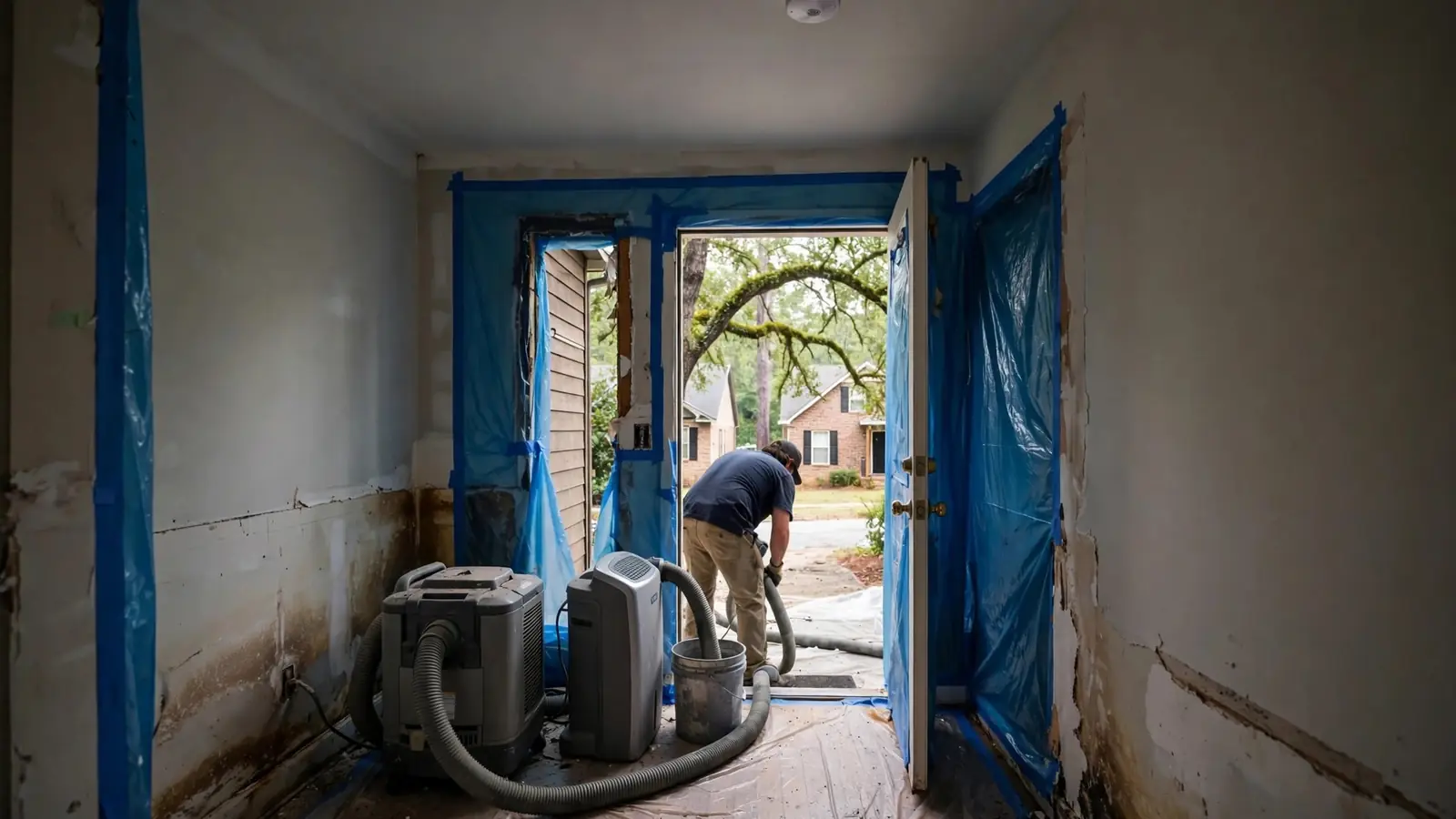
Water from fire hoses soaks floors, walls and ceilings. Wet rooms are slippery, may have live electrical hazards and can begin to grow mold within a day or two. Staying in a house with wet areas is not ideal, especially for people with allergies or asthma. Professional drying, described on our water damage from firefighting page, usually takes several days.
How a pro assesses it
How a contractor judges whether a home is livable
- 1
Structure
Checks ceilings, floors and framing near the fire for damage.
- 2
Systems
Confirms whether power, gas and water have been cleared by the right professionals.
- 3
Residue
Looks for soot and smoke residue in living and sleeping areas.
- 4
Moisture
Measures moisture in floors, walls and ceilings.
- 5
Security
Checks that windows, doors and the roof are closed or secured.
Stay or go
Deciding whether to stay or relocate
If the house fails any of the safety checks, relocating is the safer choice. Many homeowners and renters policies include additional living expense coverage for temporary housing while the home is repaired. Even if you decide to stay in part of the house, keep damaged rooms closed off and limit time in them until cleanup is done.
Prevention
Preventing another fire while you stay
- Avoid using damaged outlets, cords or appliances.
- Do not use generators indoors or in attached garages.
- Keep temporary space heaters away from bedding and curtains.
- Keep exits clear of debris and stored belongings.
Pets
Pets and a smoky house
Pets breathe the same air at floor level, where heavier particles settle, and they groom soot from their fur. Birds are especially sensitive to airborne irritants. If smoke spread through the house, board pets or keep them with friends until cleaning is done, and call a veterinarian if an animal coughs, wheezes or seems lethargic after exposure.
FAQ
Staying home after a fire: questions
Can I sleep in my house after a small kitchen fire?
Possibly, if the fire was contained, the area is ventilated, utilities are safe and alarms work. Keep the kitchen closed off and run a HEPA purifier in bedrooms.
How long after a fire is the air safe?
It depends on how much residue spread and whether it has been cleaned. Air quality improves after cleaning and filtration; strong smell or visible soot means it is not yet clean.
Is it safe for children to stay?
Children are more sensitive to smoke particles. If smoke spread beyond a single room, it is better for them to stay elsewhere until cleaning is complete.
Can I run the air conditioner?
Not until the system has been checked and cleaned. Running it can spread residue through the house.
What if I have nowhere else to go?
Contact the American Red Cross and your insurer. Many policies include temporary housing coverage, and the Red Cross often helps displaced families with immediate needs.
Should I stay home to guard my belongings?
Not if it puts your health at risk. Secure the house with board-up, remove valuables, and ask neighbors to watch it. Belongings can be replaced; lungs and safety come first.