
How can I stop smoke smell spreading right after a fire in Charlotte?
Keep the heating and cooling system off, bag clothing and linens, and air the house out only when weather and security allow. Smoke odor lives in residue, so it keeps spreading until that residue is cleaned. A portable purifier with a carbon filter can help in rooms you use [3].
Key facts: Emergency Odor Removal
- Lasting smoke smell comes from residue and gases held in porous materials, so the source must be cleaned or removed, not only covered up.
- EPA cautions that ozone generators sold as air cleaners can irritate the lungs, and ozone at levels safe for people does little against odor sources [1].
- A portable air cleaner with an activated carbon filter can reduce some smoke gases in a room people are using [3].
- Running the heating or cooling system after a fire can spread smoke odor into every room through the ducts [2].
Right now
Steps that limit smoke smell in the first hours
- 1
Keep the system off
Leave the furnace and air conditioner off so the blower cannot pull smoky air through the ducts into clean rooms [2].
- 2
Close doors to clean rooms
Shut bedroom and closet doors that the smoke did not reach. Each closed door slows the spread.
- 3
Bag soft belongings
Put clothing, bedding and towels in bags and take them out of the house until they can be laundered or professionally cleaned.
- 4
Air out with care
If the weather is dry and the house can be watched, open windows and point box fans outward to push smoky air out.
- 5
Skip the sprays
Air fresheners and scented candles only mask the smell and add their own chemicals to the air.
- 6
Call about the odor plan
Describe what burned and how far the smell reaches. Burned plastic, food and wood each leave a different kind of residue.
When it is urgent
Odor problems that should not wait
These situations let smoke smell set deeper the longer they go on.
The blower ran after the fire
Smoky air may already be in the ducts and returns, ready to blow into each room when the system starts.
Someone in the home has breathing trouble
Smoke gases and particles bother sensitive lungs. Getting the air cleaned up matters sooner for them [4].
Soft furnishings fill the smoky rooms
Sofas, mattresses and curtains act like sponges for odor. Moving or treating them early helps.
Burned plastic or protein
Melted plastics and burned food leave stubborn, sharp smells that spread fast in a closed house.
Humid days are coming
Warm, damp air releases trapped odor, so a house that smells mild today can smell worse tomorrow.
When you call
How the odor call and first visit usually go
Calls to this number are answered 24/7. Your call connects straight to an independent local contractor, and you speak with them on the same call. Say what burned, which rooms smell strongest and whether the heating or cooling ran. That helps them judge where the residue is. The full method is on the odor removal service page.
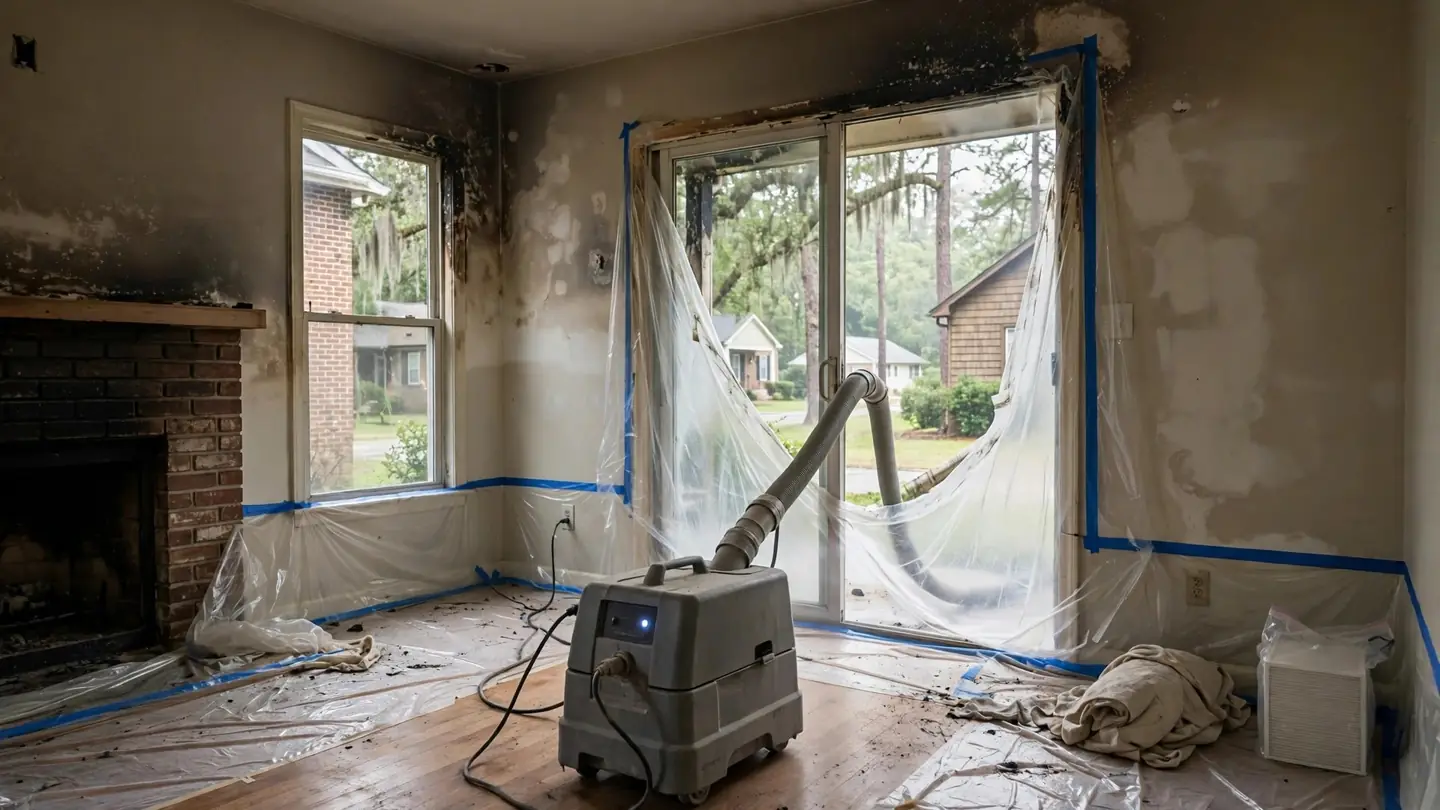
On a first visit, crews often set up HEPA air scrubbers in the smoky rooms and seal off the parts of the house that smell clean. They look at the returns, ducts and attic, because those spread odor quietly. Soft items may be packed out for cleaning elsewhere.
Real odor removal comes later, after soot and residue are cleaned and surfaces are sealed. The early work just stops the smell from spreading. Ask on the call how they will check the house afterward. For the bigger first-night picture, see emergency fire damage restoration.
Charlotte factors
Charlotte heat, humidity and smoke smell
Long, humid Charlotte summers make smoke odor harder to shake. Moist warm air pulls trapped smell back out of walls and fabric, so many owners notice it most on the first muggy days after a fire.
Houses on crawl spaces can draw air up through gaps in the floor. If hose water reached the crawl space, a musty smell can mix with the smoke. A local example of how this plays out is on the page about smoke odor removal in Myers Park.
Many newer two-story homes use one central return that pulls air from both floors. Smoke from one room can reach the whole house that way. For a nearby look at mid-century homes, read about smoke odor removal in SouthPark.
Air treatment
Cleaning the air while residue is removed
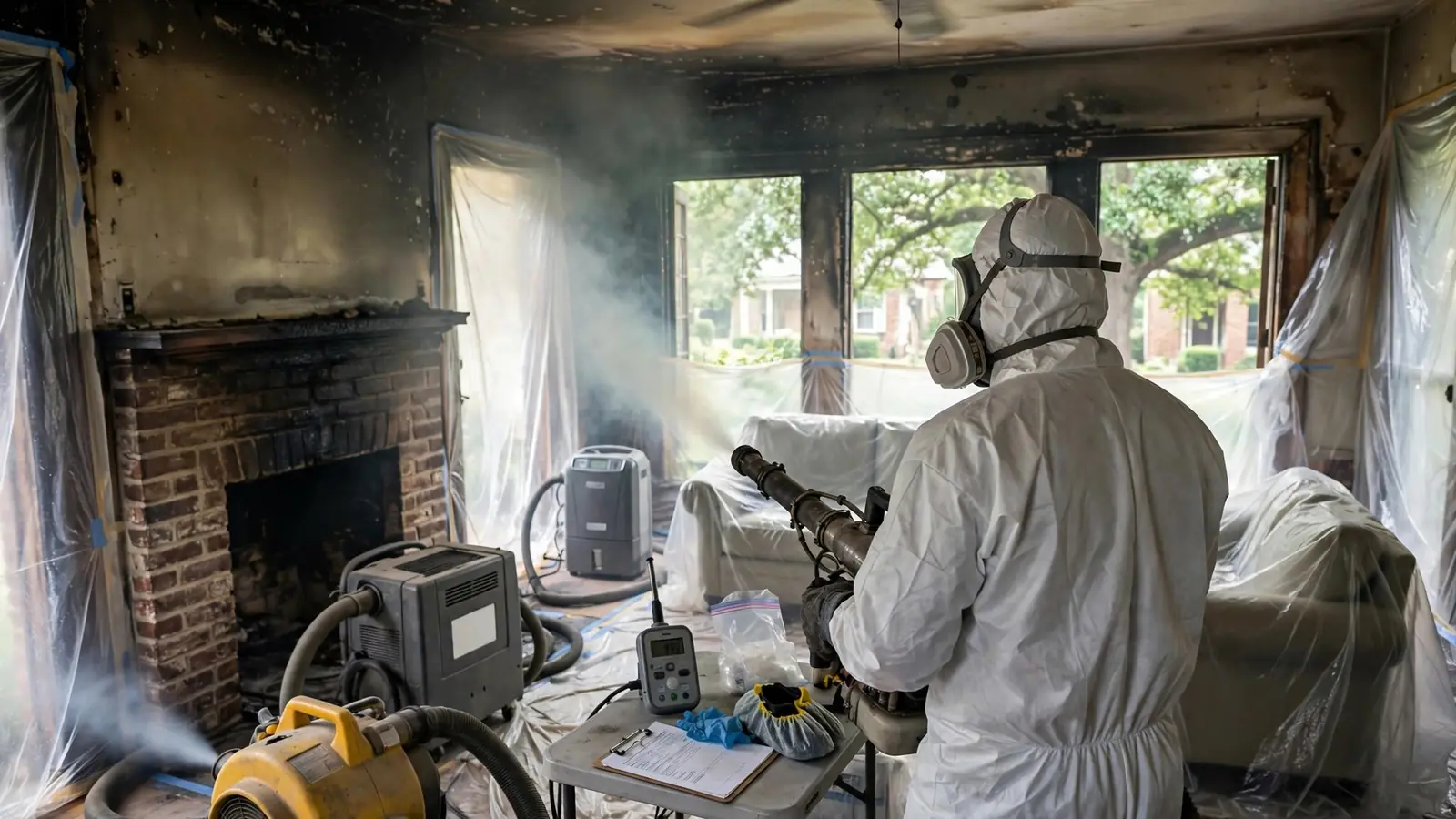
Air scrubbers with HEPA and carbon filters pull fine particles and some odor gases from the room [3]. They run while crews clean, so stirred-up residue does not settle again.
Fogging treatments may follow once surfaces are clean. They reach cracks and gaps that wiping cannot, but they work best after the residue itself is gone.
Ducts and vents
Why vents get attention on day one
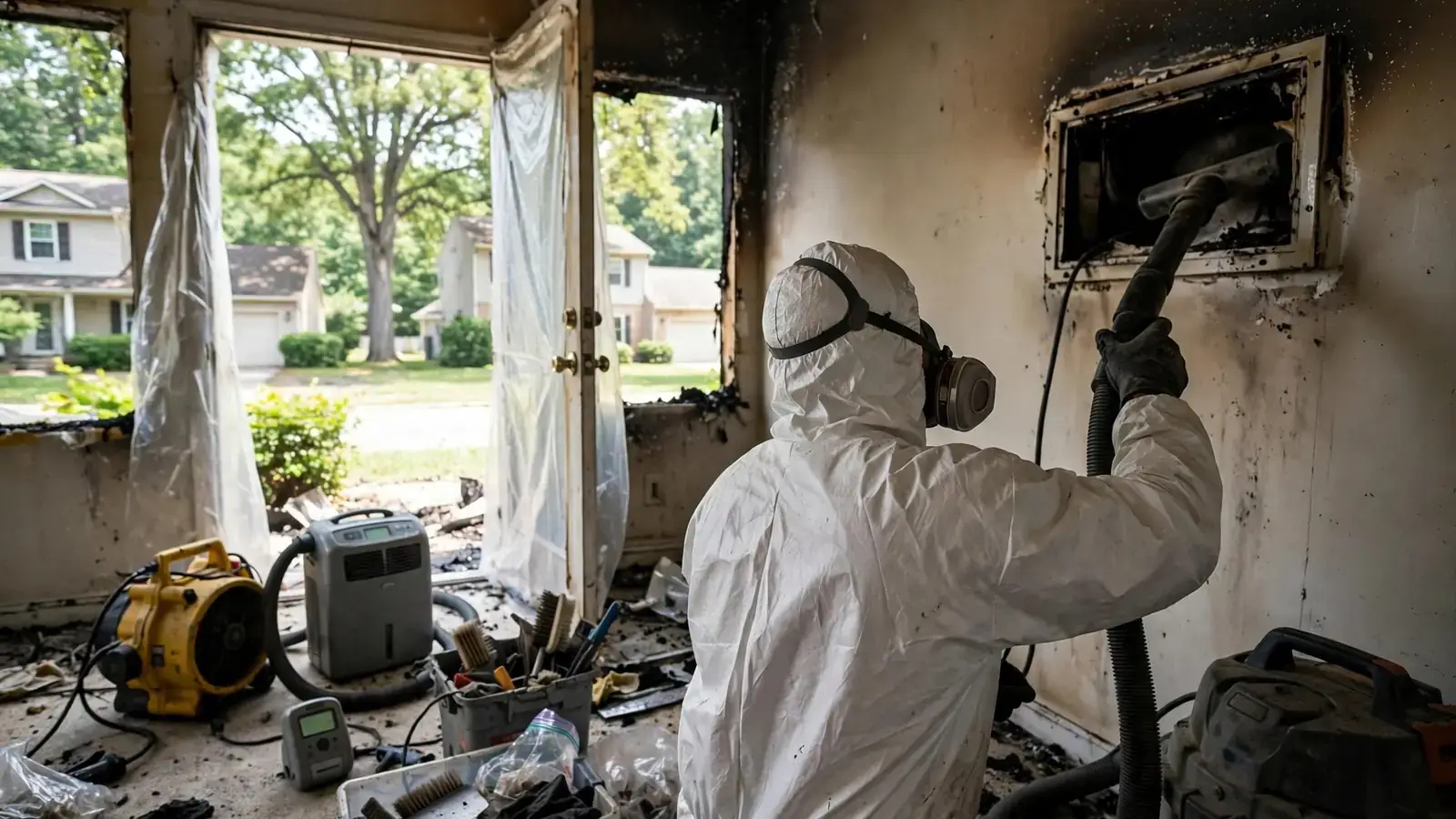
Smoke follows the airflow. Returns, supply registers and duct runs often hold residue even in rooms that look clean, and they push smell out every time the system runs.
Crews may cover vents early and clean them before the system is switched back on. If the smell keeps returning later, read about smoke odor that won't go away.
Have ready
Notes that help with an odor call
- What burned: food, plastic, wood, wiring or furniture
- Which rooms smell strongest and which seem clean
- Whether the heating or cooling ran during or after the fire
- Whether anyone in the home has asthma or other breathing issues
- Whether the house has a crawl space, slab or basement
- Which soft belongings are still inside
Over the next week
Why smoke smell returns, and how to stop it
Smoke odor often seems to fade after a day or two and then return. That is normal while residue is still in the house. The smell is strongest when the air warms up or turns humid, so the first hot afternoon is a useful test.
Lasting results come in a set order: clean or remove the residue, treat what is left in the air and in hidden spaces, and seal surfaces that still hold odor. Skipping a step usually means the smell returns once the house is closed up again.
Ask the contractor how they will check the result, for example with the house shut and the air conditioning running for a day. A clear check at the end is worth more than a strong scent of cleaner on the last visit.
Keep bagged clothing and linens out of the house until they have been washed or professionally cleaned. Bringing them back too soon can carry the smell into rooms that were already treated.
Common missteps
Odor mistakes people make in the first days
These are easy to fall into when the smell is strong and you want it gone.
Masking with fragrance
Scented sprays and plug-ins add another smell on top of the smoke and can make it harder to tell when the residue is really gone.
Washing clothes once at home
Smoky laundry can fill the washer and dryer with odor. Ask whether items should go to a cleaner that handles fire-damaged textiles.
Closing up the house too soon
Sealing the house while residue is still on surfaces traps the smell inside, especially once the weather turns warm.
Forgetting the attic and closets
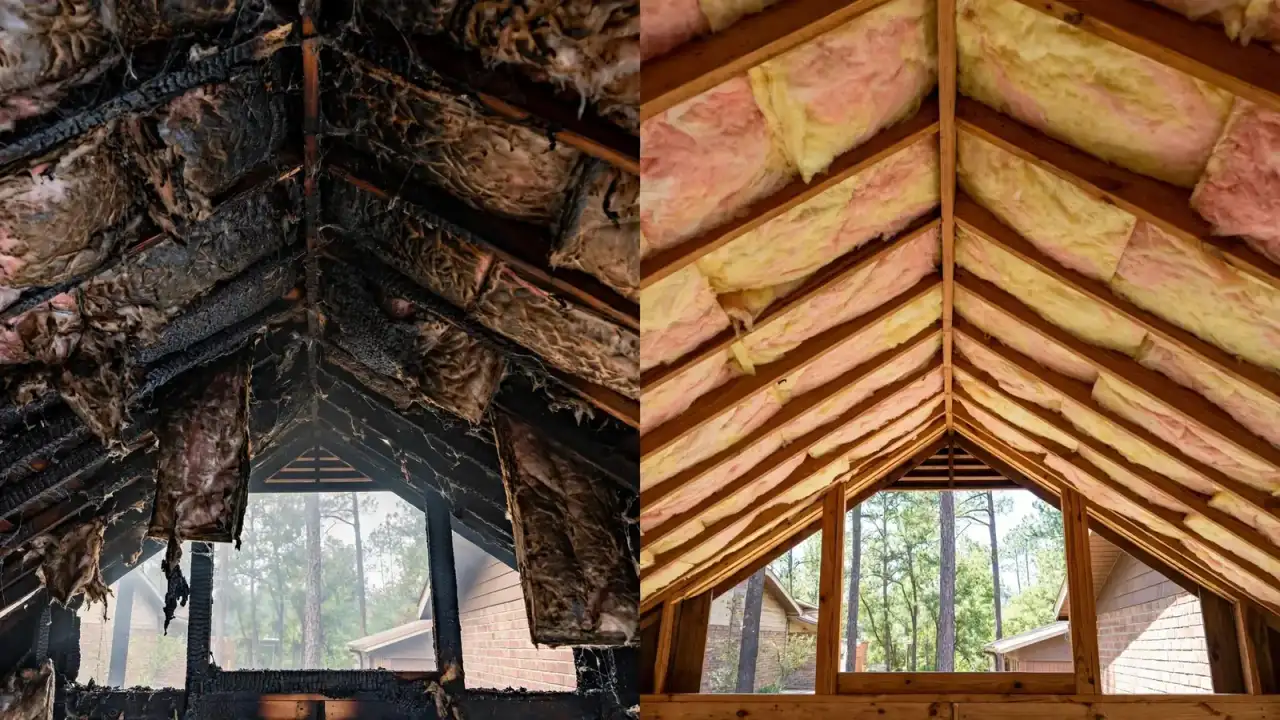
Smoke rises into the attic and settles in closed spaces, and those areas often release odor long after the main rooms are clean.
FAQ
Emergency odor removal questions
Can I sleep in my house tonight if it only smells of smoke?
That depends on how strong the smell is and what the fire department said. Smoke gases can irritate lungs, so many people stay elsewhere until the air is cleaned up.
Will opening every window get rid of the smoke smell?
It helps in the short term, but the smell lives in residue on surfaces. It comes back until that residue is cleaned and, where needed, sealed.
Is it okay to turn on the air conditioning to clear the smoke?
Not yet. The blower can carry smoky air through the ducts to every room [2]. Ask the contractor when it is safe to run.
Who can I call at night about a strong smoke smell?
Calls to this number are answered around the clock and connect to an independent local contractor who can talk through first steps on that call.