Who do I call in Charlotte right after a house fire is put out?
Call a fire restoration contractor once the fire department has released the house. The first jobs are securing broken openings and starting to dry firefighting water, because both get worse by the hour. Calls to this number are answered around the clock and connect you to an independent local contractor.
Key facts: Emergency Fire Restoration
- Smoke and hot gases travel through doorways, returns and attic openings, so rooms far from the fire can carry residue soon after the fire starts [1].
- The American Red Cross says not to go back inside a burned home until the fire department confirms it is safe [2].
- EPA advises drying wet materials within about 24 to 48 hours to limit mold growth, which is why firefighting water is treated as urgent [4].
- Structural repairs after a Charlotte fire may need a permit from Mecklenburg County Code Enforcement, while cleaning alone usually does not [5].
The first hour
First-hour priorities once the flames are out
- 1
Wait for the all-clear
Stay outside until the fire department tells you the structure can be entered. Smoldering spots, weak floors and damaged wiring are not always visible from the doorway [2].
- 2
Account for people and pets
Make sure everyone who lives in the house is safe and has somewhere to sleep tonight. Pets may hide after a fire, so check closets and crawl spaces only once entry is allowed.
- 3
Leave utilities alone
Do not switch the power, gas or water back on yourself. Ask the fire department or the utility which systems were shut off and who should restore them.
- 4
Photograph before touching
Walk the outside, then each room you are allowed into, and take wide photos and close-ups. Pictures taken before anything moves help your insurance claim.
- 5
Look for open roofs and windows
Note any broken glass, forced doors or holes in the roof. These openings are the most time-sensitive problem, because rain and intruders can reach the inside.
- 6
Call for a restoration contractor
Describe the fire, the water and the openings. The contractor can tell you what should happen tonight and what can wait until daylight.
What makes it urgent
Signs your fire damage cannot wait until morning
Some problems grow worse every hour. These are the ones restoration crews treat first.
The house is open to the weather
Broken windows, a forced door or a vented roof let rain, wind and animals in. Charlotte storms can arrive quickly in summer.
Water is standing or dripping
Hose water soaks ceilings, floors and the crawl space. Wet materials can begin to grow mold in a day or two [4].
Nobody can stay in the house
An empty, damaged home draws trespassers. Securing it protects belongings left inside.
Residue is on metal and plastic
Acidic smoke residue starts to pit fixtures and yellow plastics within days, especially in humid air.
The heating or cooling system ran
A system that ran during or after the fire may have pulled smoke through the ducts into every room [1].
When you call
How a 24/7 call and the first visit unfold
Calls to this number are answered around the clock. Your call connects directly to an independent restoration contractor who serves Charlotte, and you talk with that person on the same call. Tell them where the fire started, whether the fire department broke windows or cut the roof, and whether water is still dripping. Their answers help you decide on the first steps for the board-up and tarping service.
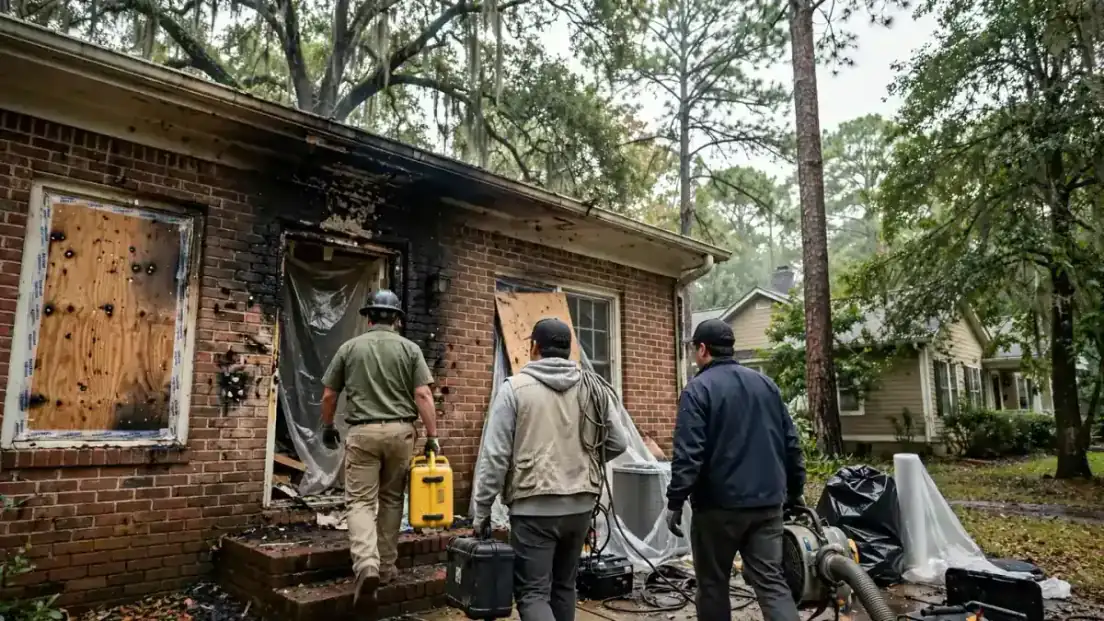
When a crew comes out, the usual order is to make the house safe and closed first. They walk the outside, cover open windows and doors, and tarp any hole in the roof. Then they look inside for standing water and start pulling it out, because drying cannot begin until the bulk water is gone. The approach to that step is set out on the page about water damage from firefighting.
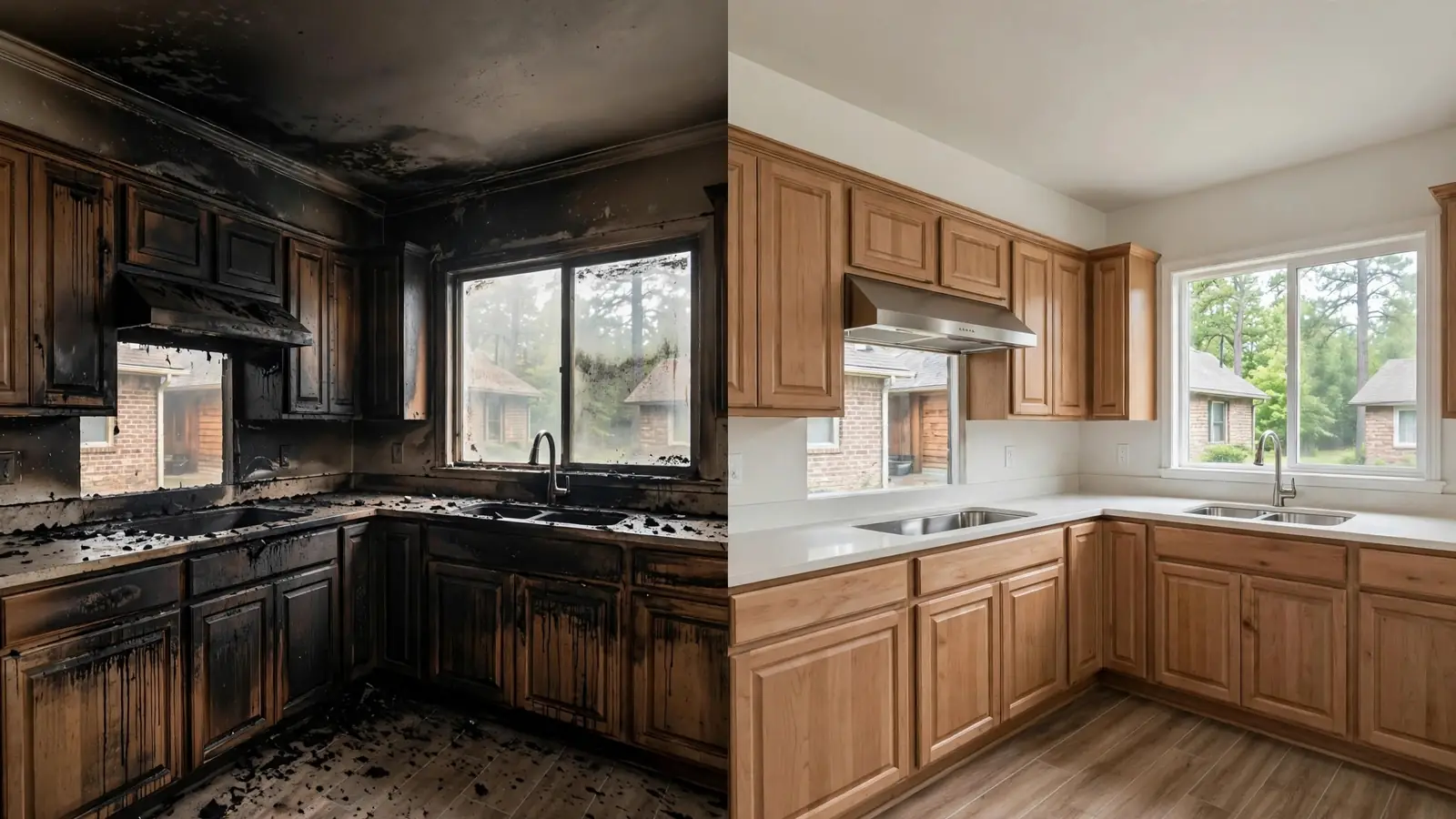
Cleaning smoke and soot comes next, once the structure is secure and drying is under way. Crews photograph and document the damage as they go, which helps the adjuster understand what happened. Arrival timing depends on the contractor and the time of night, so ask about it on the call rather than assuming.
Charlotte factors
Why Charlotte homes need quick action after a fire
Many Charlotte houses, from early bungalows in Dilworth and Plaza Midwood to 1990s subdivisions, sit on vented crawl spaces. Firefighting water drains through the floor and lands there, where it dries slowly. A local example is described on the page about firefighting water damage in Ballantyne.
Summer here is hot and humid, and thunderstorms can drop heavy rain in a short time. A roof opening left uncovered overnight can let in more water than the fire hoses did. Humid air also speeds up the corrosion that acidic smoke residue causes on metal and plastic.
Older homes with plaster, heart pine and original trim are worth keeping, but they reward careful work. For a neighborhood view of that, see soot removal in Plaza Midwood.
Securing first
Closing up the house is the first job
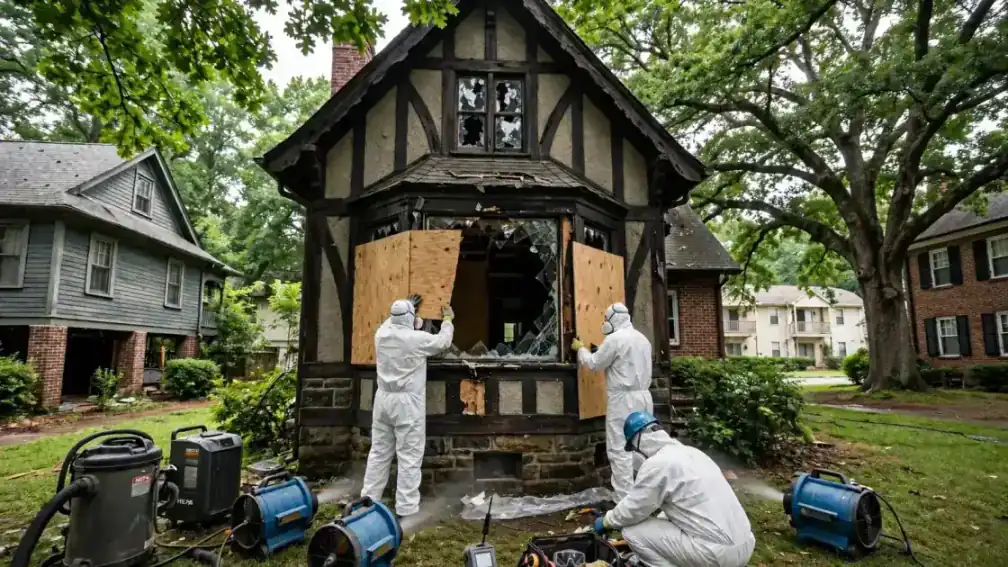
A secured house is a protected house. Plywood over broken windows and doors keeps rain out and stops anyone from walking in while you are away. A tarp fastened over the ridge keeps the attic and ceilings below from soaking in the next storm.
Your insurer will usually expect you to take reasonable steps to stop more damage, and securing openings is one of them. Keep any receipts and photos the crew gives you. The smoke damage cleanup service begins once the house is closed.
Drying second
Pulling out water before it spreads
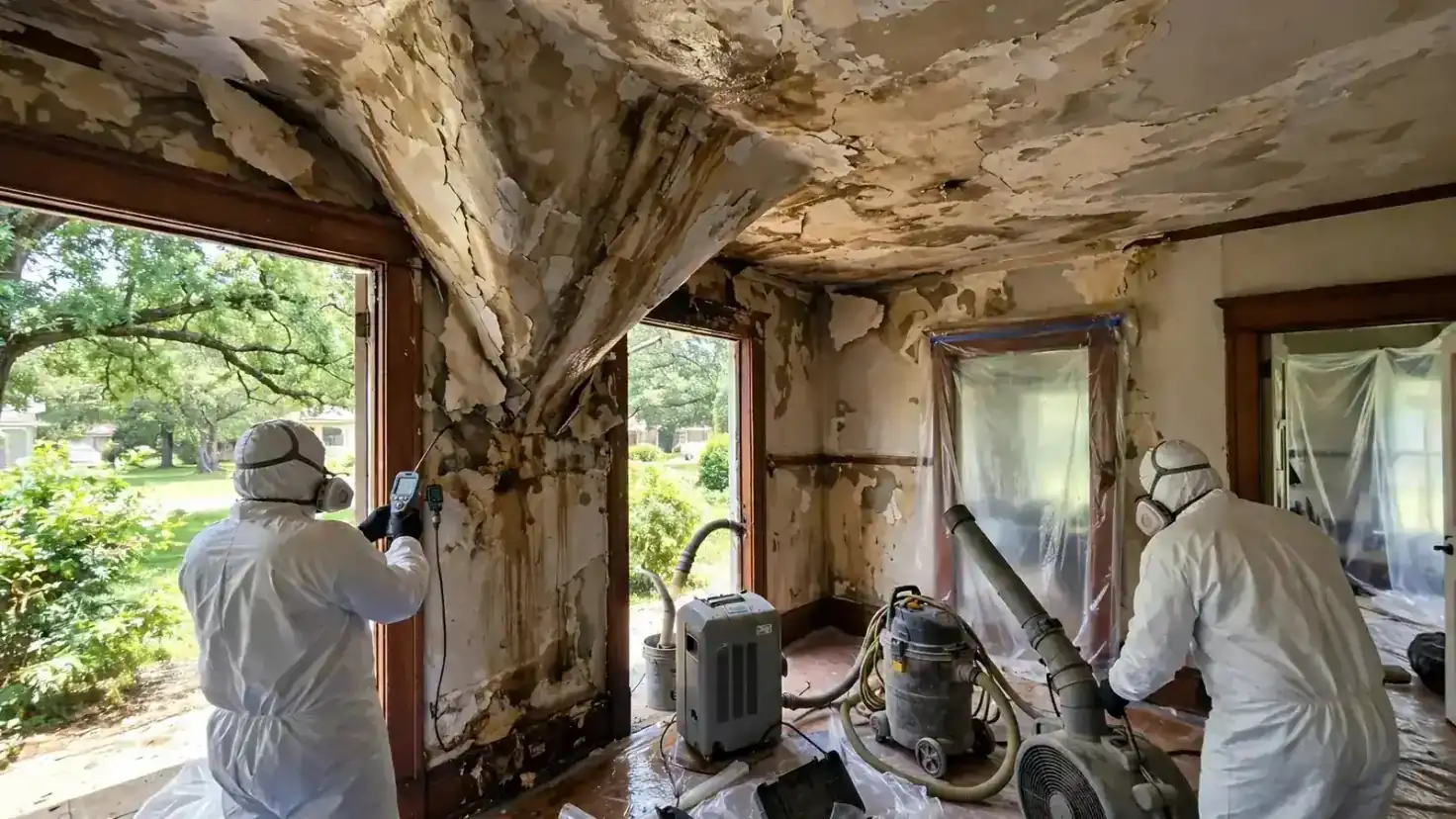
Hose water does not stay where it lands. It runs down wall cavities, through ceiling drywall and into the crawl space. Crews extract what they can, lift soaked carpet pad and set up dehumidifiers and air movers.
Moisture readings are taken each day so drying can be adjusted. Treat wet ceilings with care, because saturated drywall can fall without warning. For a step-by-step view of the days that follow, read what to do after a house fire.
Keep these close
Things to gather for the first call
- The address and the best way to reach the house tonight
- Where the fire started and which rooms were affected
- Whether windows, doors or the roof were opened by firefighters
- Whether water is still dripping or standing anywhere
- Your insurance company and policy number, if you have them
- Any instructions the fire department gave you about utilities
- Photos you have already taken of the damage
After tonight
The days that follow the first night
Once openings are covered and drying equipment is running, the pace changes. The next few days are about measuring, documenting and planning. Crews check moisture each day, note which materials are drying and which need to come out, and begin listing what can be cleaned and what will need replacing.
This is also when your insurer usually sends an adjuster. It helps to have your photos, the crew's notes and a rough list of damaged belongings ready. Our guide on working with your insurance adjuster explains what that visit tends to cover.
Think about where you will stay. Even a small fire can leave a home unpleasant to live in while cleanup goes on. If you are unsure whether it is reasonable to stay, talk it through with the contractor and look at the questions in our safety guide.
FAQ
Emergency fire restoration questions
Can someone help me at two in the morning after a fire?
Calls to this number are answered 24/7, including late at night. Your call connects to an independent local contractor who can talk through what needs to happen now and what can wait until daylight.
What gets done first on the night of a fire?
Usually the house is made safe and closed. Broken windows and doors are boarded, roof holes are tarped and standing water is removed so drying can start.
Should I start cleaning soot myself tonight?
It is better not to. Wiping soot often smears it deeper, and sooty air is hard on the lungs. Focus on safety, photos and securing the house, and leave cleaning to the crew.
Do I need to talk to my insurer before calling?
You can do both. Many people call a contractor and their insurer on the same night. Ask your insurer what they need from you and keep records of any work done to protect the home.