
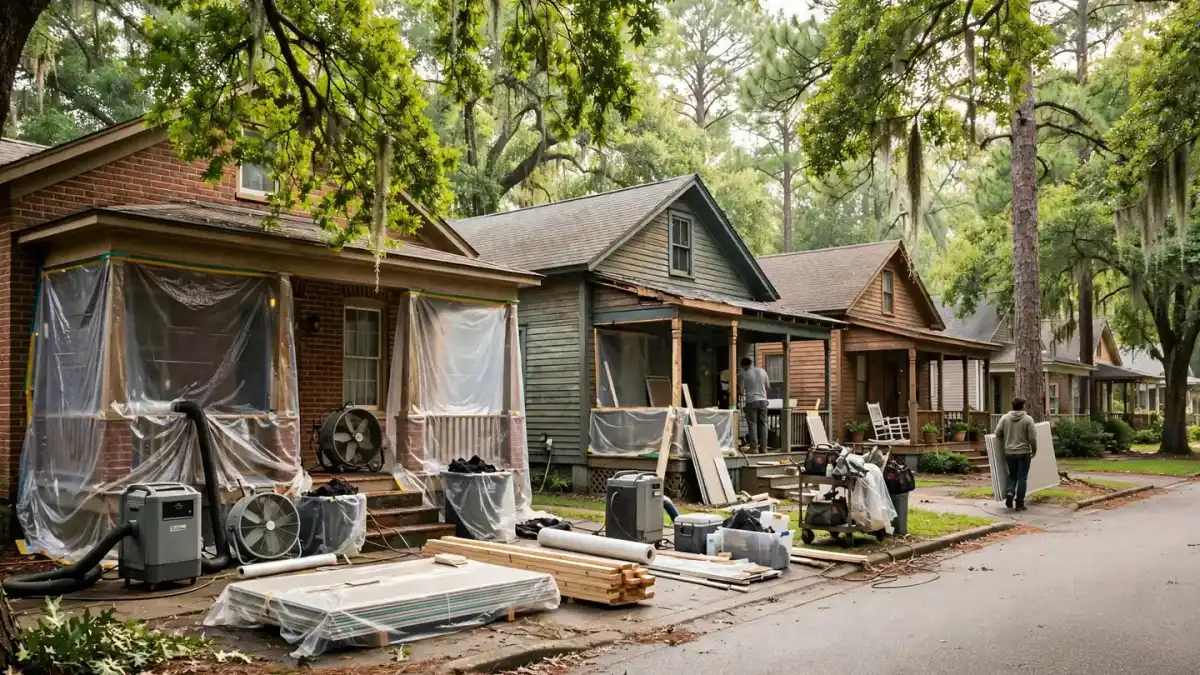
Key facts: Soot Removal in Plaza Midwood
- Soot is made mostly of fine carbon particles formed when fuel burns incompletely [1].
- The EPA notes that fine particles can reach deep into the lungs, so soot cleanup calls for protective gear [2].
- Plaza Midwood's bungalows were built mostly between the 1910s and 1940s, so paint and some older materials may need testing before soot work disturbs them [6].
What soot looks like in a Plaza Midwood bungalow
Soot from burning wood, furniture and plastics varies. Dry, powdery soot from a hot fire wipes off fairly easily. Oily, black soot from burning plastic and foam smears and needs special cleaners [1]. Many house fires leave both kinds in different rooms.
In a bungalow, soot tends to be heaviest in the half-story rooms and on ceilings close to the fire. Webs of black residue in corners, sometimes called soot tags, show where smoke lingered.
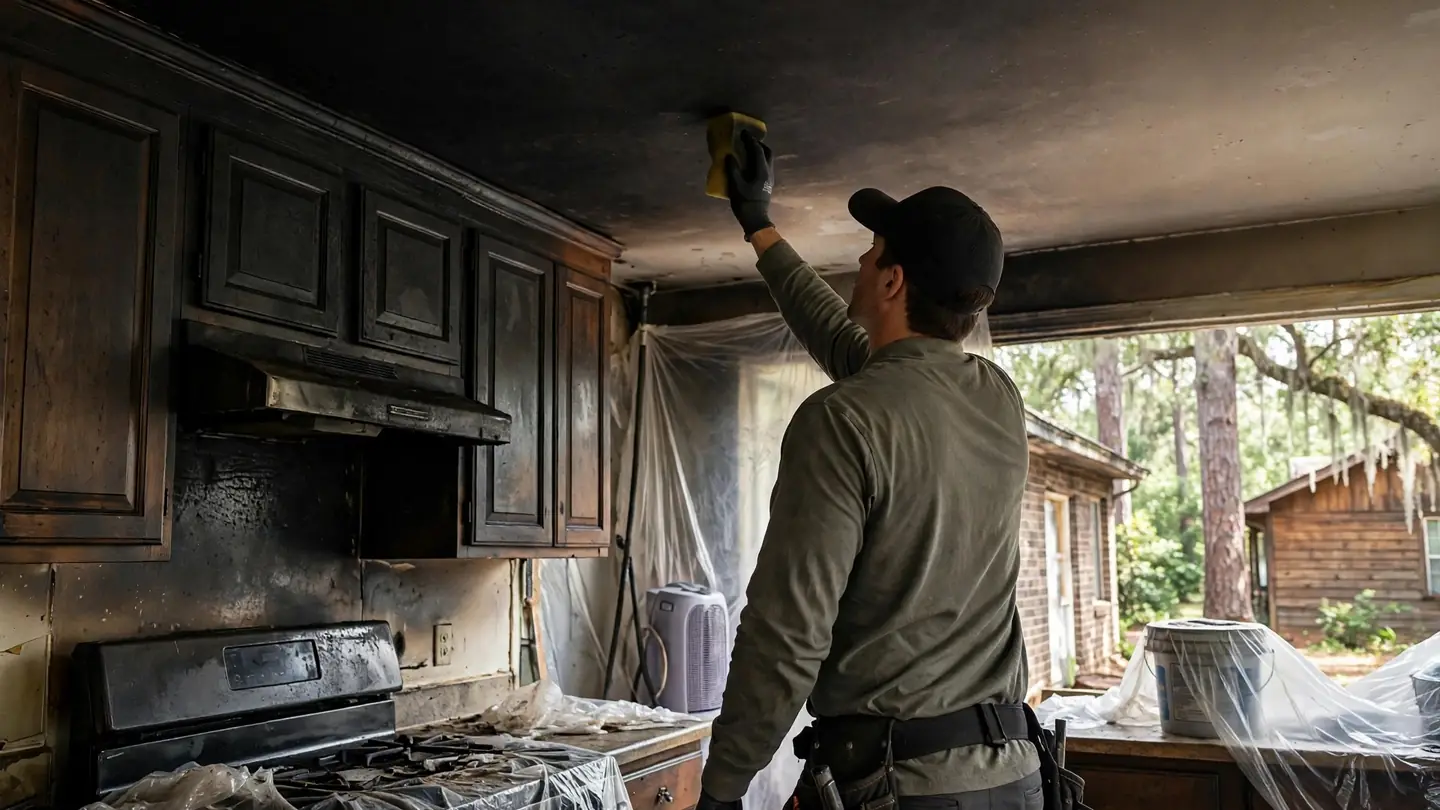
Plaster ceilings and walls in older 28205 houses
Plaster takes soot differently from drywall. Its surface is harder, so light soot can be lifted with dry chemical sponges before any washing. Rough or cracked plaster holds residue in the texture and may need repeated passes.
After cleaning, many owners seal plaster with a stain-blocking primer before repainting. That keeps any remaining soot shadow from bleeding through the new paint.
Brick fireplaces and chimney soot
Many original houses have brick fireplaces. After a house fire, soot can coat the brick face and mantel. If the fire started in or near the chimney, the flue may also need inspection before it is used again.
Brick is porous, so soot settles into it. Cleaning usually starts with dry methods and moves to gentle wet cleaning. Harsh acids can damage old mortar.
Soot removal steps in a Plaza Midwood house
Typical order of work.
- 1
Protect the clean rooms of the bungalow
Plastic barriers keep loose soot from spreading.
- 2
Vacuum loose soot with HEPA equipment
This removes the powder before anything is wiped.
- 3
Dry sponge, then wash
Each surface gets the method that suits its soot and material.
- 4
Seal and repaint where needed
Stain-blocking primer stops shadows from bleeding through.
Soot in attic edges and knee-wall spaces
In a story-and-a-half house, soot gathers in the unfinished space behind knee walls and along the attic edges. Insulation there often needs to come out. Roof boards and rafters may be cleaned by blasting or scrubbing, then sealed.
These spaces are tight and hot in summer. Crews wear respirators and protective suits, and loose material is bagged before it is carried through finished rooms.
Lead and asbestos checks in a pre-1978 Plaza Midwood house
Soot removal can disturb old paint. The EPA's lead-safe rules apply to contractors working on painted surfaces in homes built before 1978 [3]. Old pipe insulation, floor tiles or ceiling textures might contain asbestos; the EPA advises not disturbing suspect materials until they are tested [5].
Testing takes a few days but prevents a bigger problem. A contractor can explain on the phone whether testing makes sense for your house.
What to describe on a Plaza Midwood soot call
This helps judge the job.
- Where the soot is heaviestKitchen, half-story bedrooms, a stairway or the porch.
- Whether it is dry or greasyGreasy soot points to plastics and needs different cleaners.
- Fireplace or chimney involvementIf the fire started near the flue.
- The house's ageSo lead and asbestos testing can be considered.
Soot in a newer Plaza Midwood townhome
Infill townhomes have drywall and modern paint, so soot often comes off more evenly. But plastic-heavy contents, from electronics to vinyl flooring, tend to create oily soot that smears. A dry cleaning pass first, then targeted washing, is common.
Shared walls may carry soot into a neighbor's unit through outlets and gaps. If you share walls, check with your association and neighbor before work starts.
Why you should not wipe soot with a wet cloth
It is tempting to scrub black marks off walls right away. A wet cloth pushes fine soot into paint and plaster pores, making permanent stains. Leaving surfaces alone until a cleaner can work on them usually gives better results.
Our guide to soot on walls and ceilings explains what you can safely do in the first days.
After soot is removed in Plaza Midwood
Soot removal is often followed by odor removal and then paint and repairs. The Plaza Midwood page covers how the neighborhood's older and newer buildings recover.
The U.S. Fire Administration has more on what to expect when going back into a home after a fire [4].
Soot on Plaza Midwood porches and siding
Soot does not stay indoors. Smoke pouring out of broken windows leaves black streaks on wood siding, porch ceilings and the underside of the eaves. On a tight lot, the wall of the house next door can be marked too. Old painted wood needs gentle cleaning by hand, since strong pressure can lift paint that may contain lead.
Exterior soot is usually cleaned after the inside is under way. Covering shrubs and the ground below keeps runoff and paint flakes out of the garden.
FAQ
Soot Removal in Plaza Midwood: questions
Can I clean soot off my walls myself?
Light dusting with a HEPA vacuum can help, but wet wiping often smears soot. Heavy soot is best left to a cleaner.
Does soot always mean the plaster has to be replaced?
No. Most plaster can be cleaned and sealed unless it is burned or loose.
Is soot in a Plaza Midwood house harmful to breathe?
The fine particles can be. The EPA notes they can reach deep into the lungs, so limit time in sooty rooms.