
Key facts: Soot Removal in Dilworth
Soot on Dilworth plaster
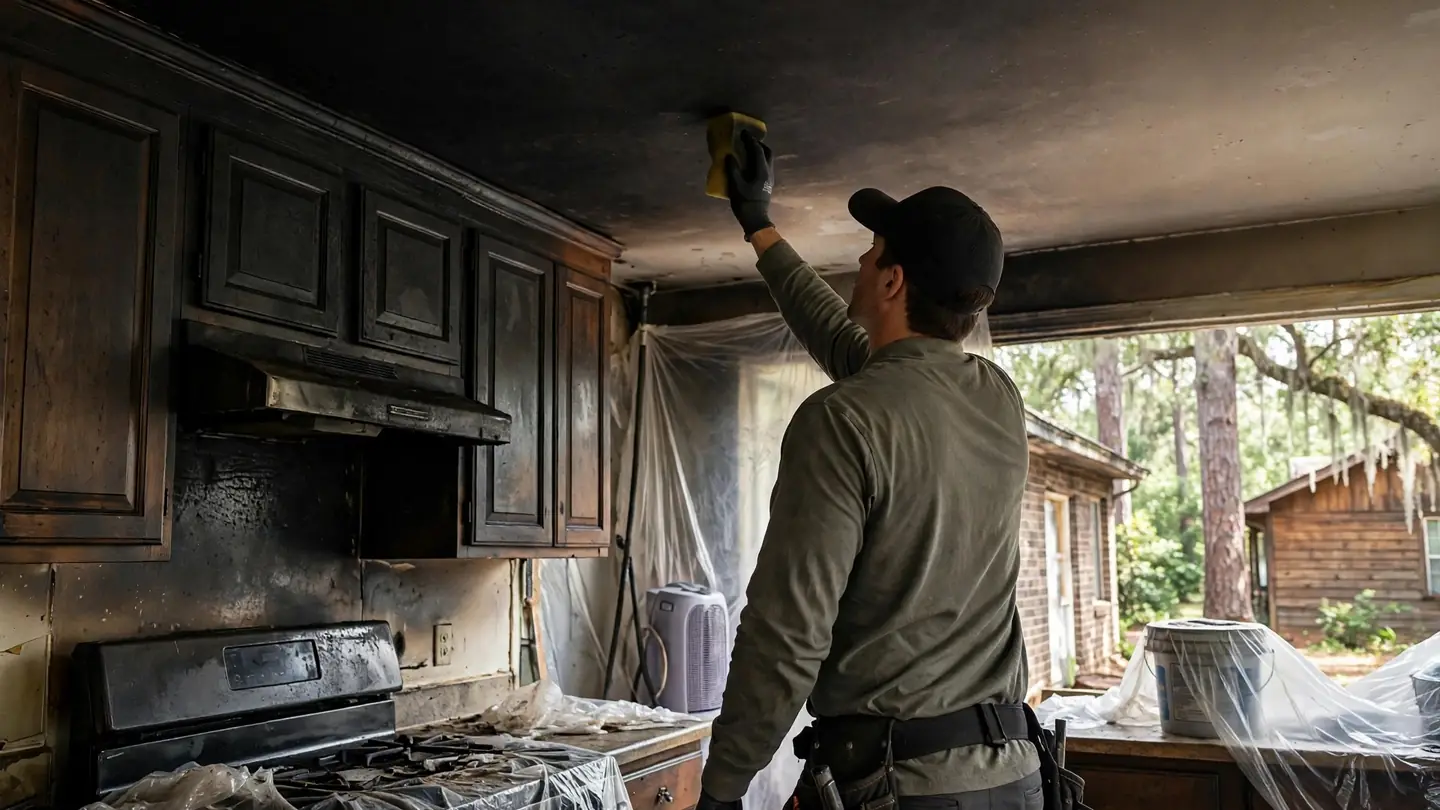
Plaster walls in Dilworth homes are dense and hard [6]. Soot sits mostly on the surface, and dry sponges and HEPA vacuums remove much of it. A light wash with a mild cleaner follows, with fast drying so the plaster does not soak up water.
Old plaster often has a network of fine cracks, and soot works into them. After cleaning, a stain-blocking primer seals what remains before repainting.
Soot across Dilworth heart pine boards
Many Dilworth floors are original heart pine or oak. Soot settles on the finish and into the gaps between boards. HEPA vacuuming first, then a cleaner suited to the finish, often restores light soot damage.
Heavy soot or water damage may mean sanding and refinishing. Old floor finishes and nearby painted baseboards should be checked for lead before sanding [3].
Soot removal in a Dilworth house
The usual sequence for older homes.
- 1
Check Dilworth materials for lead and asbestos
Test before disturbing old paint, tiles or pipe wrap.
- 2
Vacuum and dry-sponge
Remove loose soot without water.
- 3
Clean each surface with matched products
Plaster, wood, brick and tile all need different cleaners.
- 4
Seal and refinish
Primer on plaster, refinish floors if needed.
Painted trim and doors
Window casings, baseboards and doors in Dilworth houses are usually painted wood with many coats. Soot can be washed from sound paint. Where paint is peeling or blistered from heat, scraping it creates dust that may contain lead [3].
Contractors doing that work must contain and clean dust under EPA rules. Keep children and pets out of the area.
Brick and tile surfaces
Brick fireplaces and tile hearths, bathrooms and kitchens are common in Dilworth homes. Soot in rough brick and grout lines needs masonry cleaners and soft brushes, not harsh pressure that can damage old mortar.
Old tile can usually be cleaned well. Grout that holds stubborn soot may need deeper cleaning or regrouting.
Soot inside hollow walls
Balloon-framed walls in older Dilworth houses can carry smoke and soot up from floor to attic [6]. Soot inside these cavities cannot be seen but can cause odor later. When walls are opened for repair, the inside surfaces can be cleaned and sealed.
Our smoke odor removal in Dilworth page explains how hidden soot affects odor.
Asbestos in older houses
Old floor tiles, pipe insulation and some ceiling textures in houses of this age can contain asbestos [5]. Cleaning soot from the surface does not usually disturb it, but removing or breaking the material can.
The EPA recommends having suspect materials tested before removal. Your contractor can arrange this.
What not to do with soot in a Dilworth house
Simple steps while you wait.
- Do not scrub plaster with wet ragsWater and pressure can smear soot and damage plaster.
- Do not sand floors or trimOld paint may contain lead.
- Do not remove old floor tilesThey may contain asbestos.
- Do not run the heating or coolingFans spread soot through the house.
Soot and health
Fine particles in soot can be breathed deep into the lungs [2]. During removal, crews wear respirators and run air scrubbers. Family members, especially children and people with breathing problems, should stay out of the area.
The U.S. Fire Administration advises waiting for the fire department to say a home is safe before reentering [4].
Where soot removal fits
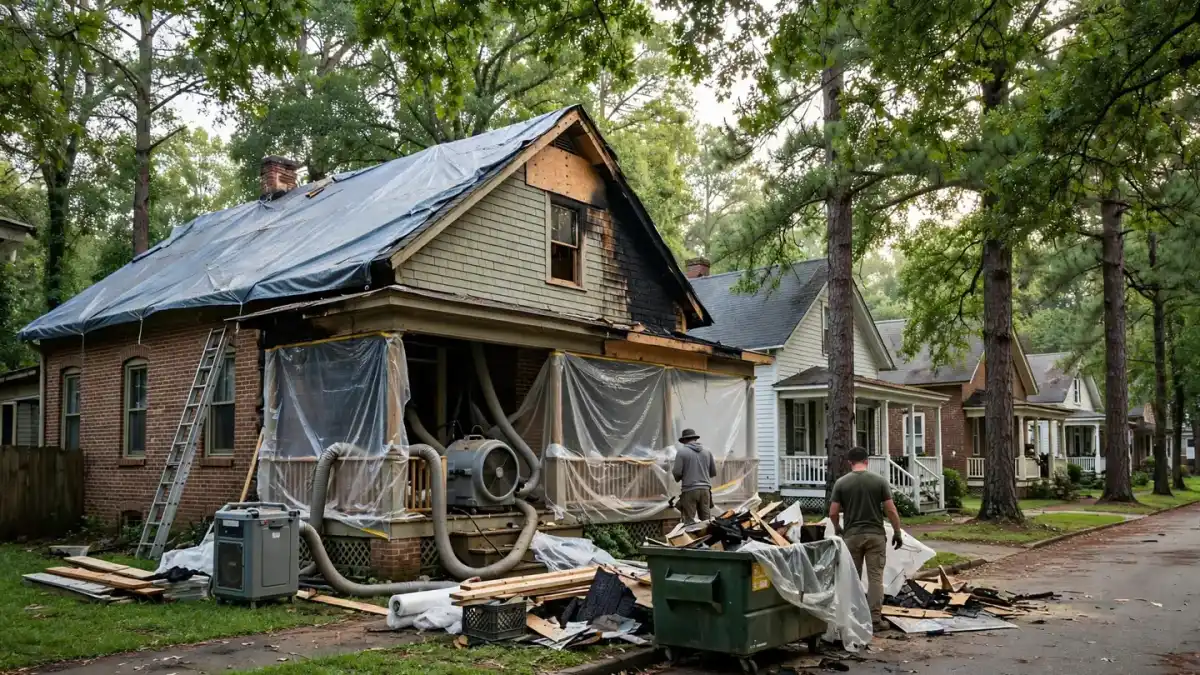
Soot removal follows board-up and drying. Our board-up and tarping in Dilworth page explains securing older homes first. The Dilworth page explains local approvals.
The soot on walls and ceilings guide helps you understand the residue before your contractor arrives.
Bungalow built-ins and soot in Dilworth
Craftsman bungalows near Latta Park and along East Boulevard often have built-in bookcases, colonnades between rooms and window seats. Soot drifts into the open shelves and onto the tops of the columns, where it is easy to miss. These pieces are usually stained wood under an old varnish or shellac, which can cloud if a strong solvent touches it.
Crews vacuum the shelves first, then test a mild cleaner on the back of a shelf before working on the visible faces. Glass doors on the cases are removed and washed separately.
Attics and porches after soot in Dilworth
Because older walls can act like chimneys, the attic above a Dilworth fire often holds more soot than the rooms below it. Loose insulation that is blackened is usually bagged and replaced, and the rafters and roof boards are vacuumed and, where needed, sealed. Porch ceilings of painted beadboard also catch soot that pours out of open windows and doors.
Beadboard has many narrow grooves, so it is vacuumed and cleaned with soft brushes. Peeling paint on porch ceilings should be treated as possible lead paint before anyone scrapes it.
FAQ
Soot Removal in Dilworth: questions
Can soot be cleaned from my Dilworth plaster?
Usually yes. Plaster is dense and cleans well with dry sponges, a light wash and a sealing primer.
Do my old floors need sanding after soot?
Not always. Light soot often cleans from the finish. Heavier damage may need refinishing after a lead check.
Is asbestos a risk during soot removal?
Surface cleaning usually does not disturb it. Removing old tiles or pipe wrap could, so test first.
Sources and citations
- [1]Wikipedia: Soot
- [2]U.S. EPA: Particulate matter (PM) basics
- [3]U.S. EPA: Lead renovation, repair and painting program
- [4]U.S. Fire Administration: Home fire prevention and safety
- [5]U.S. EPA: Protect your family from asbestos
- [6]North Carolina State Historic Preservation Office: Dilworth Historic District nomination