
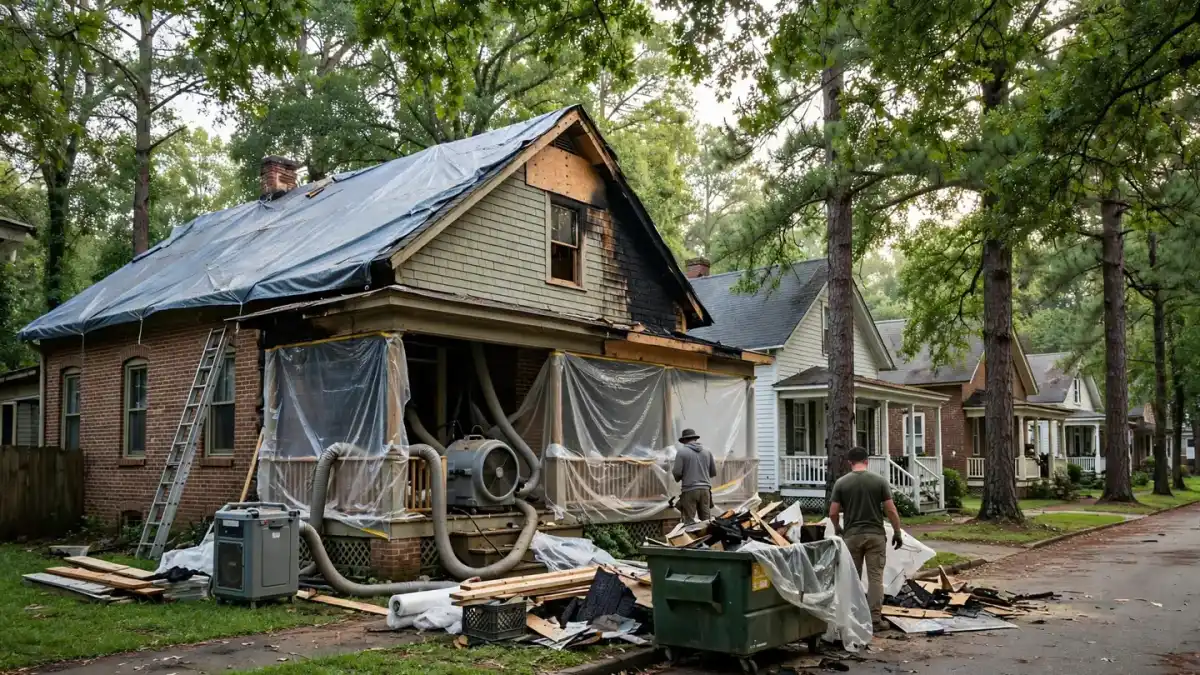
Key facts: Firefighting Water Damage in Dilworth
Wet plaster ceilings in Dilworth
Plaster on wood lath can hold a lot of water. When firefighting water soaks a plaster ceiling, the plaster may lose its grip on the lath and sag. A sagging plaster ceiling is heavy and dangerous. Nobody should stand under it.
Crews may support the ceiling or remove the loose section under control. Plaster that stays attached can often dry in place, though it may need repair later by a plasterer.
Water in Dilworth's original floorboards
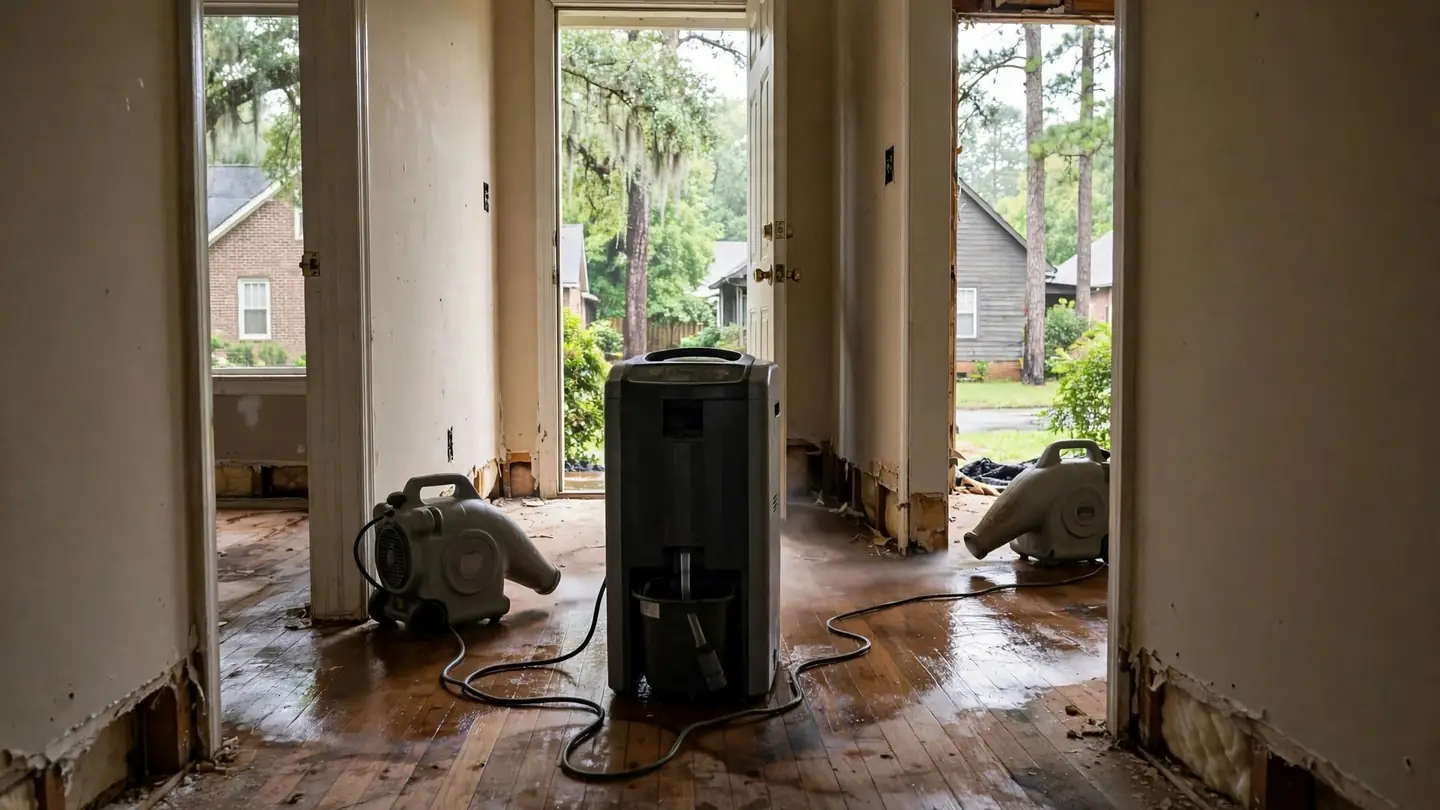
Original wood floors in Dilworth absorb water and can cup or buckle. Drying them slowly and evenly, from above and from the crawl space below, gives them the best chance of lying flat again.
Boards that stay cupped after drying may flatten with time or with sanding. Floors that buckle badly may need sections replaced with matching wood.
Drying a Dilworth house
A common order in older homes.
- 1
Secure the Dilworth house and utilities
Make power safe and check ceilings for sagging.
- 2
Pump water from Dilworth floors and crawl space
Pumps and extraction tools on floors and in the crawl space.
- 3
Set up drying from above and below
Fans and dehumidifiers in rooms and the crawl space.
- 4
Track moisture daily
Readings on plaster, floors and framing until dry.
The crawl space under the house
Most Dilworth homes sit above a crawl space. Water from firefighting drains down through the floor and collects there. A wet crawl space in Charlotte's humid climate keeps the whole house damp and can grow mold.
Removing standing water, pulling out wet insulation and running dehumidifiers below the floor are key steps. A vapor barrier on the ground may be replaced if it was damaged.
Charlotte humidity and slow drying
Summers in Charlotte are long and humid. Older houses without central air can be especially hard to dry because outside air brings in more moisture. Closing windows and running dehumidifiers is usually more effective than airing out.
The EPA recommends drying wet materials within a day or two to limit mold [1]. With plaster and old wood, drying often takes longer, so moisture readings guide the work.
Electrical safety in older wiring
Mold prevention
Signs of trapped water in a Dilworth home
Mention any of these on your call about a Dilworth house.
- Plaster ceiling bulging or crackingWater may be trapped above it.
- Floorboards cuppingMoisture is still in the wood.
- Musty smell from the crawl spaceWater or mold below the floor.
- Paint bubbling on wallsWater inside the plaster or lath.
Contents and furnishings
Furniture, rugs and papers soaked during firefighting should be moved out of wet rooms. CDC guidance says porous items that cannot be cleaned and dried should be discarded [3].
Antique furniture should be dried slowly to avoid cracking. Specialists can help with valuable pieces.
What comes next
Once the house is dry, smoke cleanup can begin. Our smoke damage cleanup in Dilworth page explains cleaning older finishes.
The Dilworth page covers local approvals and how older materials shape the work.
Lead and asbestos when wet Dilworth materials come out
Drying an older house often means removing wet baseboards, soaked plaster or crawl space insulation. In a Dilworth home built before 1978, painted trim may contain lead, and old pipe wrap or floor tiles may contain asbestos. Tearing these out while they are wet can still release dust or fibers once they dry.
Contractors should follow EPA lead-safe practices on painted parts and test suspect materials before removal, as the Dilworth page notes. Ask your contractor how they plan to contain debris while the drying equipment is running.
Brick piers and foundations under Dilworth houses
The brick piers and foundation walls that hold up many Dilworth houses are tough, but old mortar is softer than modern mix and can wash out when large amounts of water pour through. Water that stands against the foundation also keeps the crawl space damp for weeks if the ground drains slowly.
Once the water is gone, a look at the piers, the sill and the floor joists from the crawl space shows whether anything shifted or softened. Wood that stays wet near the ground is the first place rot and insects appear, so it should be dried and checked before the floors above are refinished.
FAQ
Firefighting Water Damage in Dilworth: questions
My Dilworth plaster ceiling is sagging. What should I do?
Stay out from under it. A crew can support it or remove the loose section under control.
Can my heart pine floors be saved after water?
Often yes, with careful drying from above and below. Some boards may need replacing.
Why does the crawl space matter?
Water collects there and keeps the whole house damp, which can lead to mold.
Sources and citations
- [1]U.S. EPA: A brief guide to mold, moisture and your home
- [2]U.S. Fire Administration: Home fire prevention and safety
- [3]CDC: Mold cleanup after a disaster
- [4]Mecklenburg County Code Enforcement
- [5]Wikipedia: Water damage
- [6]North Carolina State Historic Preservation Office: Dilworth Historic District nomination