
Key facts: Firefighting Water Damage in University City
Water in University City units below a fire
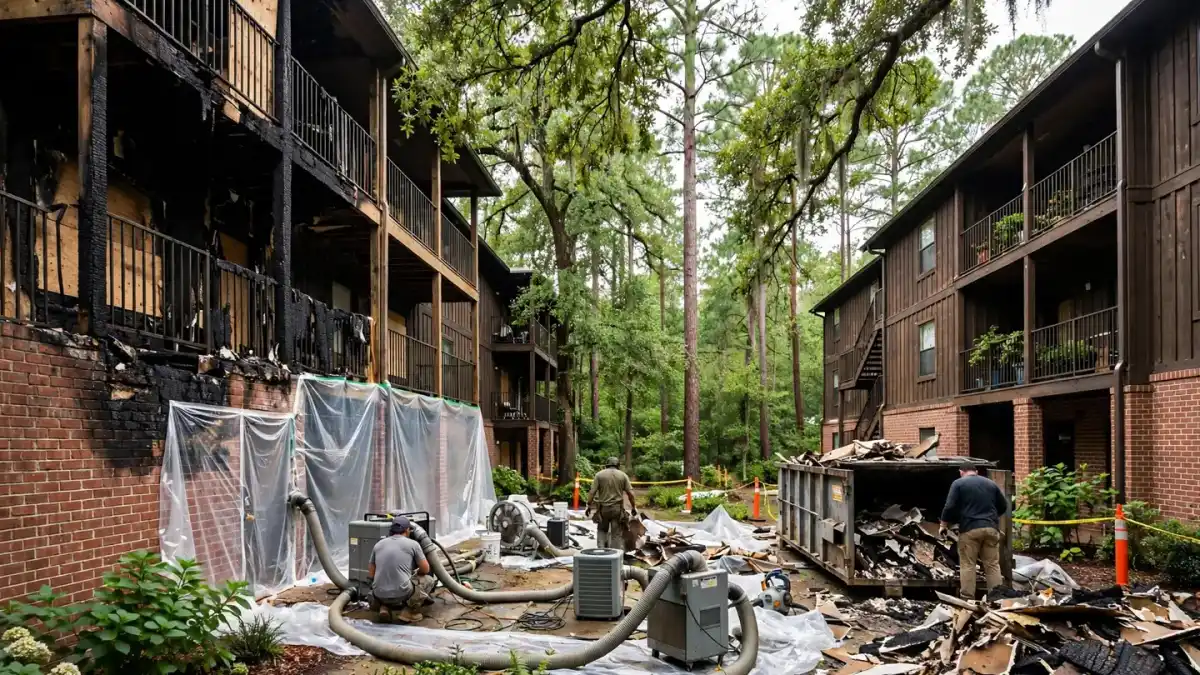
Water from fire hoses and sprinklers flows down through floors into the units below. Ceilings may sag, light fixtures may drip and carpet may be soaked. Residents of those units often have to leave while drying happens.
Management usually arranges drying of the building, while renters deal with their belongings.
Sprinklers in newer University City buildings
Newer apartment buildings often have sprinklers. They limit fire spread but release water that reaches units below. Drying usually covers several units at once.
Sprinkler water is usually cleaner than hose water, but it still soaks drywall and carpet.
Two-story houses after firefighting
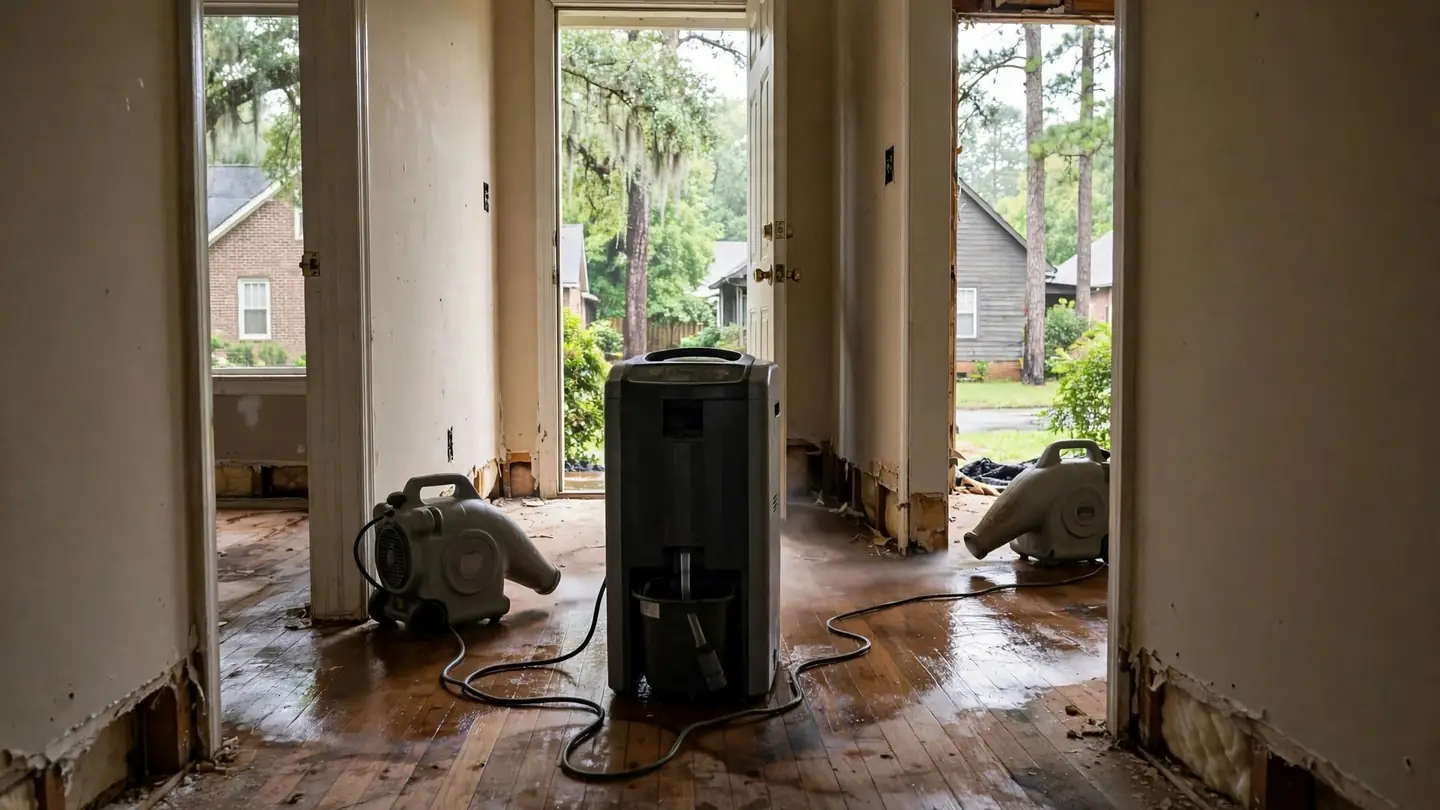
In subdivision houses, water from upstairs firefighting comes through ceilings below. Drywall that is soaked usually comes out above the wet line. Carpet and pad are often removed.
Moisture meters show where water spread.
Drying order for a University City home
A typical sequence.
- 1
Make the University City unit safe
Check sagging ceilings and electrical hazards.
- 2
Remove standing water from floors
Extraction from carpet and hard floors.
- 3
Cut out wet drywall and remove pad
Materials that cannot dry are removed.
- 4
Run drying equipment with readings
Until moisture is normal.
Humidity and mold risk
Charlotte's humid weather slows drying and helps mold grow. The EPA says drying within 24 to 48 hours prevents most mold [1]. In apartment buildings, drying several units at once needs a lot of equipment.
If you notice musty smells or spots, mention it on your call.
Renters and water damage
Renters insurance generally covers belongings damaged by water from firefighting [7]. The landlord's policy covers the building.
Move belongings out of wet units as soon as it is allowed.
What to mention on a University City water call
These help plan drying.
- Which floor you live onUnits below the fire are often wettest.
- Whether building sprinklers went offAnd how many units are affected.
- Ceilings bowing in your unitSo crews plan safely.
- Your property manager's contactFor coordinating drying.
Stairwells and breezeways
Water runs down stairwells and breezeways, soaking shared spaces. Management usually dries these areas. Slippery surfaces can be a hazard.
Report any wet shared spaces to management.
Permits for University City water repairs
Drying usually does not need a permit, but rebuilding often does through Mecklenburg County Code Enforcement [4].
Ask management to have an electrician check wet outlets and fixtures in your unit before power is turned back on.
After drying in University City
Once dry, smoke damage cleanup and repairs can start. The University City page explains how shared buildings recover.
Belongings that never touched a flame can still be ruined by soaking, as the U.S. Fire Administration points out [2].
Ground-floor units and slab floors
Ground-floor apartments in University City garden buildings usually sit on a concrete slab. Water from the floors above runs down through the building and spreads across the slab under carpet and vinyl plank. It can soak the bottom of walls in several rooms.
Carpet pad is usually removed, and baseboards may be pulled so wall cavities can dry. Slabs dry slowly in humid weather, so dehumidifiers often run for several days.
Where to stay while a University City unit dries
Drying equipment is loud and runs day and night, and wet units are often not fit to live in. Renters may need somewhere else to stay. Many renters policies cover additional living expenses, and the American Red Cross often helps people displaced by a fire with immediate needs.
Students may be able to get temporary housing help through the university. Ask the campus housing office what is available.
Belongings in wet University City apartments
Beds, couches, rugs and boxes on wet floors soak up water fast. Moving them to a dry room or out of the unit limits damage. Electronics should be unplugged and moved off the floor.
Photograph items before moving them so your renters insurer has a clear record.
Two-story University City houses on crawlspaces or slabs
Subdivision homes in University City sit on either crawlspaces or slabs. With a crawlspace, water from firefighting drains under the house and needs to be dried there too. With a slab, water spreads under flooring and into walls.
Either way, moisture readings guide the drying until materials are back to normal.
Water in University City townhome garages and stairs
Townhomes in University City often have a garage on the ground floor and living space above. Water used on an upper-floor fire runs down the stairs and collects in the garage and entry. Drywall along the stairwell may need cutting at the bottom so the wall can dry.
Items stored in the garage, such as boxes, bikes and tools, should be moved out of standing water and dried.
FAQ
Firefighting Water Damage in University City: questions
Why is my University City unit below the fire so wet?
Water from hoses and sprinklers flows down through floors and ceilings.
Does renters insurance cover water damage from firefighting?
Generally, for your belongings. Check your policy.
How long will drying take in a University City building?
Often several days, longer if many units are affected.
Sources and citations
- [1]U.S. EPA: A brief guide to mold, moisture and your home
- [2]U.S. Fire Administration: Home fire prevention and safety
- [3]CDC: Mold cleanup after a disaster
- [4]Mecklenburg County Code Enforcement
- [5]Wikipedia: Water damage
- [6]Wikipedia: University of North Carolina at Charlotte
- [7]North Carolina Department of Insurance