
Key facts: Smoke Odor Removal in University City
- Cooking is a leading cause of home fires, and small apartment kitchens can fill living areas with smoke quickly [7].
- EPA guidance says ozone generators should not be used where people are present because ozone can damage the lungs [1].
- Carbon filters work by adsorption, holding odor molecules on a large internal surface area [5].
How smoke smell moves between University City units
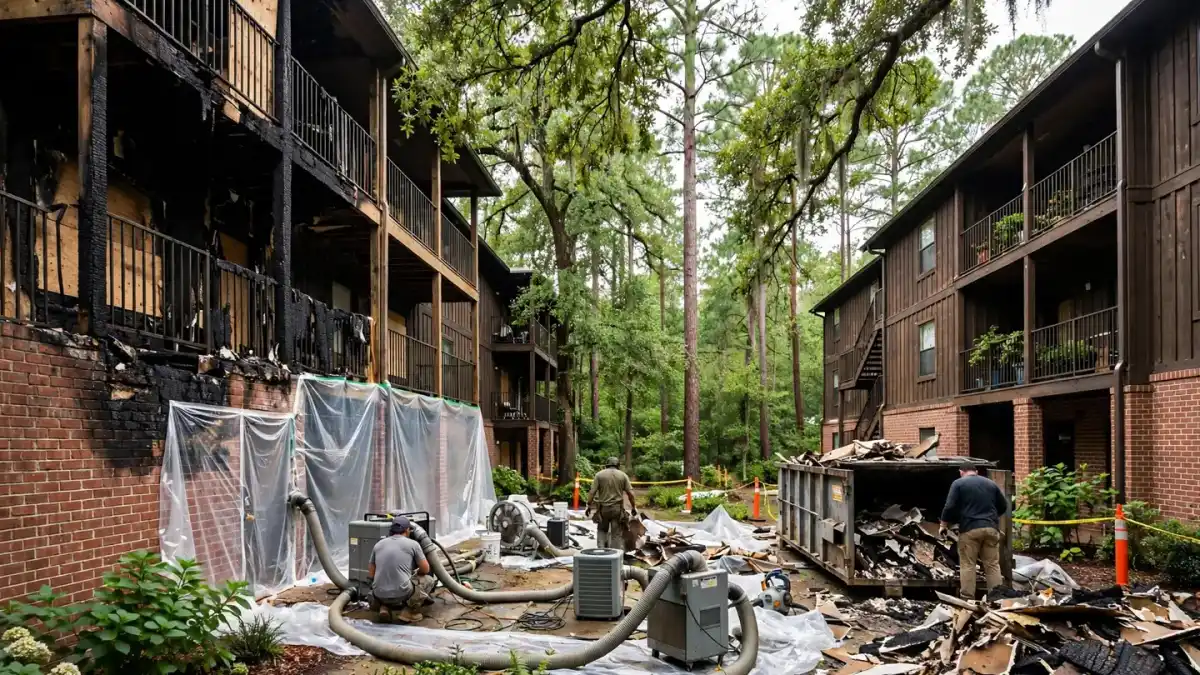
Garden apartment buildings separate units with fire-rated walls and floors, but smoke still finds a way. It travels through the attic over the top floor, through plumbing and wiring chases, around doors onto shared breezeways and through bathroom and kitchen exhaust ducts. Neighbors often notice odor and a light film in closets and bathrooms.
Odor work in a building like this is a building-wide job. Treating only the fire unit leaves smell in the units beside it, and it can drift back.
Apartment cooking fires and grease smoke
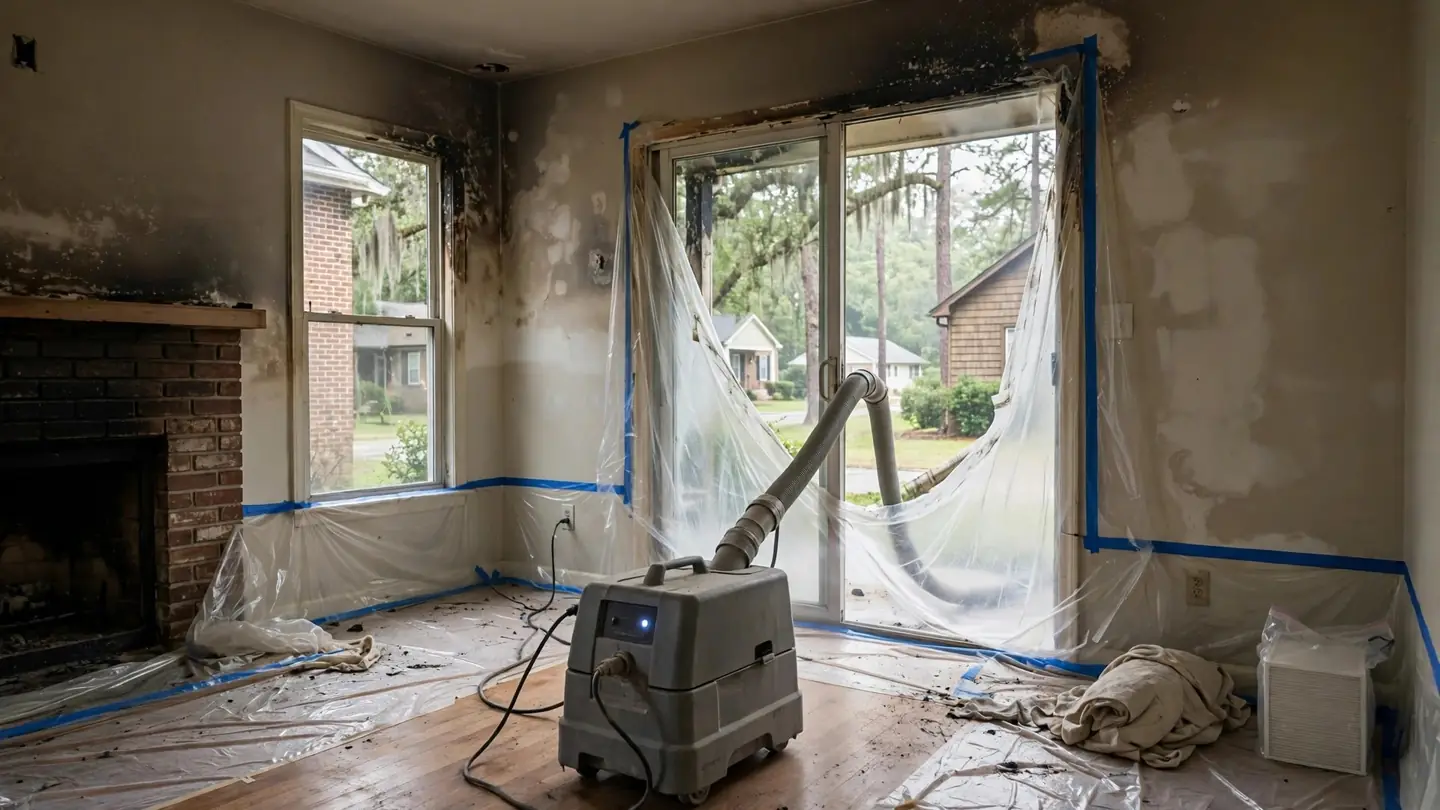
Kitchen fires are common in apartments, and grease and food smoke leave a strong, sticky smell [7]. Cabinets, range hoods, ceilings and the walls next to the stove usually hold the most residue. The smell also gets into fabric furniture and bedding nearby.
Cleaning the kitchen thoroughly, including inside cabinets and the range hood ducting, usually comes before any air treatment.
Renters' belongings and soft goods
Clothing, bedding, couches and backpacks soak up smoke. Many items can be cleaned by contents specialists, while heavily smoked foam cushions and mattresses are usually replaced. Renters insurance, if you have it, generally covers your belongings [6].
Keep a list and photos of what was cleaned and what was thrown away.
Odor removal order in a University City unit
A typical sequence.
- 1
Find smell sources in the University City unit
Kitchen, closets, ducts, shared walls and attic access.
- 2
Remove materials that cannot be saved
Burned items and heavily smoked soft goods.
- 3
Clean surfaces, cabinets and exhaust ducts
So residue does not keep releasing smell.
- 4
Treat the air and seal where needed
Filtration, deodorizing and odor-blocking primer.
Odor in two-story subdivision houses
In a two-story house, smoke from a downstairs fire rises up the stairs into bedrooms. The HVAC system, if it ran, can spread smell to every room. Attic insulation above a burned room can also hold odor.
Duct cleaning, filter changes and checking the attic are often needed to clear the smell.
Treatments and safety
Ozone and hydroxyl machines can break down odor after cleaning. The EPA notes that ozone at effective levels harms health, so no one should be inside during use [1]. Air scrubbers with HEPA and carbon filters can run while people work [3].
Some cleaning products release volatile compounds, so ventilation matters during work [4].
What to mention on a University City odor call
These help the contractor scope the job.
- Whether your unit burned or a neighbor's didOdor from a neighbor's fire is usually lighter.
- Which rooms smell strongestClosets, bathrooms or the kitchen.
- Who manages the buildingShared spaces are the owner's to treat.
- Whether the unit's air system was runningDucts may need cleaning.
Muggy University City summers and lingering smell
Charlotte's humid summers can make smoke smell seem stronger, as moisture in the air carries odor. Damp areas from firefighting water add a musty smell. Drying fully is part of clearing odor.
Running dehumidifiers after cleaning can help.
After odor removal in University City
Odor removal follows smoke damage cleanup and comes before painting. The University City page covers how apartments and houses recover.
Our guide on smoke odor that will not go away explains why smell sometimes returns.
Bathroom fans and dryer vents in University City apartments
Bathroom exhaust fans and dryer vents in apartment buildings often connect to ducts that run through shared spaces. Smoke can enter those ducts from the fire unit and come out in a neighbor's bathroom or laundry closet. A strong smell in a bathroom with no visible residue is a common sign.
Cleaning or replacing fan housings and duct runs, and changing dryer lint traps and vent lines, are often part of odor work in these buildings.
Moving back into a University City unit after odor work
Before moving back in, walk through with management and check closets, cabinets and bathrooms with doors closed for a few minutes. Smell that builds up in a closed space points to a missed source. Running the air system for a while and checking again helps.
If the smell returns after the unit has been closed up, report it in writing so it can be dealt with before your belongings come back.
FAQ
Smoke Odor Removal in University City: questions
Why does my University City apartment smell when the fire was next door?
Smoke travels through shared attics, chases and breezeways. A lighter cleaning usually helps.
Can my couch be saved after an apartment fire?
Sometimes, if smoke was light. Heavily smoked foam is usually replaced.
Who pays for odor treatment in shared building spaces?
Usually the building owner. Ask management what they are arranging.
Sources and citations
- [1]U.S. EPA: Ozone generators that are sold as air cleaners
- [2]U.S. Fire Administration: Home fire prevention and safety
- [3]U.S. EPA: Guide to air cleaners in the home
- [4]U.S. EPA: Volatile organic compounds' impact on indoor air quality
- [5]Wikipedia: Activated carbon
- [6]North Carolina Department of Insurance
- [7]NFPA: Cooking fire safety