

Key facts: Soot Removal in University City
Greasy soot in University City apartments
Plastic-heavy furniture, electronics and synthetic fabrics create oily, black soot that smears [1]. In small apartments, it can coat every surface quickly. Dry cleaning first, followed by degreasing cleaners, usually works best.
Testing a small area shows which method lifts the soot without spreading it.
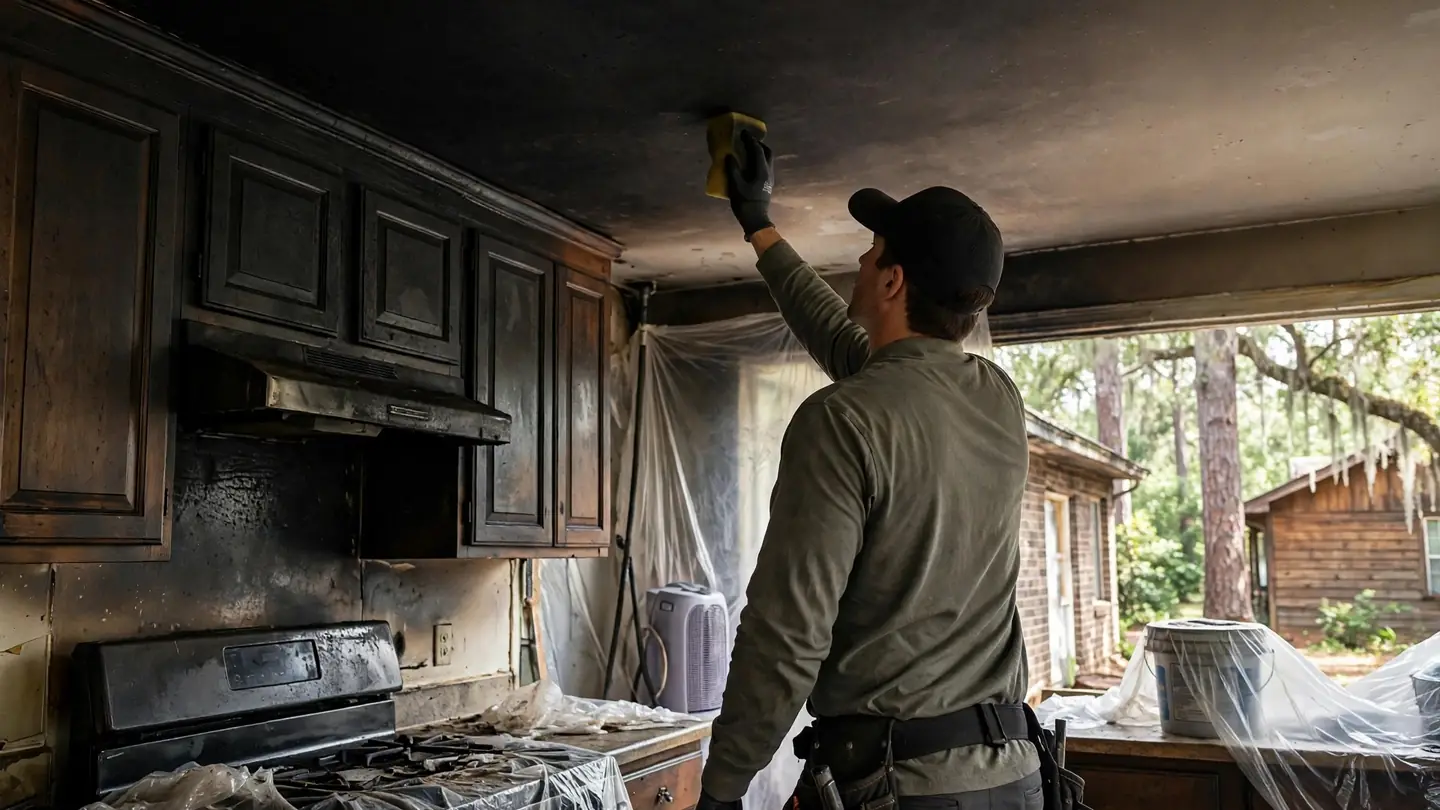
Kitchen soot from cooking fires
Cooking fires leave a mix of grease and soot on cabinets, ceilings and appliances. This residue is sticky and needs cleaners made for it. Range hoods and exhaust ducts often need cleaning too.
Cabinets with heavy residue inside may be replaced.
Soot removal order in a University City unit
A typical sequence.
- 1
Contain soot in the University City unit
Plastic barriers and closed doors.
- 2
HEPA vacuum loose particles
Before any wiping.
- 3
Clean with methods matched to the soot
Dry sponges, then degreasers.
- 4
Seal and paint where stains remain
Stain-blocking primer.
Soot in two-story subdivision houses
In a two-story house, soot rises into upstairs rooms and settles on ceilings and walls. Drywall usually cleans well if it is not blistered. Attic insulation above burned rooms may need removal.
The HVAC system may carry soot to other rooms, so duct cleaning is often needed.
Protective gear and health
Fine soot particles can reach deep into the lungs [2]. Crews wear respirators and protective clothing. Residents should limit time in sooty rooms until cleanup is done.
Opening windows can help, but avoid stirring up soot by sweeping.
What to mention on a University City soot call
These shape the plan.
- Where the University City fire startedGrease soot needs special cleaners.
- Whether soot reached neighboring unitsThrough breezeways or shared walls.
- Electronics in sooty roomsThey may need specialist cleaning.
- The management company or landlordFor shared spaces.
Testing older materials in University City homes
Most University City buildings are newer, but some older homes in the area may have materials that need testing. The EPA advises not disturbing suspect materials before testing [5].
A contractor can tell you on the phone whether testing makes sense.
Why wiping soot can make it worse
Scrubbing soot with a wet cloth smears it into paint. Waiting for proper cleaning usually gives better results.
Our guide to soot on walls and ceilings explains what to do first.
After soot removal in University City
Soot removal is followed by odor removal and painting. The University City page covers how apartments and houses recover.
Before going back in to look at soot damage, read the U.S. Fire Administration's advice on re-entering a home after a fire [4].
Soot inside kitchen cabinets and appliances
After an apartment kitchen fire, soot coats the inside of cabinets, the tops of refrigerators and the inside of microwaves and ovens. Dishes and cookware can usually be washed, but open food near the fire should be thrown out. Cabinets are emptied fully so the shelves and back panels can be cleaned.
Appliances that were close to the fire should be checked before use. Soot in vents and fans can keep releasing smell and residue.
Soot on furniture and electronics in student rooms
Student bedrooms often hold desks, gaming setups, laptops and stacks of books. Soot settles on all of it and can work into keyboards and vents. Electronics should be unplugged and left off until a contents specialist has looked at them.
Books and papers can be dried and cleaned in many cases, though heavily coated ones may need to be replaced.
Soot along the top floor and attic of a University City building
In a garden apartment building, smoke that reaches the shared attic leaves soot on insulation and roof framing over several units. That soot can sift down through light fixtures and ceiling vents. Attic cleaning, and sometimes insulation replacement, is a building owner's job.
Top-floor tenants who see dark marks around ceiling fixtures or vents should report it to management.
Clothing and bedding in University City apartments
Clothing and bedding hold soot and smell. Washing at home can spread soot to the machine and other loads. Contents cleaners use methods suited to each fabric.
Keep a list for your renters insurer.
Soot tracked on shoes and carts between units
In a building with shared breezeways, soot is easily carried on shoes, moving dollies and laundry baskets from one unit to the next. Walk-off mats at unit doors and plastic runners along the breezeway during cleanup cut down on tracking. Residents moving belongings out should bag items before carrying them through clean areas.
Asking management when breezeway cleaning is scheduled lets you time your own move-out so cleaned floors are not marked again.
FAQ
Soot Removal in University City: questions
Why is soot in my University City apartment so greasy?
Plastics and synthetic fabrics burn dirty, leaving oily soot that smears.
Can soot from a neighbor's fire reach my unit?
Yes, through breezeways and shared spaces, usually as a light film.
Should I clean soot off my electronics?
Leave it to a specialist and do not power them on until checked.