
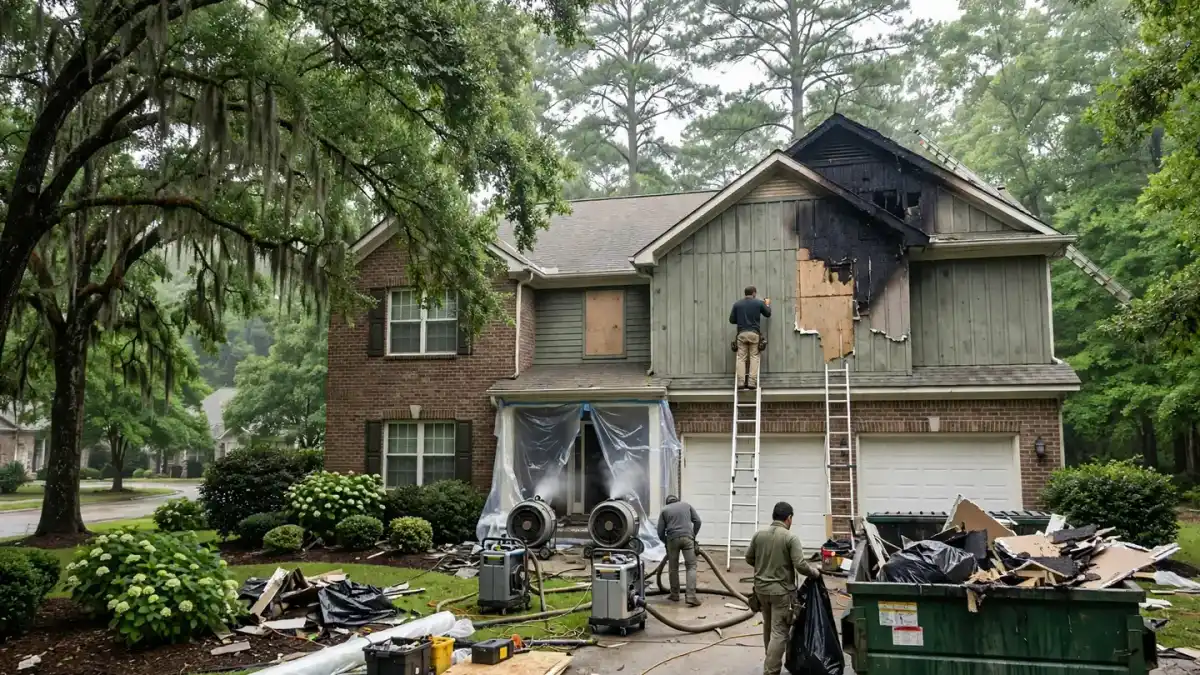
Key facts: Soot Removal in Ballantyne
- Soot is made mostly of fine carbon particles produced when fuel does not burn completely [1].
- Fine particles like those in soot can be inhaled deeply and are linked to heart and lung effects, the EPA reports [2].
- Homes built before 1978 may contain lead paint, but most Ballantyne houses were built later [6].
Oily soot from modern contents
Soot is mostly carbon, but what else it carries depends on what burned [1]. Fires involving plastics, synthetic fabrics and foam, which fill most newer homes, tend to leave a sticky, oily soot. UL research has shown these materials produce heavy smoke as they burn [7].
Oily soot cannot be wiped off like dust. It spreads and pushes deeper into paint if handled wrong. Removal starts with dry sponges and HEPA vacuums, then moves to degreasing cleaners chosen for each surface.
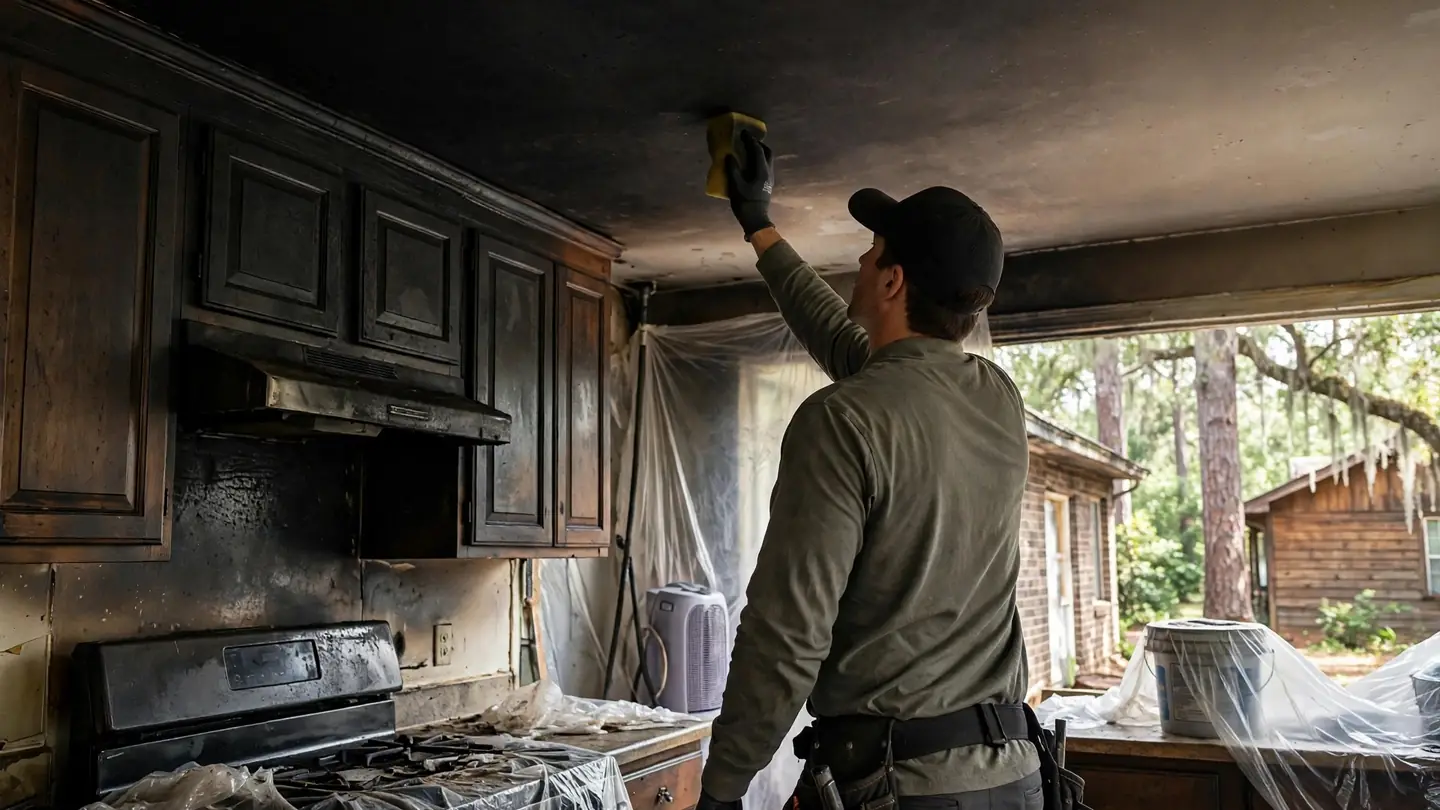
Tall walls and two-story foyers in Ballantyne
Ballantyne homes often have great rooms and foyers that rise two stories [6]. Soot rises with the heat and settles thickly on the upper walls and ceiling, sometimes leaving the lower walls looking almost clean. A crew sets up scaffolding to reach the top and cleans from the ceiling downward so falling residue does not soil cleaned areas.
Ceiling fans, chandeliers and high window ledges collect soot too. These are cleaned or taken down for cleaning at the same stage as the ceiling.
Removing soot in a Ballantyne room
The usual order for each room.
- 1
Protect floors in the Ballantyne room
Plastic and drop cloths go down before cleaning starts.
- 2
Vacuum loose soot
HEPA vacuums remove what sits on top without rubbing it in.
- 3
Use dry chemical sponges
These lift a large share of the residue from flat paint.
- 4
Wash with matched cleaners
Degreasers for oily soot, rinsed and dried thoroughly.
Recessed lights and soot shadows
Many Ballantyne ceilings have recessed can lights. During and after a fire, air moves through the gaps around these fixtures between the room and the attic, leaving rings of soot on the ceiling. Similar dark lines can appear along framing behind drywall, called ghosting.
The rings and lines usually clean partly, and a stain-blocking primer covers what remains. The fixtures themselves are checked and cleaned, and any trim rings warped by heat are replaced.
Stone fireplaces and soot
Gas fireplaces with stone or manufactured stone surrounds are common in Ballantyne family rooms. Rough stone traps soot in its pores and texture, and harsh scrubbing can damage it. Specialty masonry cleaners and soft brushes work better than pressure on natural stone.
The fireplace insert, logs and venting should also be inspected after a fire, even if the fire did not start there, because soot and heat can affect the gas parts.
Vinyl and plastic surfaces
Vinyl windows, blinds, light switch covers and some trim pieces in newer homes are plastic. Soot bonds to plastic fairly tightly, and heat can soften it. Gentle cleaners usually work on undamaged pieces, while warped or discolored plastic is often simpler to replace.
Outside, vinyl siding near a fire may carry soot streaks. A soft wash removes much of it, but siding that has rippled from heat is replaced.
Soot and your health
The EPA explains that fine particles can travel deep into the lungs and even into the bloodstream [2]. During soot removal, workers use respirators and air scrubbers, and family members should stay out of the work area.
Avoid running the HVAC system until filters are changed and the ducts are checked, since the blower can spread soot to clean rooms. Our smoke odor removal in Ballantyne page explains how ductwork is handled.
Do and do not with soot in a Ballantyne home
Simple rules while you wait for help.
- Do not wipe soot with a damp clothIt smears and sets the stain.
- Do not run the air systemThe blower spreads fine particles.
- Do change the HVAC filtersOnce power is safe, before any use.
- Do photograph soot before cleaningYour adjuster will want to see it.
Kitchen cabinets and soot
Painted and stained cabinets in open Ballantyne kitchens often take heavy soot. Painted finishes clean with mild degreasers; stained wood needs products that will not strip the finish. Cabinet interiors and drawer contents are checked too, since soot drifts inside through gaps.
If the cabinets were close to a stovetop fire and the finish blistered, refinishing or replacing doors may be needed after cleaning.
Linking soot removal with the wider recovery
Soot removal is one step in a sequence. Openings may need board-up first, wet areas need drying, and odor treatment follows cleaning. The Ballantyne page lays out the typical stages.
Reading the soot on walls and ceilings guide will help you recognize the different residue types before your contractor visits.
FAQ
Soot Removal in Ballantyne: questions
Why is soot heavier near my Ballantyne ceilings than the floor?
Soot rises with hot gases and settles thickest on upper walls and ceilings, especially in tall rooms.
What are the dark rings around my recessed lights?
Air moving between the attic and the room deposits soot around the fixtures. They usually clean partly and are then sealed.
Can I clean soot off my stone fireplace myself?
Harsh scrubbing can damage stone. Specialty cleaners and soft brushes work better, so it is best left to a crew.