
Key facts: Board-Up and Tarping in Ballantyne
- Most Ballantyne neighborhoods grew up from the 1990s onward around a planned office, golf and retail core [6].
- The U.S. Fire Administration warns that floors and roofs weakened by fire may give way under a person's weight [2].
- The National Weather Service office in Greer, South Carolina issues the forecasts used for the Charlotte area [5].
Why Ballantyne openings are larger than they look
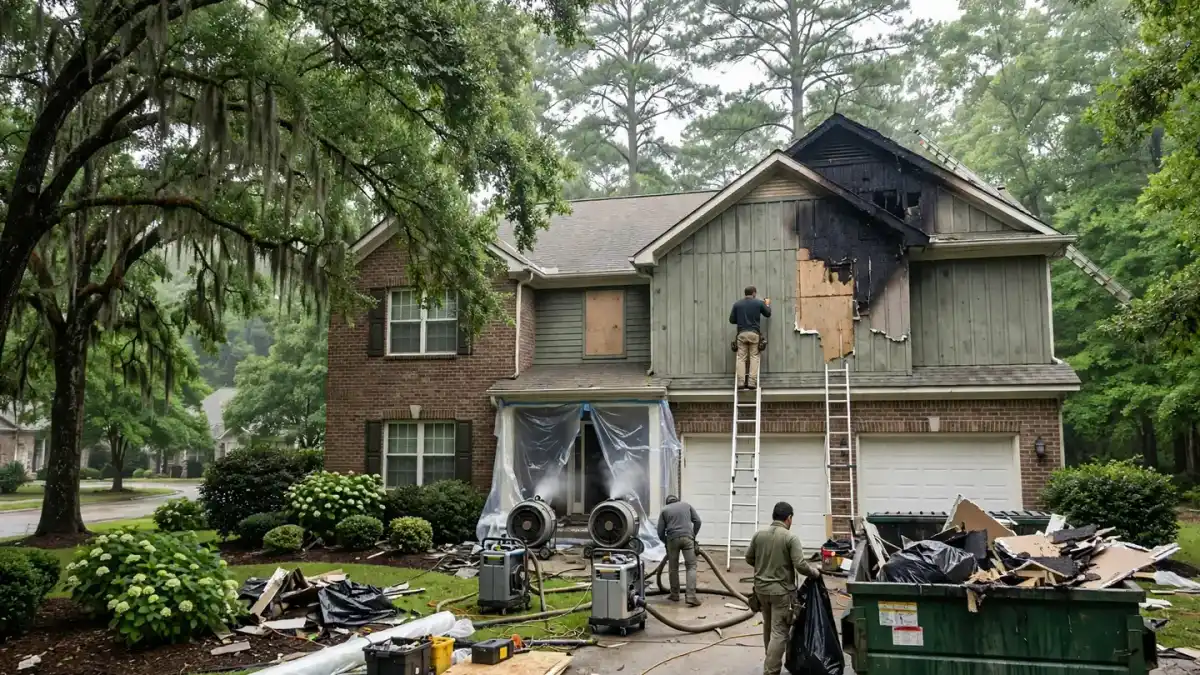
Houses in Ballantyne were mostly built between the mid-1990s and the 2010s, and many of them have two-story foyers or great rooms [6]. That design puts a tall window, sometimes with an arched transom, high above the front entry. When heat or firefighters break that glass, the opening can sit fifteen feet or more off the ground and needs ladders or a lift to reach.
Rear walls often carry wide banks of windows facing a deck or patio, plus sliding or French doors. Each of those is a large opening. A crew sizes panels to the rough opening and plans the work so the highest pieces go up while the ground is still dry and footing is good.
Engineered framing under a damaged Ballantyne roof
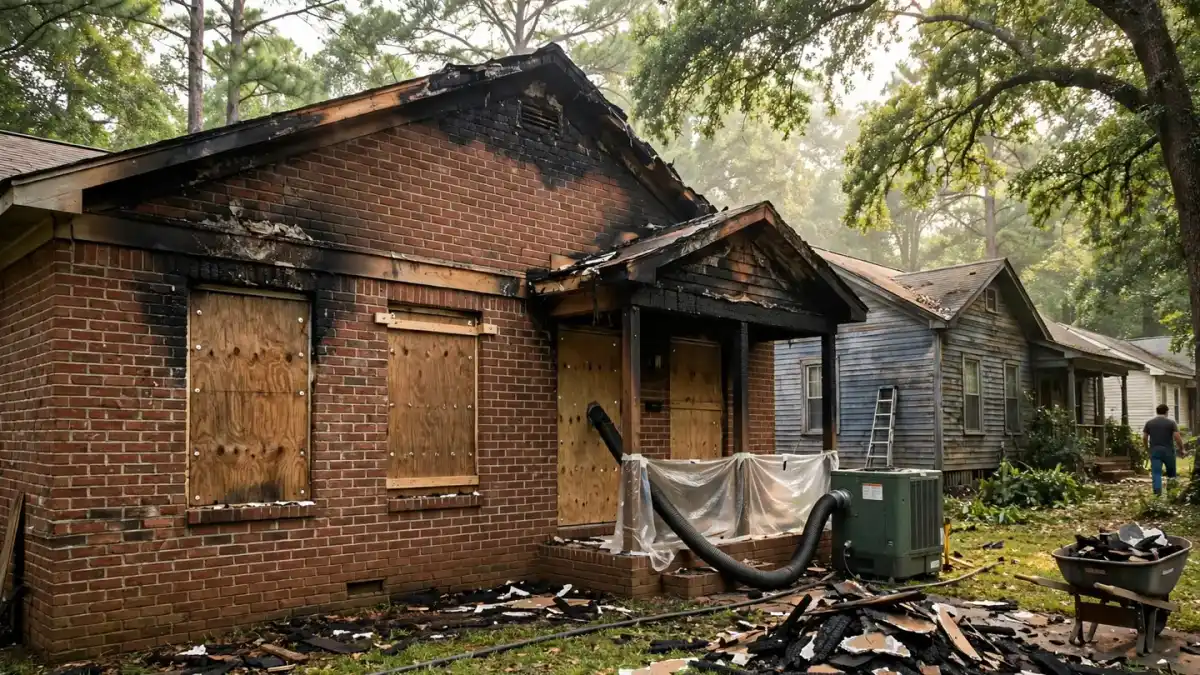
Roofs on newer south Charlotte houses are usually built from factory trusses, and floors from wood I-joists [7]. These members are light and thin, and their metal plates and webs can weaken quickly in heat. A roof that looks only scorched from outside may have trusses below it that no longer carry load.
For that reason, crews look from the attic or the room below before anyone steps near a burned section. Tarps are anchored to sound framing well away from the damage, and battens are screwed through into solid wood rather than into decking that may have lost strength.
Order of work on a Ballantyne two-story
How a crew usually sequences the job.
- 1
Wait for release and confirm utilities in Ballantyne
The fire department hands the house back, and gas and power are checked as safe.
- 2
Photograph every elevation and roof plane
Front, rear, both sides, garage end and each damaged slope.
- 3
Close high openings, then low ones
Foyer and second-floor windows first, then doors and ground-floor glass.
- 4
Tarp the roof and recheck after storms
Lap the tarp over the ridge where possible and inspect it after every heavy rain.
The attached garage on a south Charlotte lot
Many Ballantyne fires start in or spread through the attached garage, where gasoline, paint and stored boxes add fuel. Heat can warp a steel overhead door so it no longer seals or locks, and the bonus room that often sits above the garage may lose part of its floor or roof.
A crew can brace a damaged overhead door, cover a burned-through door panel and secure the interior door between garage and house. If the room above is open to the weather, its windows and roof section are covered at the same time so rain does not run down into the garage ceiling.
Thunderstorms and tropical rain over Charlotte
Summer afternoons in the Charlotte region often bring sudden thunderstorms, and remnants of hurricanes and tropical storms can drop heavy rain for a day or more in late summer and fall. A roof opened by fire or by firefighters needs to be covered before that weather arrives, not after.
The Greer forecast office posts local outlooks and warnings that a crew can use to plan when to go up on the roof [5]. Once the tarp is on, it should be checked after every strong storm, because wind can lift an edge and let water into the attic insulation and ceilings below.
HOA rules and temporary covers
Most Ballantyne subdivisions have a homeowners association with standards for how the outside of a house looks. Temporary board-up and tarps protect the property and are generally expected after a fire, but telling the association what has happened and how long the covers may stay up avoids misunderstandings.
Permanent exterior changes, such as a new window style or different siding, may need association approval later. The Ballantyne page lists the approvals that usually apply during rebuilding.
What to describe when you call about a Ballantyne home
These details help the crew arrive with the right equipment.
- Height of the broken windowsGround floor, second floor or the tall foyer window.
- Condition of the garage doorWhether it closes, opens or is jammed.
- Which Ballantyne roof slope is openOver the garage, the kitchen or a bedroom.
- Access around the houseFences, gates, slopes or a pool that affect ladder placement.
Vinyl siding and windows near the fire
Vinyl siding and vinyl window frames are common on Ballantyne houses built in the 2000s. They soften and sag at fairly low temperatures, so even a fire that stayed inside can leave melted siding near a window. Panels are fastened to the framing around the opening rather than through soft vinyl that will be replaced.
Where siding has melted away and left sheathing exposed, a sheet of plastic or a panel over the area keeps rain from soaking the wall. This is a short-term step that holds the wall dry until siding repair is scheduled.
Keeping contents dry once the house is closed
Closing the openings is only part of protecting a home. Furniture near broken windows, rugs on wet floors and electronics in damp rooms should be moved or covered with plastic. If firefighting water is standing on hardwood or carpet, removing it soon reduces swelling and the chance of mold.
Our page on water from firefighting explains how drying usually follows board-up. The what to do after a house fire guide gives a broader first-week checklist.
Recording the work for your claim
Insurance adjusters usually want to see both the damage and the steps taken to prevent further loss. Before and after photos of each opening, a list of the materials used and the dates of the work make that simple. Keep any written estimate or invoice for the board-up with the rest of your claim papers.
The North Carolina Department of Insurance offers consumer guidance on homeowner claims and how to raise concerns with an insurer [1]. Reading it early helps you know what to ask for.
FAQ
Board-Up and Tarping in Ballantyne: questions
Can the tall foyer window in my Ballantyne home be boarded from outside?
Usually yes, using a ladder or lift. Sometimes it is safer to cover it from inside the foyer if the outside ground is steep or soft.
Will my HOA object to plywood on the front of the house?
Temporary covers after a fire are normally accepted. Let the association know the timeline, and ask before making permanent exterior changes.
Is it safe to walk on a roof over trusses after a fire?
Not until someone has checked the framing. Truss roofs can weaken quickly in heat, so crews inspect from below first.
Sources and citations
- [1]North Carolina Department of Insurance
- [2]U.S. Fire Administration: Home fire prevention and safety
- [3]American Red Cross: Home fires
- [4]Mecklenburg County Code Enforcement
- [5]National Weather Service: Climate of Charlotte (GSP office)
- [6]Wikipedia: Ballantyne, Charlotte
- [7]UL Fire Safety Research Institute