
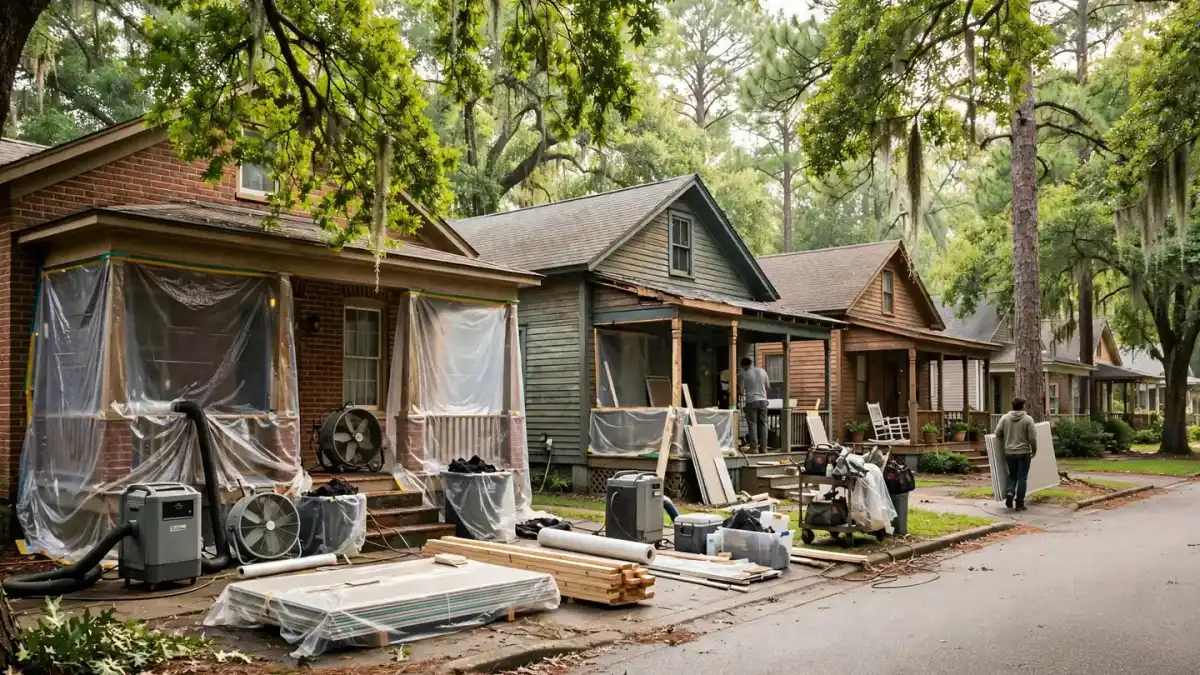
Key facts: Board-Up and Tarping in Plaza Midwood
- Many Plaza Midwood streets are lined with bungalows from roughly the 1910s to the 1940s, which grew up as a streetcar-era suburb east of Uptown [6].
- The U.S. Fire Administration warns that floors and roofs weakened by fire can give way, so nobody should walk on them until they are checked [2].
- Forecasts from the National Weather Service office in Greenville-Spartanburg, which serves the Charlotte area, help crews time roof covers before storms arrive [5].
What a fire leaves open on a Plaza Midwood bungalow
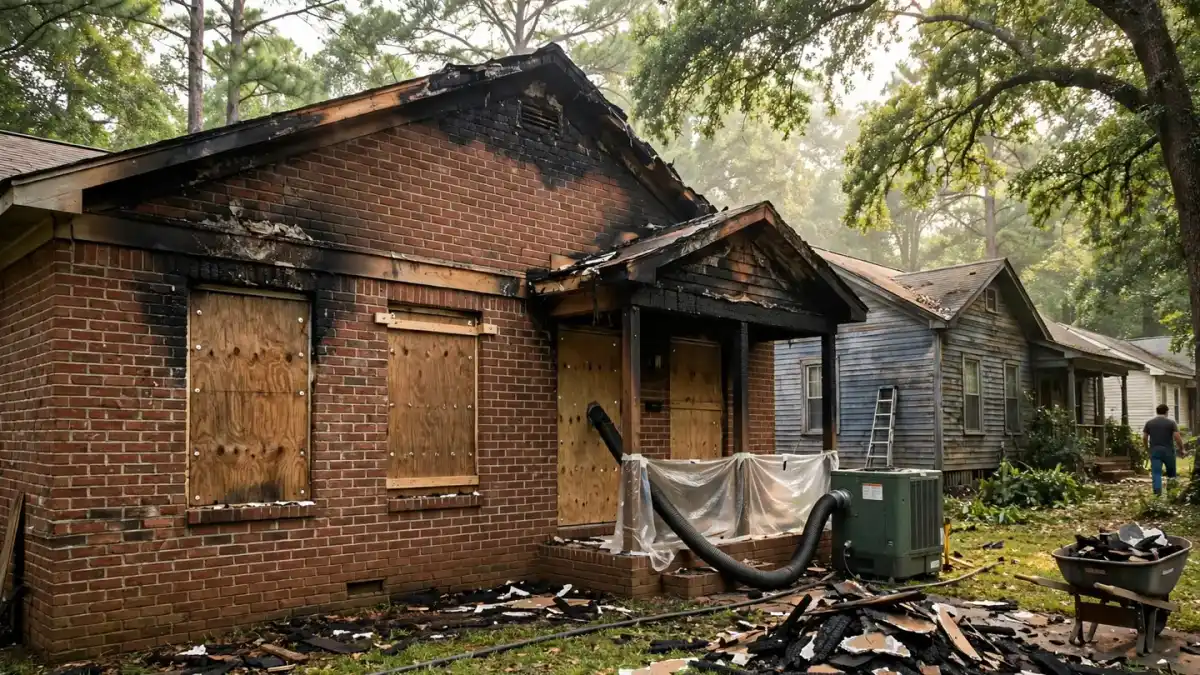
The classic house here is one or one-and-a-half stories with wood siding, tapered porch columns and a low-pitched roof [6]. Fire tends to break the original wood sash windows, char the porch ceiling and burn through the roof boards above a kitchen or half-story bedroom. Each of those spots becomes a way in for weather and trespassers once the trucks leave.
Because many of these houses sit on crawlspaces, a crew also looks below the floor. Vent screens and crawlspace access doors can be knocked loose by hoses or heat, and an open crawlspace lets animals settle in while the house stands empty.
Narrow side yards between Plaza Midwood houses
Lots in the older part of the neighborhood are tight, and new infill often sits close to the side lot line. That leaves little room for ladders, panels and a work truck on the side of the house facing the neighbor. Crews often carry materials along a shared driveway or through the back yard to reach side windows.
Talk to the neighbor before work begins if a ladder must stand on their side of the line. A short heads-up avoids friction, and it also gives you a chance to check whether their house took heat damage from your fire.
Protecting old wood windows in a 28205 home
Original wood windows in a 1920s bungalow are worth keeping where the sash and frame survived. Board-up panels can be fitted to the outside of the casing, or set inside the opening against blocking, so fasteners do not split old trim. Broken glass is cleared first so it does not fall later.
If the house is in a local historic district or you plan to restore the windows, photograph each one before it is covered. Those pictures help a window restorer and an adjuster see what was there. The Charlotte Mecklenburg Historic Landmarks group keeps information on the area's older buildings [7].
Closing up a Plaza Midwood house after the fire
A common order of work for a bungalow or infill townhome.
- 1
Wait for release and safe utilities in the bungalow
The fire department releases the house and the gas and power are confirmed off or safe.
- 2
Photograph the porch, roof and every side
Pictures from the street, the side yards and the back record the damage before anything is covered.
- 3
Panel the windows, doors and crawlspace openings
Broken sash, the front door, any back door and loose crawlspace vents are closed.
- 4
Tarp the low roof and fasten it to sound framing
Tarps run well past the burned area and are held down with battens along each edge.
Tarping a low, wide bungalow roof
Plaza Midwood bungalow roofs are fairly low, so a burned section can often be reached from a ladder at the eave. The risk is the decking around the hole, which may look fine but be charred underneath. Crews check from the half-story rooms or attic where they can and fix battens to rafters, not to weak boards.
Charlotte summers bring frequent afternoon thunderstorms, and tropical storm remnants can bring hours of heavy rain later in the season. A tarp that is not lapped well over the ridge or held at every edge can peel back in one storm. The local forecast is worth checking before and after the cover goes on [5].
Infill townhomes on the same Plaza Midwood street
Newer three-story townhomes in the neighborhood are a different job. Their windows are higher, their roofs may be flat or low-slope with a membrane, and units share walls. Reaching an upper window can call for a lift or a long ladder, and a roof cover may need to tie into a parapet instead of a ridge.
In a townhome row, check with the association before work starts. The association may handle the roof and exterior while you handle the interior, and they may already have a contractor on the way.
Details that help on a Plaza Midwood board-up call
Having these ready shortens the conversation.
- Whether it is a bungalow or a townhomeThe building type changes the ladders, panels and access needed.
- Which openings are brokenFront windows, side windows facing a neighbor, porch doors or the crawlspace.
- Where the roof is burned throughOver the kitchen, a half-story bedroom or the porch.
- How to reach the back of the lotAlley, shared driveway or a gate in a back fence.
Porches and front doors on Central Avenue side streets
The deep front porch is a defining feature of these houses, and it often holds the most valuable trim. A porch fire can scorch columns and burn the beadboard ceiling. If the porch roof is sagging, crews may add temporary posts before anyone works near it, and they close the front door with a secure panel.
Houses close to the busy commercial strip along Central Avenue see more foot traffic than quiet blocks. A solid, locked cover on the main entry matters more there, and a sign with a contact name tells passers-by the property is being looked after.
Permits and your insurer in Plaza Midwood
Temporary covers usually go on before any permit, but repairs to the structure that follow generally go through Mecklenburg County Code Enforcement [4]. Keep notes on what was covered and when, since an adjuster or inspector may ask.
Most homeowner policies expect you to take reasonable steps to protect the house from further damage. The North Carolina Department of Insurance has consumer help on how claims work if you have questions about your policy [1].
Next steps once the Plaza Midwood house is secure
With the house closed, attention turns to drying firefighting water in the crawlspace and cleaning smoke from plaster walls and knee-wall spaces. The Plaza Midwood page has more on how these older houses recover.
Our guide on what to do after a house fire walks through the first days in order, from finding a place to stay to calling your insurer.
FAQ
Board-Up and Tarping in Plaza Midwood: questions
Can a board-up crew save my old wood windows?
Often, yes. Panels can be set so fasteners avoid the original trim, and intact sash can be left in place behind the cover.
Who covers the roof on a Plaza Midwood townhome?
That depends on your association documents. In many communities the association handles roofs and exteriors, so call them early.
Should I tarp my bungalow roof myself before a storm?
It is safer not to. Fire can weaken decking you cannot see, and the U.S. Fire Administration warns against walking on fire-damaged structures.
Sources and citations
- [1]North Carolina Department of Insurance
- [2]U.S. Fire Administration: Home fire prevention and safety
- [3]American Red Cross: Home fires
- [4]Mecklenburg County Code Enforcement
- [5]National Weather Service: Climate of Charlotte (GSP office)
- [6]Wikipedia: Plaza Midwood
- [7]Charlotte-Mecklenburg Historic Landmarks Commission