
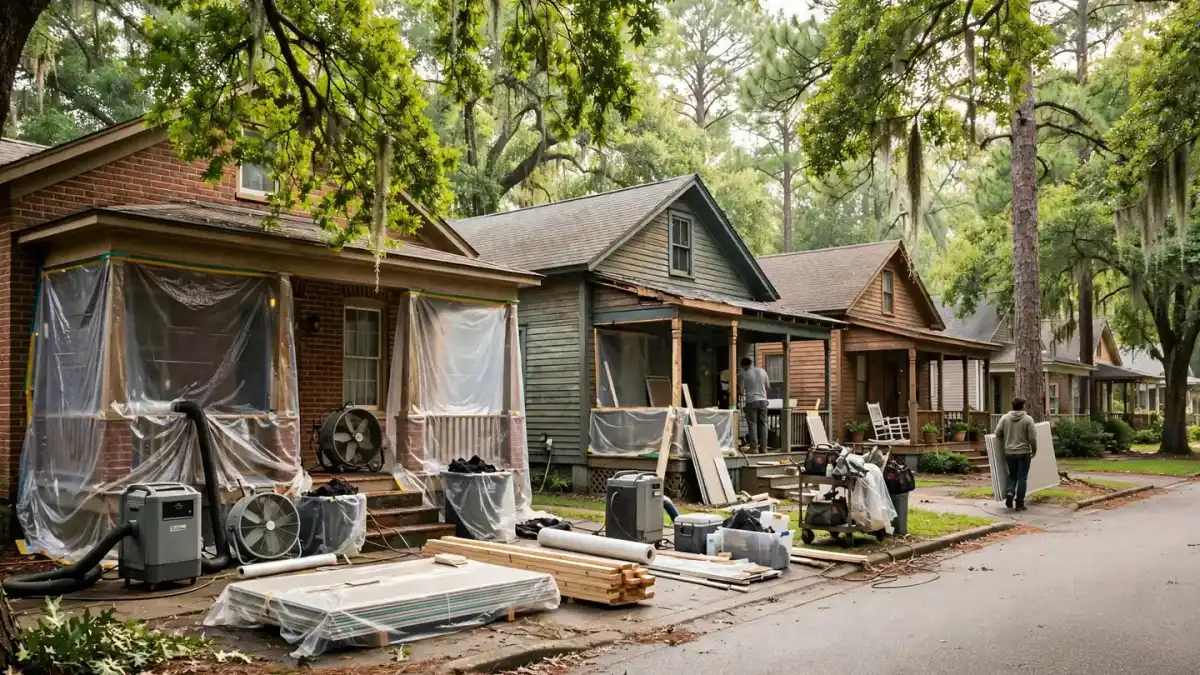
Key facts: Firefighting Water Damage in Plaza Midwood
- The EPA advises drying wet building materials within 24 to 48 hours to prevent mold growth [1].
- Most early Plaza Midwood houses stand over crawlspaces, so firefighting water often collects under the floor [6].
- The CDC notes that mold exposure can cause stuffy noses, wheezing and other symptoms, especially in sensitive people [3].
Where firefighting water goes in a Plaza Midwood bungalow
Water from hoses moves down and outward. In a bungalow on a crawlspace, it soaks through wood floors and drips onto the soil below. It also runs into wall cavities and soaks the bottom of plaster walls.
Upstairs, half-story rooms can drip water down through the ceiling of the main floor. Plaster ceilings holding water can sag and should not be stood under.
Drying the crawlspace under a 28205 house
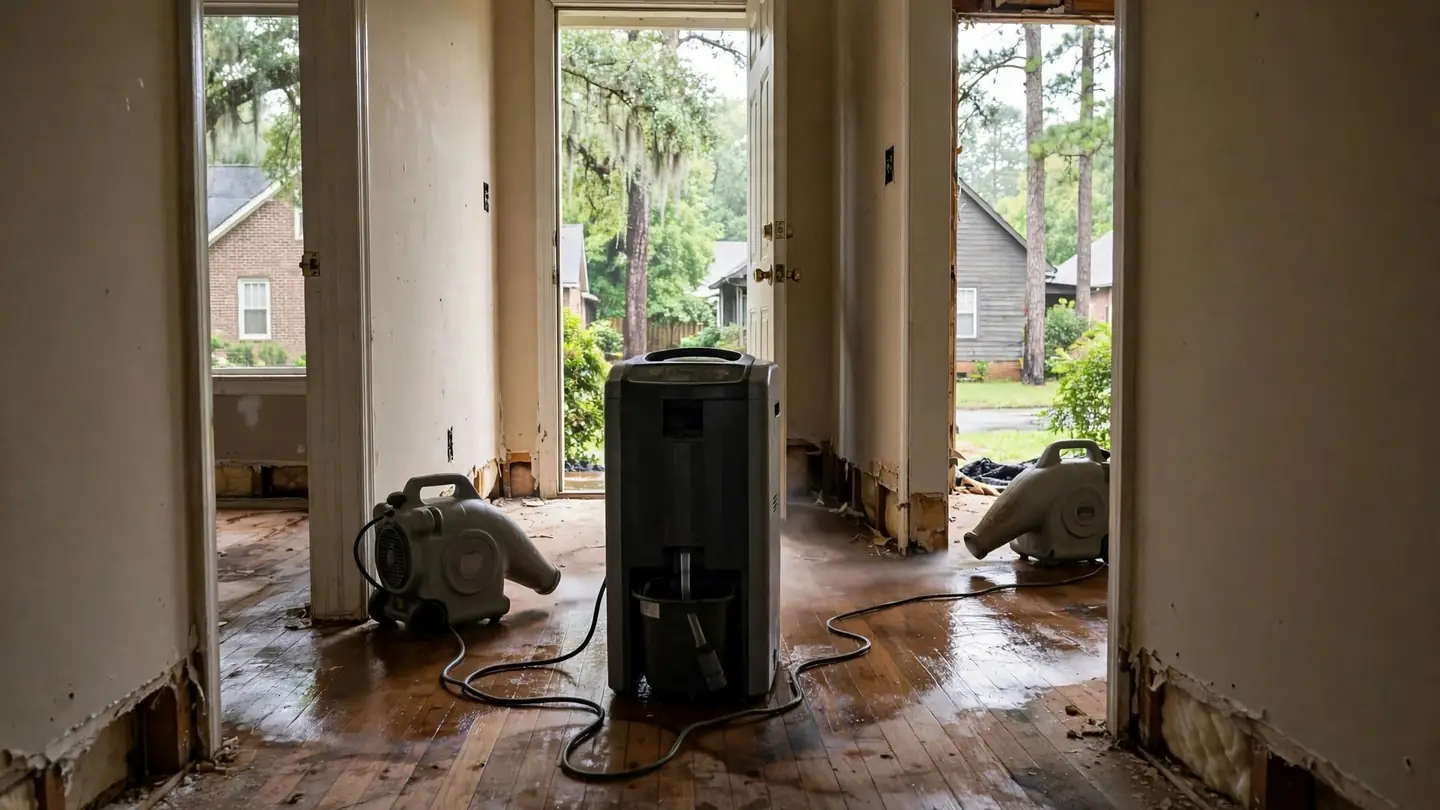
Crawlspaces under older houses can stay damp for weeks if left alone. Wet insulation between floor joists is usually removed. Standing water is pumped, and fans and dehumidifiers run until wood readings are normal.
A vapor barrier on the soil, if there is one, may need to be replaced. Charlotte's humid summers make crawlspace drying slow, so dehumidifiers are often more important than fans.
Wood floors and subfloors
Original hardwood floors swell and cup when they soak up water. Many will flatten as they dry slowly. Drying from above and below together, using the crawlspace, often works well in bungalows.
If boards were already weak or burned, they may be replaced. Refinishing waits until moisture readings show the wood is dry.
Drying a Plaza Midwood house after a fire
Typical order of work.
- 1
Check that the Plaza Midwood house is safe
Sagging ceilings and electrical hazards come first.
- 2
Pump out water pooled under the bungalow
From floors and the crawlspace.
- 3
Remove soaked materials that cannot dry
Wet insulation, carpet pad and badly damaged drywall or plaster.
- 4
Run dehumidifiers and fans with moisture checks
Readings show when materials are dry enough to rebuild.
Plaster and drywall that got soaked
Plaster can survive getting wet if it dries quickly and stays attached to its lath. Plaster that sags or separates needs to come down. Drywall in newer townhomes usually loses strength when soaked and is cut out above the wet line.
Wall cavities behind wet surfaces may need to be opened so air can move. Leaving them closed traps moisture and invites mold.
Mold risk in Charlotte's humid weather
Humid air slows drying and helps mold grow. The EPA says wet materials should be dried within 24 to 48 hours to prevent mold [1]. After a fire, with power off and windows boarded, that can be hard to manage without equipment.
If you notice a musty smell or spots appearing, mention it on your call. Mold cleanup sometimes becomes part of the recovery before rebuilding.
Points to raise on a Plaza Midwood water call
These help plan the drying.
- Whether the house has a crawlspaceAnd if water is pooled there.
- Floor typesHardwood, tile, carpet or vinyl.
- Sagging ceilingsSo the crew can plan safely.
- Power statusWhether drying equipment can run on site power.
Firefighting water in a Plaza Midwood townhome
Townhomes with several floors send water down stairwells and through floors to lower levels and the garage. Shared walls can carry moisture into the next unit. Drying often has to cover several floors at once.
If your townhome is in an association, check whether they arrange drying of shared spaces.
Water and permits in Plaza Midwood
Drying itself usually does not need a permit. Rebuilding that follows, such as replacing framing or rewiring wet circuits, usually does, through Mecklenburg County Code Enforcement [4].
Electrical systems that got wet should be inspected before power is restored.
From drying to cleanup in Plaza Midwood
Once materials are dry, smoke damage cleanup and repairs can move ahead. The Plaza Midwood page explains how crawlspaces and plaster affect recovery in the neighborhood.
The U.S. Fire Administration notes that water used on a fire can damage items that were not burned [2].
Brick piers and foundation walls under Plaza Midwood bungalows
The brick piers and low foundation walls under these older houses can sit in pooled water for days after a fire. Brick handles getting wet, but soft old mortar and the wood sills resting on it do not like staying damp. Contractors look at the sills and the ends of floor joists while the crawlspace dries, since wet wood here is where decay starts.
Foundation vents are often open to the yard. In muggy weather, outside air can add moisture instead of removing it, so crews may close vents and run dehumidifiers in the crawlspace until readings come down.
Belongings in wet Plaza Midwood rooms
Rugs, upholstered chairs, books and boxes resting on wet wood floors draw up water quickly. Lifting furniture onto blocks, rolling up rugs and carrying out paper goods in the first day limits the loss. Photograph things before moving them so your insurer can see where they were.
Papers and photos that matter can be sealed in bags and frozen until a specialist can dry them, which stops mold while you sort out the rest of the house.
FAQ
Firefighting Water Damage in Plaza Midwood: questions
How long does a crawlspace take to dry?
Often several days with dehumidifiers. Without equipment, it can stay damp for weeks in humid weather.
Will my hardwood floors have to be replaced?
Not always. Many floors flatten as they dry. Refinishing waits until moisture is normal.
Can I run the AC to dry the house?
Not until ducts and the air handler are checked. Wet ducts can spread moisture and smoke odor.