
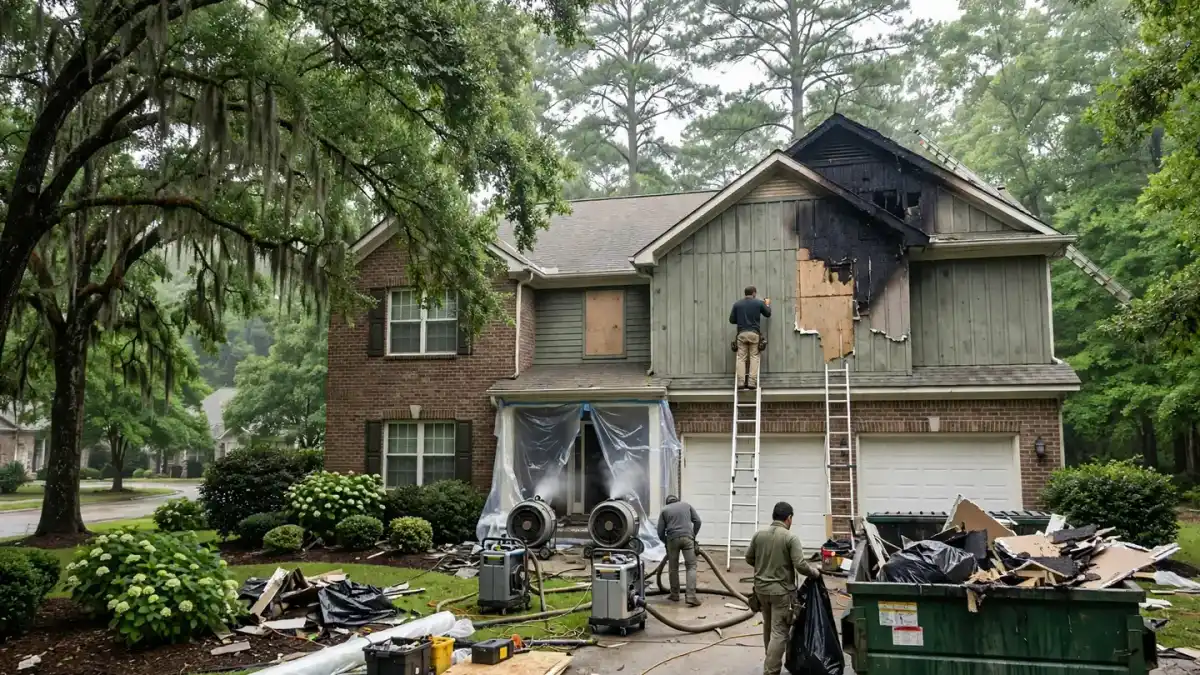
Key facts: Smoke Damage Cleanup in Ballantyne
- Smoke contains fine particles small enough to be breathed deep into the lungs, according to the EPA [3].
- The American Red Cross advises people not to reenter a fire-damaged home until the fire department says it is safe [2].
- Open floor plans let smoke move more freely through a house, UL research has found [8].
Drywall and flat paint across large Ballantyne rooms
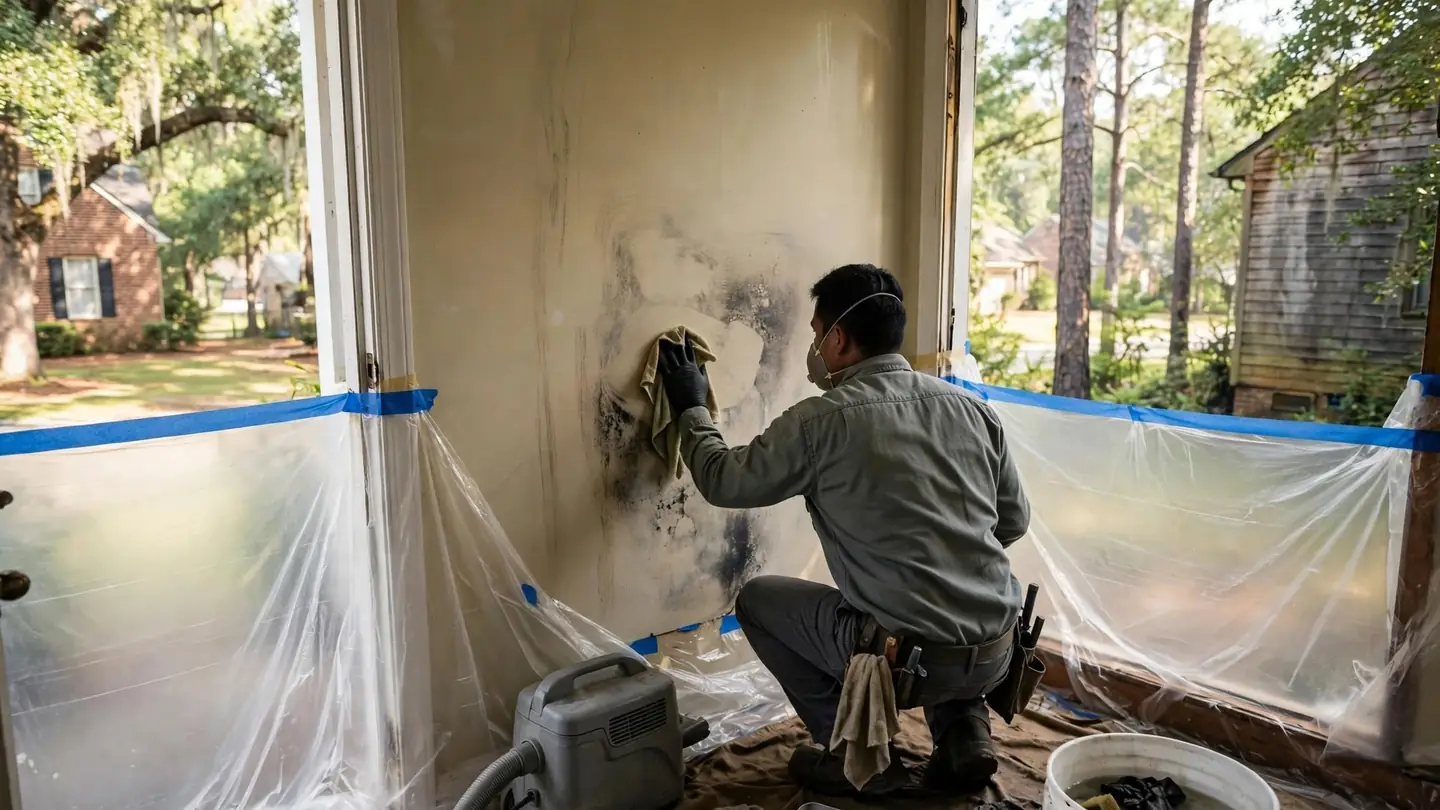
Walls and ceilings in Ballantyne homes are almost always painted drywall. Flat or eggshell paint on large surfaces is porous and holds smoke film. Rooms with two-story ceilings add height, so cleaning crews use scaffolding or tall ladders to reach the top before working down.
Light smoke can often be removed with dry sponges followed by a mild detergent wash. Heavier residue may need repeated cleaning and then a stain-blocking primer before repainting. Drywall that is charred, soaked or sagging is cut out and replaced.
Open kitchens and greasy smoke
Kitchen fires are a common start in Ballantyne homes, and open layouts carry kitchen smoke straight into the family room and breakfast area. Cooking fires often leave a sticky, greasy residue that smears if it is wiped dry.
Cabinets, countertops and appliances are cleaned with degreasing products suited to each finish. Inside the cabinets, dishes and food packages are sorted. Food exposed to smoke or heat is generally discarded, which the Red Cross also recommends [2].
How a Ballantyne cleanup usually runs
A general outline; every house differs.
- 1
Ventilate and filter the Ballantyne air
Air scrubbers run while work goes on to capture airborne particles.
- 2
Dry-clean the soot
Dry sponges and HEPA vacuums lift loose residue before any water touches it.
- 3
Wash, rinse and dry
Surfaces are washed with cleaners matched to each material.
- 4
Seal and repaint
Stain-blocking primer locks in faint residue before final paint.
Engineered hardwood and laminate floors
Many Ballantyne homes have engineered hardwood or laminate on the main floor. These have a thin wear layer over a core of plywood or fiberboard. Smoke residue usually cleans from the finish, but firefighting water can make the core swell or the top layer peel.
Floors that were only smoky are cleaned with products safe for the finish. Floors that were wet are checked for cupping and loose boards, and badly swollen sections often have to be replaced rather than sanded.
Smoke from attached garage fires
A garage fire in a Ballantyne house sends smoke through the door to the kitchen or laundry room and into the attic over the garage. Building codes require a fire-resistant wall between garage and home, but that wall slows smoke rather than stopping it entirely [7].
Burning car parts, plastic bins and chemicals can leave a heavier, more acidic residue than wood smoke. Rooms next to the garage often need deeper cleaning, and metal fixtures there should be cleaned soon before the residue starts to etch them.
Protecting your lungs during cleanup
The particles in smoke are very small, and the EPA explains that fine particles can reach deep into the lungs and affect the heart [3]. Wearing a well-fitted respirator and running air filtration during cleanup protects both workers and family members.
People with asthma, heart conditions, young children and older adults should stay out of the house while heavy cleaning is underway. Our guide is it safe to stay after a fire covers when returning makes sense.
Moisture and mold after a summer fire
Charlotte summers are hot and humid. When firefighting water meets warm, muggy air, wet drywall and carpet can start to grow mold within a day or two. The EPA notes that drying wet materials quickly is the key step in preventing mold [4].
Smoke cleanup in a home that also got wet starts with drying. Cleaning a wall that is still damp can trap moisture behind new paint, so moisture readings are taken before any sealing primer goes on.
Surfaces that need special care in Ballantyne homes
Each one reacts differently to smoke and cleaning.
- Granite and quartz countertopsCleaned with non-acidic products.
- Stainless steel appliancesResidue can etch the finish if left.
- Window blinds and shuttersOften easier to clean off-site.
- Light fixtures and ceiling fansCollect residue on top surfaces.
Electronics and home offices
Many Ballantyne households include a home office with computers, monitors and printers. Smoke residue can be slightly acidic and may harm electronics over time. Devices that were exposed should be unplugged and not used until they are checked.
A restoration contractor can arrange cleaning of electronics or document them for the insurance claim if they cannot be saved. Important files should be backed up from devices that still work.
Permits for repairs after cleaning
Cleaning does not usually need a permit, but replacing damaged drywall, wiring or HVAC parts does. In Charlotte, those permits come from Mecklenburg County Code Enforcement [5]. Your contractor normally handles the application.
For more detail on residue types, see the soot on walls and ceilings guide. The Ballantyne page covers local approvals and typical recovery stages.
FAQ
Smoke Damage Cleanup in Ballantyne: questions
Can smoke-stained drywall in my Ballantyne home be cleaned instead of replaced?
Often yes, if it is not charred or soaked. Cleaning and a stain-blocking primer handle most light to moderate smoke.
Why is the residue near my garage worse than elsewhere?
Garages hold plastics, fuel and chemicals that burn into heavier, more acidic residue.
Should we stay home while smoke cleanup is happening?
People with breathing or heart problems, children and older adults should stay away during heavy cleaning.
Sources and citations
- [1]U.S. Fire Administration: Home fire prevention and safety
- [2]American Red Cross: Home fires
- [3]U.S. EPA: Particulate matter (PM) basics
- [4]U.S. EPA: A brief guide to mold, moisture and your home
- [5]Mecklenburg County Code Enforcement
- [6]U.S. EPA: Lead renovation, repair and painting program
- [7]Wikipedia: Ballantyne, Charlotte
- [8]UL Fire Safety Research Institute