
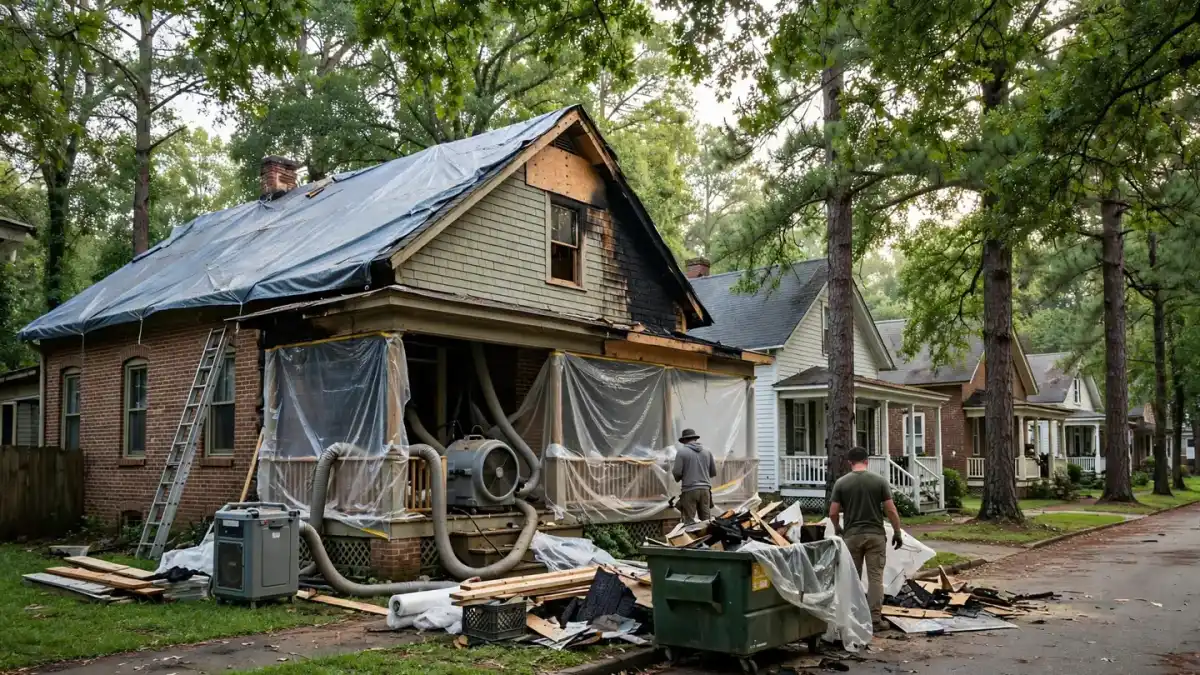
Key facts: Smoke Damage Cleanup in Dilworth
Cleaning plaster walls in Dilworth
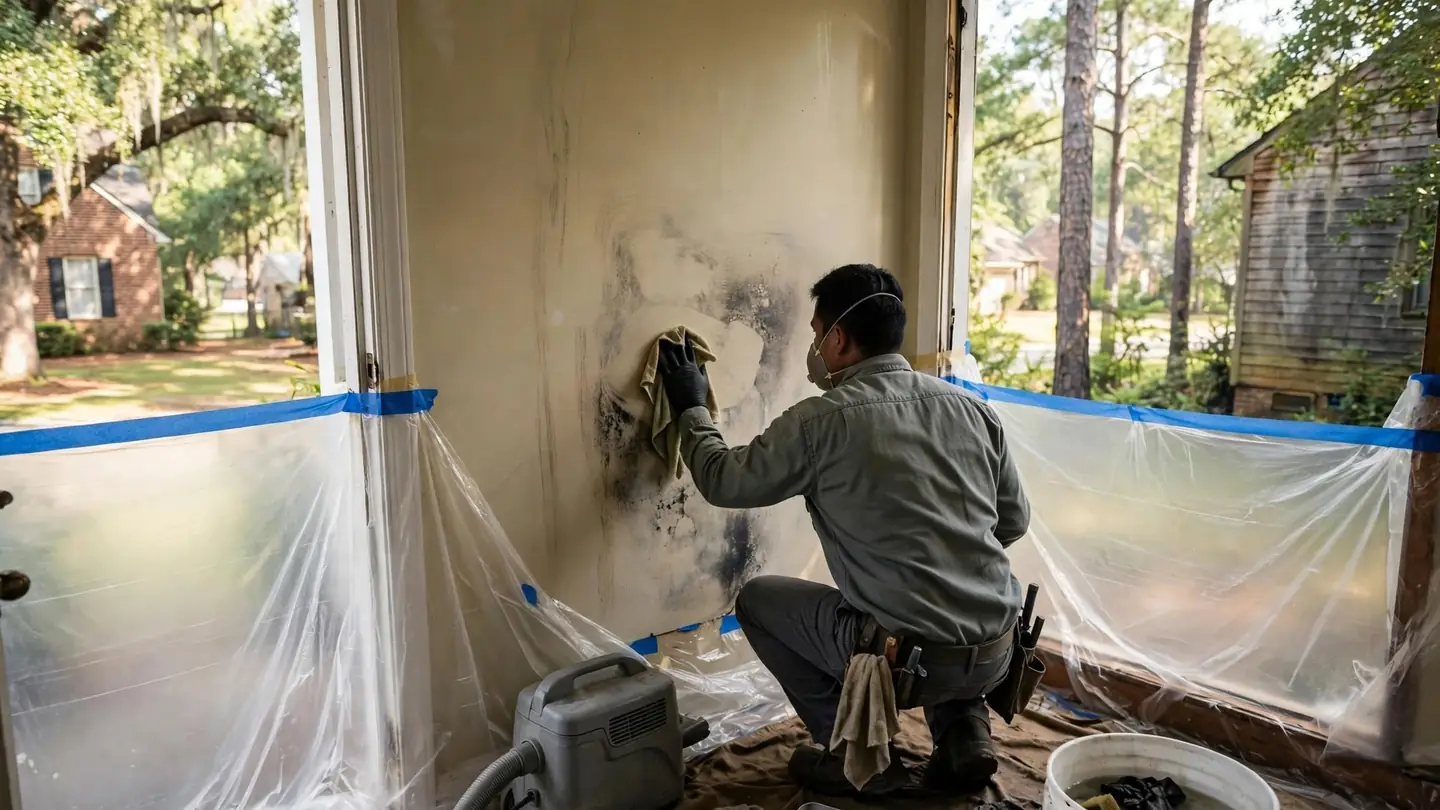
Plaster walls are harder and less porous than drywall, so they often clean better [8]. Light smoke usually comes off with dry sponges and a mild wash. Old plaster often has fine cracks, though, and smoke can settle into them.
After cleaning, a stain-blocking primer helps cover faint marks. Plaster that has come loose from the lath, or that was soaked by firefighting water, may need repair by a plasterer familiar with older homes.
Painted trim and lead safety
Window casings, baseboards and doors in Dilworth houses often have many layers of paint, and the lower layers may contain lead. Cleaning with sponges and washing usually does not disturb paint, but scraping, sanding or removing trim can.
Contractors paid to do work that disturbs paint in most pre-1978 homes must follow EPA lead-safe rules [6]. Ask how dust will be contained and cleaned before work starts.
Smoke cleanup in a Dilworth room
A typical approach for older finishes.
- 1
Test cleaners on Dilworth finishes
Try each product on a hidden spot of plaster, paint or wood.
- 2
Remove loose soot dry
HEPA vacuums and dry sponges come before any water.
- 3
Wash gently and dry quickly
Mild cleaners, light moisture and fast drying protect plaster.
- 4
Seal and touch up
Primers and matched paint on cleaned walls and trim.
Built-ins and woodwork
Many Dilworth bungalows have built-in bookcases, china cabinets and window seats. Stained wood with an old varnish or shellac finish can react to strong cleaners. Testing first and using mild products protects the finish.
Glass doors on built-ins can be removed and cleaned separately. Shelves and the backs of cabinets also collect smoke and should not be skipped.
Brick fireplaces and mantels
Brick fireplaces with wood mantels are common in Dilworth living rooms. Smoke from a house fire can stain the brick face and the mantel finish. Brick cleans with masonry products and soft brushes, avoiding harsh pressure that can damage old mortar.
If the house has an old chimney, it should be inspected after a fire, since heat and water may have affected the flue.
Moisture and smoke cleanup
Firefighting water and Charlotte's humid summers can keep plaster and wood damp for days. The EPA recommends drying wet materials quickly to help prevent mold [4]. Washing damp plaster can make things worse, so drying comes first.
Moisture readings show when walls are dry enough to clean and seal. Our firefighting water damage in Dilworth page explains how drying works in older houses.
Older materials that need care during Dilworth smoke cleanup
Each one reacts differently.
- Plaster ceiling medallionsFragile and easily damaged by scrubbing.
- Leaded or stained glassCleaned gently by hand.
- Brass and iron hardwareRemoved and cleaned separately.
- Tile hearths and bathroom tileGrout may hold smoke residue.
Asbestos in older materials
Houses of Dilworth's age can have asbestos in old floor tiles, pipe wrap, duct insulation or ceiling texture. Cleaning surfaces does not usually disturb it, but removing damaged materials may. The EPA advises testing before disturbing suspect materials [9].
Your contractor can arrange testing so the cleanup and any removal are done safely.
Who should stay out during cleanup
The American Red Cross advises waiting for the fire department to say a house is safe before going back in [2]. During heavy cleaning, children, older adults and anyone with breathing problems should stay elsewhere.
Our is it safe to stay after a fire guide explains the signs that a home is ready to live in again.
Permits and approvals for repairs
Cleaning usually does not need a permit, but repairs to wiring, plumbing or structure do. In Charlotte, those permits come from Mecklenburg County Code Enforcement [5]. If you are in a local historic district, exterior changes may also need review.
The Dilworth page lists who handles each approval. The soot on walls and ceilings guide explains residue types you may see.
Wood windows and old glass during Dilworth cleanup
Original wood windows in Dilworth houses collect smoke film on the glass, the sash and the inside of the frame where the weights run. Old wavy glass is thin and can crack if a cleaner pushes hard on it, so crews clean it by hand with light pressure. Sash cords and pulleys are checked, since heat can make old cords brittle.
Storm windows added over the years trap smoke between the two layers of glass. They are usually taken down, cleaned on both sides and refitted once the sash behind them is clean.
FAQ
Smoke Damage Cleanup in Dilworth: questions
Can smoke-stained plaster in my Dilworth home be cleaned?
Usually yes. Plaster is dense and cleans well, though cracks and loose areas may need repair.
Is old lead paint in my Dilworth house a problem during smoke cleanup?
Washing usually does not disturb paint, but scraping or sanding does. Contractors must follow EPA lead-safe rules.
Should old floor tiles be tested before removal?
Yes. Older tiles and mastic may contain asbestos, so testing comes before removal.
Sources and citations
- [1]U.S. Fire Administration: Home fire prevention and safety
- [2]American Red Cross: Home fires
- [3]U.S. EPA: Particulate matter (PM) basics
- [4]U.S. EPA: A brief guide to mold, moisture and your home
- [5]Mecklenburg County Code Enforcement
- [6]U.S. EPA: Lead renovation, repair and painting program
- [7]Wikipedia: Dilworth (Charlotte neighborhood)
- [8]North Carolina State Historic Preservation Office: Dilworth Historic District nomination
- [9]U.S. EPA: Protect your family from asbestos