
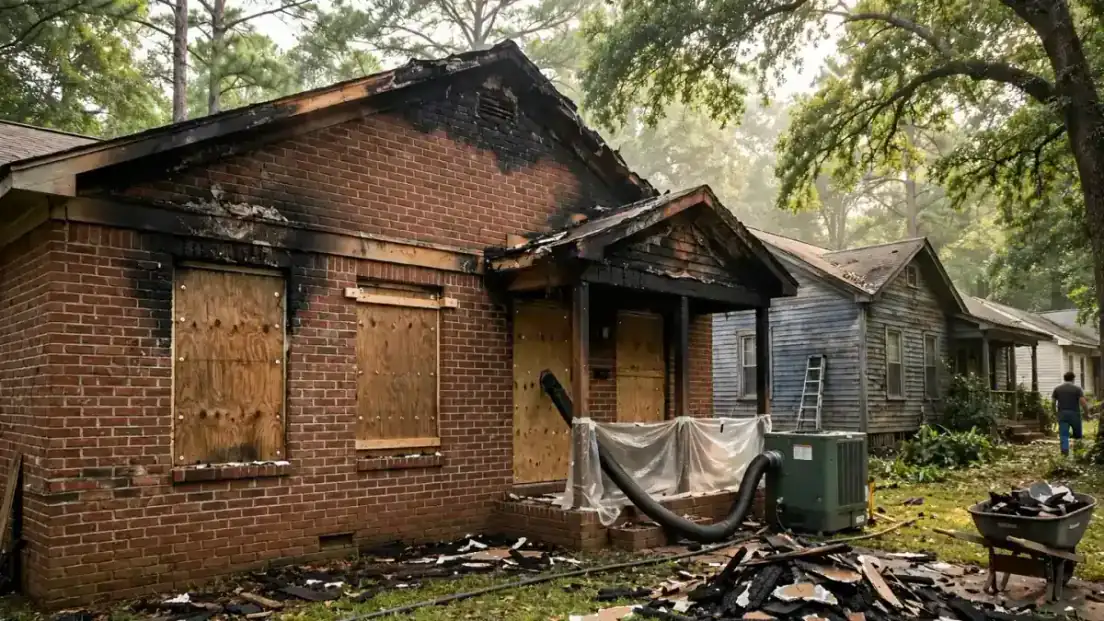
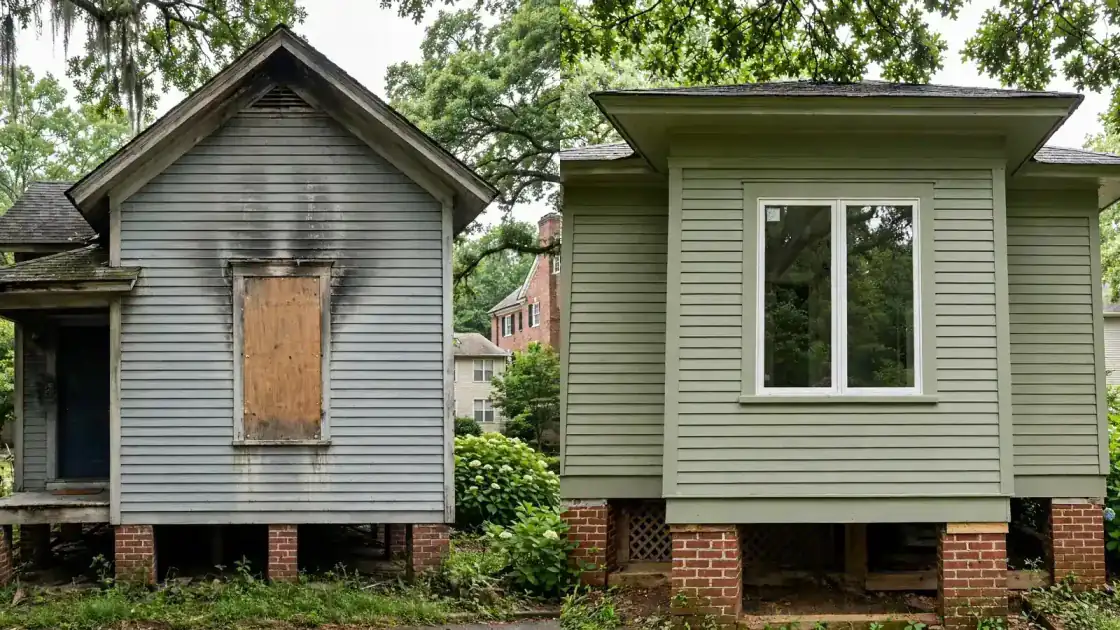
How quickly does a burned house in Charlotte need to be boarded up?
As soon as the fire department releases it, ideally the same night. Open windows, doors and roof holes let rain and trespassers in, and Charlotte storms can arrive fast in summer. Your insurer will also expect reasonable steps to stop further damage. Calls are answered 24/7 to arrange it.
Key facts: Emergency Board-Up
- Firefighters often break glass and cut roof openings to release heat and smoke, which leaves the house exposed once they leave [2].
- Homeowners policies usually expect you to take reasonable steps to stop further damage after a loss, and covering openings is one of those steps [1].
- The U.S. Fire Administration advises securing a fire-damaged home against entry before leaving it empty [2].
- Charlotte summer thunderstorms can bring heavy rain in a short time, so an uncovered roof opening is a real overnight risk [5].
Right now
What to do about open windows and roofs tonight
- 1
Stay off the roof
Burned roof decking can give way under a person's weight. Leave the roof to a crew with the right ladders and fall protection.
- 2
Walk the outside first
From the yard, note every broken window, damaged door and any opening in the roof or siding. Take photos of each one.
- 3
Take out what matters
If firefighters say it is safe, remove medicine, documents, valuables and firearms. An empty house with open windows is easy to enter.
- 4
Tell a neighbor
Ask someone nearby to watch the house and call the police if they see anyone inside after dark.
- 5
Move items away from openings
If you can reach them safely, shift furniture and boxes away from broken windows so rain cannot soak them.
- 6
Call to arrange covering
Describe how many openings there are and how high they sit. Second-floor windows and roof holes need ladders or a lift.
When it is urgent
Openings that should be covered before morning
Any one of these is reason to call tonight rather than wait.
A hole in the roof
Firefighters may cut the roof to vent the attic. Rain through that hole soaks insulation and the ceilings below.
A forced or burned door
A door that no longer locks invites trespassers and lets weather straight into the living space.
Broken ground-floor windows
Low openings are the easiest way in for people and animals, and the hardest to watch from the street.
Storms in the forecast
A thunderstorm or the remnants of a tropical system can turn an open house into a wet one within an hour [5].
You cannot stay at the house
If nobody will be there overnight, covering every opening protects the belongings that are left.
When you call
What the crew asks and does when it arrives
Your call is answered around the clock and connects to an independent local contractor. They usually ask how many windows and doors are open, whether the roof was cut and how tall the house is. That tells them which panels, tarps and ladders to bring. The method for each opening is laid out on the board-up and tarping service page.
On site, crews commonly start with the openings closest to the ground and any roof hole, because those let in the most water and the easiest entry. Plywood is cut to fit and fastened to the frame, and a door panel may be fitted with a lock so you can still get in. Tarps are laid over the ridge and held with wood battens rather than a few nails.
Before they leave, ask the crew to photograph each covered opening and give you a written list. That record supports your claim. Timing depends on the contractor and the hour, so ask about it on the call. The full night-one checklist is on our emergency fire damage restoration page.
Charlotte factors
Charlotte weather and houses that shape board-up work
Rain falls in every season here, and summer storms can bring strong gusts. A tarp that is not fastened along its edges can lift like a sail and rip loose, leaving the attic open again [5]. That is why the fastening matters more than the tarp itself.
Older Dilworth and Plaza Midwood houses often keep original wood windows and trim. Fastening panels to the casing instead of the sash leaves those windows repairable later. A neighborhood look at that work is on the page about board-up and tarping in Dilworth.
Townhomes and condos share roofs and walls. Covering one unit may involve the owners association, which can have its own rules about who handles the building shell. For an example in that kind of housing, read about board-up and tarping in University City.
Windows and doors
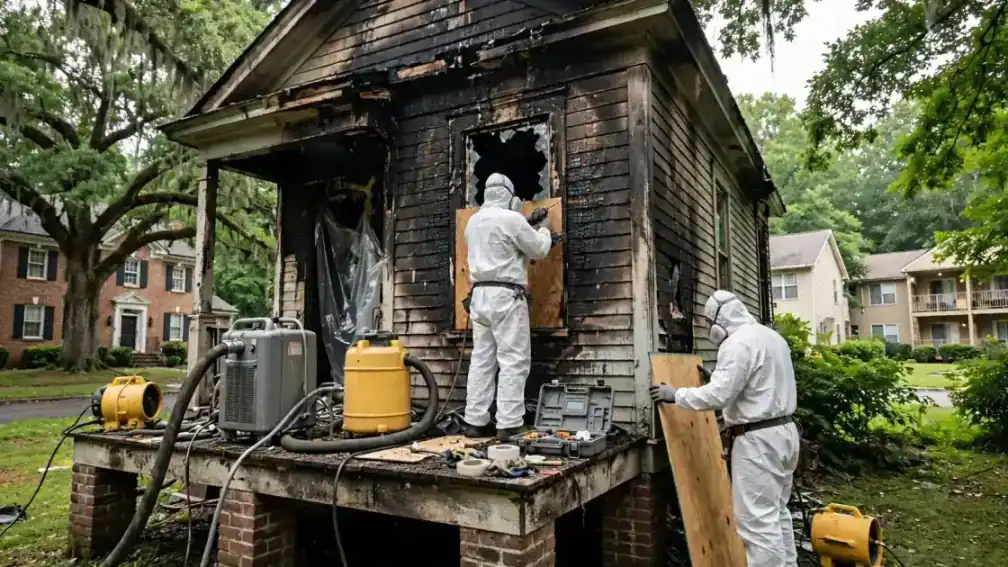
Fitting panels to a burned opening
Each panel is measured to the opening and fixed to solid framing so it cannot be pried off easily. Where a door is gone, a framed panel with a hasp or lock lets you and the adjuster get inside without leaving the house open.
Fasteners are placed with later repair in mind. Panels screwed into the casing come off cleanly when the new window goes in, which keeps the repair simpler.
Roof openings
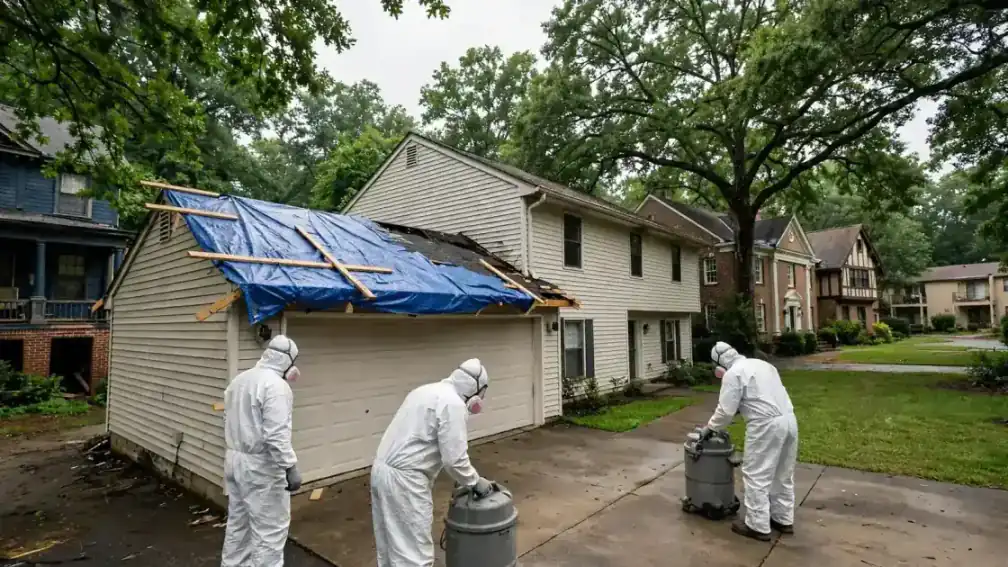
Tarping a vented or burned roof
A roof tarp works best when it runs over the ridge so water cannot slip under the top edge. Wood battens along the edges hold it flat against the wind.
Garage roofs and porch roofs get the same care, because water through either can reach the main house. Check the tarp after every storm. For what comes next inside, see what to do after a house fire.
Have ready
Details that help the board-up crew plan
- How many windows and doors are broken or forced
- Whether any opening is on the second floor
- Whether the fire department cut or burned through the roof
- Whether the house is a townhome or condo with shared walls
- Where the crew can park and set up ladders
- Whether anyone will be at the house overnight
After the boards go up
Living with a boarded house for a while
Temporary covering can stay in place for weeks while the claim moves forward and repairs are planned. Walk around the house every few days and after each storm. Look for panels that have shifted, tarps that have pooled water and any sign that someone has tried to get in.
If anything looks wrong, call the contractor back and describe it. A loose tarp edge is a small fix early and a wet ceiling later. Keep the key or code for any locked door panel somewhere safe, and share it only with the people who need to get inside.
When the permanent repairs are scheduled, the crew removes panels one opening at a time so the house is never left wide open. Ask them to note any trim or frame damage they find as they go.
FAQ
Emergency board-up questions
Can I get a broken window boarded up tonight in Charlotte?
In Charlotte, calls about emergency board-up are answered 24/7; your own call reaches an independent Charlotte contractor who talks it through with you.
Is it safe to put a tarp on my burned roof myself?
It is not a good idea. Burned decking can collapse, and a tarp that is not fastened well can blow off in the next storm. A crew with fall protection is safer.
Will boarding up damage my old wood windows?
It does not have to. Panels can be fixed to the casing instead of the sash, so original windows stay repairable.
Does my insurer care whether the house is boarded?
Most policies expect reasonable steps to stop further damage after a fire [1]. Keep photos and a list of the work so you can show what was done.