
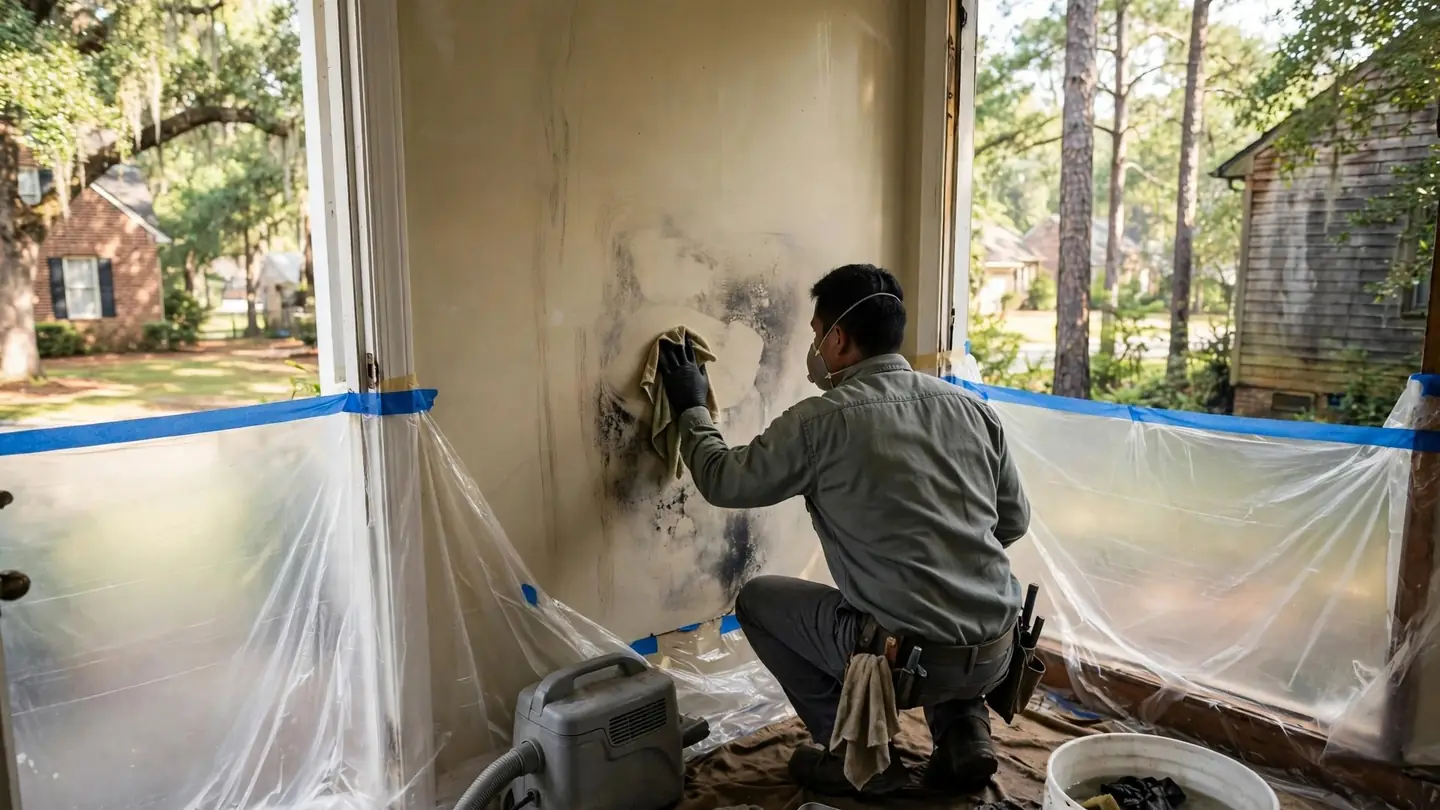
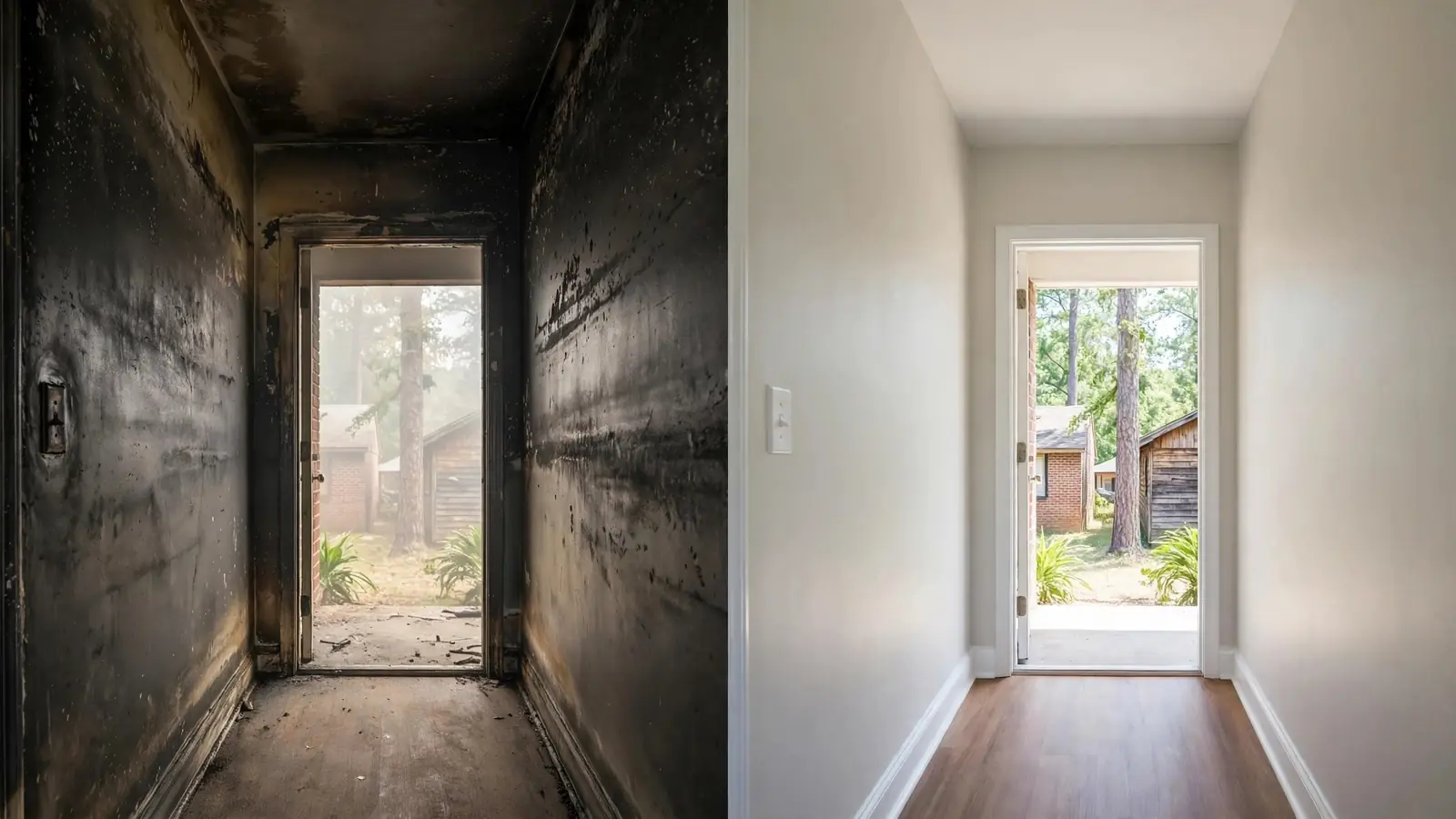
How soon should smoke damage be cleaned after a house fire?
As soon as the house is safe to enter and secured. Smoke residue is often acidic, and it begins to pit metal and yellow plastic within days, faster in humid weather. Early containment also keeps it from drifting into clean rooms. Calls to this number are answered 24/7.
Key facts: Emergency Smoke Cleanup
- Smoke can coat rooms far from the fire, because hot gases follow doorways, returns and attic openings through the house [1].
- Fine smoke and soot particles are linked by EPA to breathing and heart problems, so limiting exposure matters during early cleanup [3].
- The American Red Cross advises waiting for the fire department's all-clear before going back into a fire-damaged home [2].
- Water left from firefighting can lead to mold if materials stay wet beyond about 24 to 48 hours [4].
Right now
Early moves that keep smoke residue from spreading
- 1
Get the all-clear
Do not go back in until firefighters say the house is safe [2]. Residue can wait a few hours; your safety cannot.
- 2
Keep fans and the system off
Ceiling fans and the blower stir up particles and push them into rooms the smoke missed.
- 3
Shut the doors
Close doors between smoky rooms and clean ones. A towel at the base of a door slows drifting particles.
- 4
Do not wipe the film
A damp cloth spreads smoke residue into paint and grout. Leave walls and ceilings alone for now.
- 5
Protect what you touch
Wear gloves and a well-fitted mask if you must pick up medicine or papers [3].
- 6
Call about cleanup
Tell the contractor how far the smoke reached and whether the house is closed and dry.
When it is urgent
Smoke damage that calls for quick action
These are the conditions where waiting makes cleanup harder.
Film on fixtures and appliances
Chrome, brass and appliance trim begin to tarnish as acidic residue sits on them.
Plastic and vinyl surfaces
Window frames, outlet covers and blinds can yellow for good if residue is left in place.
Smoke reached the bedrooms
Mattresses, clothing and bedding hold residue and smell. Moving them out early limits the loss.
The house is still damp
Water from the hoses raises humidity, which speeds staining and invites mold [4].
Electronics in smoky rooms
Residue inside devices can corrode circuits. Keep them unplugged and switched off until checked.
When you call
From the first call to the first day of cleanup
In Charlotte, calls about emergency smoke cleanup are answered 24/7; your own call reaches an independent Charlotte contractor who talks it through with you.
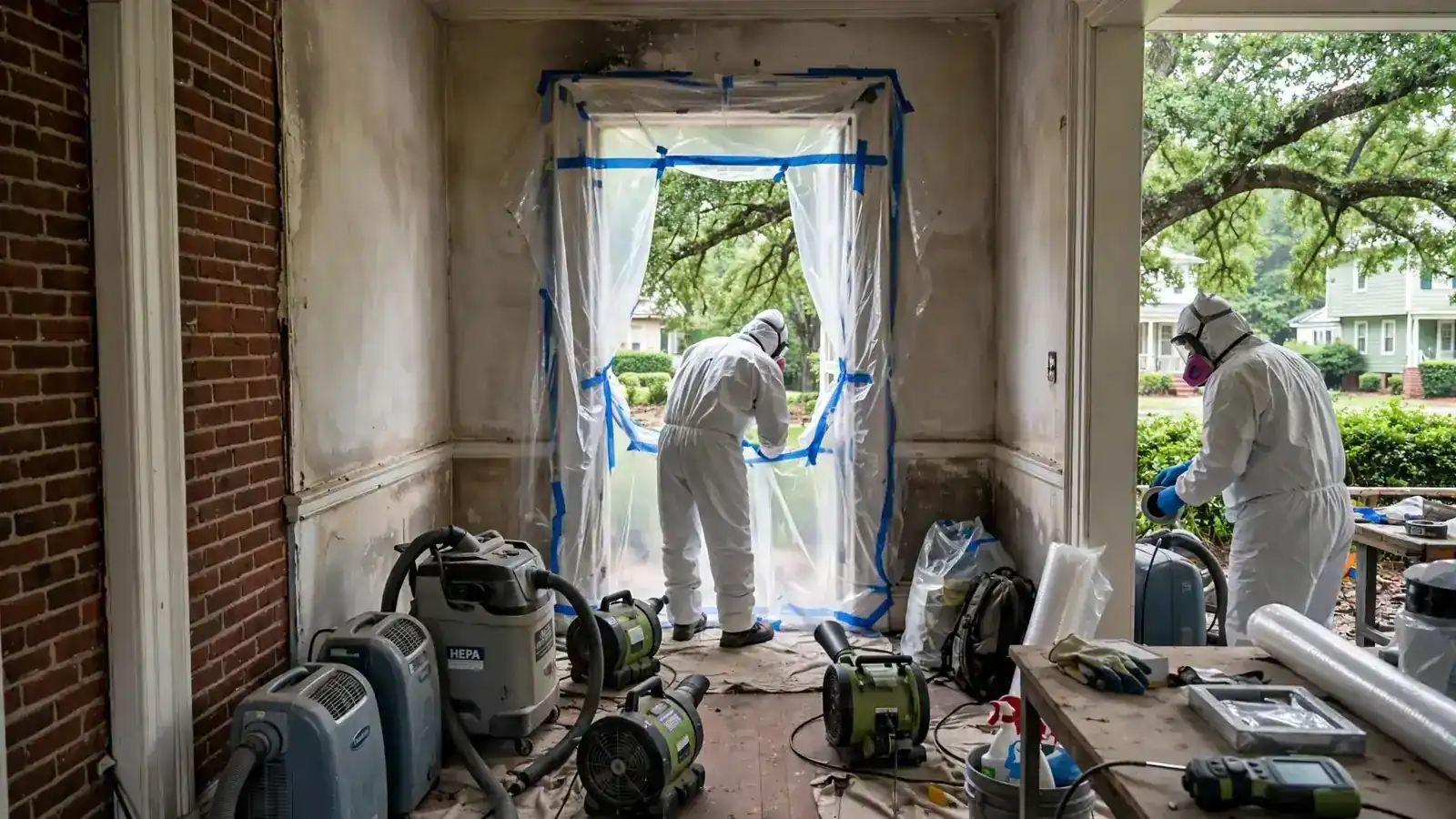
When a crew arrives, they usually hang plastic sheeting over doorways to keep clean rooms clean and set up HEPA air scrubbers. They test surfaces to see what kind of residue they are dealing with, then begin with dry methods before any wet cleaning.
Contents in the worst rooms may be packed out for off-site cleaning. Each step is photographed for the claim. If water or open walls are still an issue, those come first, as the emergency fire damage restoration page explains.
Charlotte factors
How Charlotte homes and climate affect smoke residue
Humid summers speed up the harm that acidic smoke residue does to metal and plastic. A house closed up in July with damp floors and smoky walls changes faster than the same house in a dry month.
Early twentieth-century homes have plaster walls, built-ins and original floors that are worth keeping through patient cleaning. A neighborhood example is on the page about smoke damage cleanup in Plaza Midwood.
Newer homes with open plans and two-story foyers let smoke travel fast and far. Long duct runs can carry it to rooms well away from the fire. For that kind of house, see smoke damage cleanup in Ballantyne.
Containment
Sealing off the rooms smoke did not reach
Plastic sheeting over doorways is one of the simplest and most useful early steps. It keeps particles stirred up by the work from drifting into bedrooms and closets that are still clean.
Air scrubbers inside the work zone pull air through filters and help hold the zone under slight negative pressure, so air flows into it rather than out.
Kitchens
Starting on a smoky kitchen
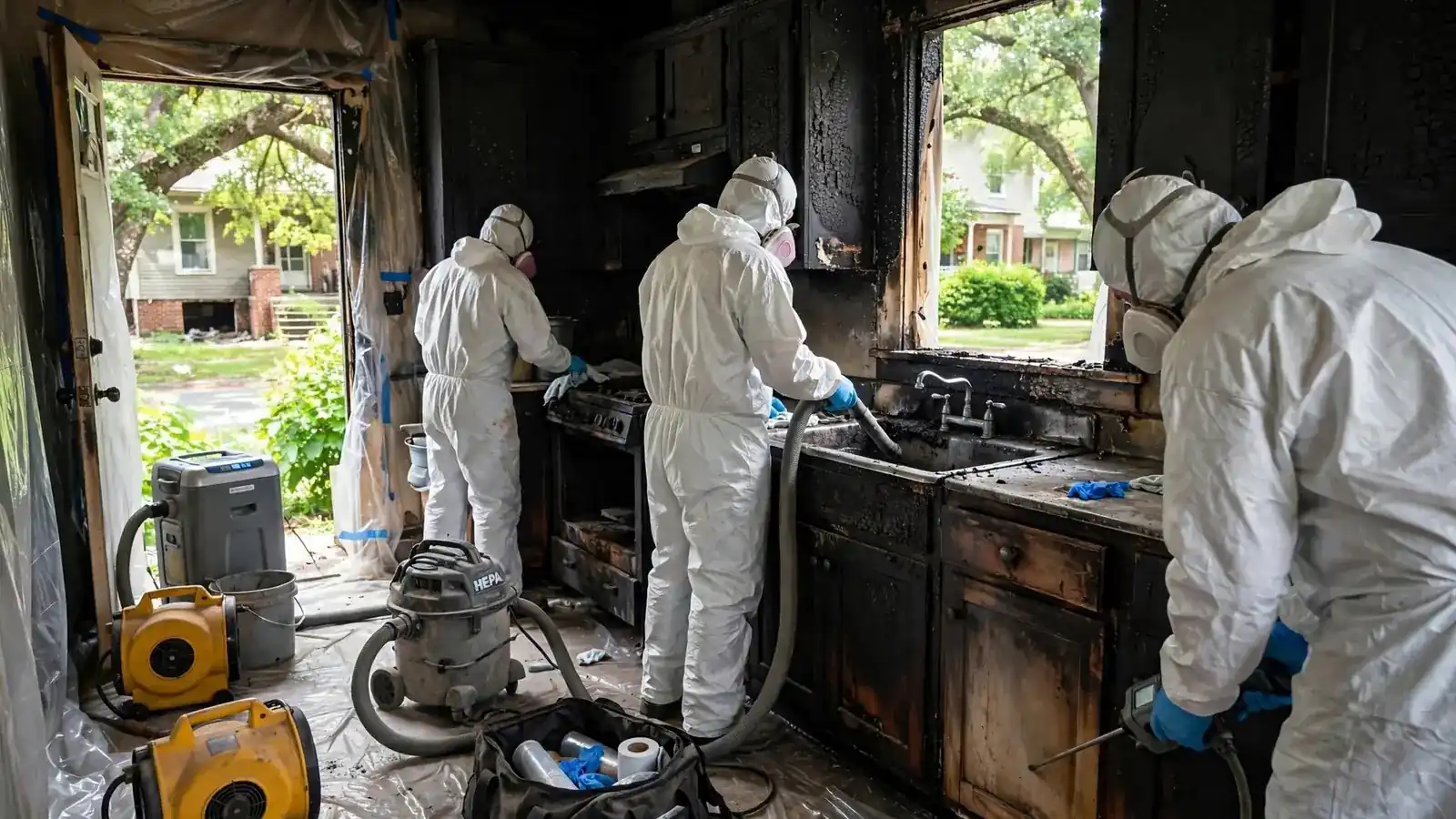
Kitchen fires are common, and they leave a greasy residue on cabinets, hoods and ceilings. That residue needs a degreasing approach rather than plain water.
Food left in open packages near the fire should usually be thrown away. For tips on stained ceilings and walls, read soot on walls and ceilings.
Have ready
Information for a smoke cleanup call
- Where the fire started and how far the gray film reaches
- Whether the heating or cooling ran during or after the fire
- Whether the house is boarded, tarped and drying
- The rough age of the house, for lead paint questions
- Which electronics and appliances were in smoky rooms
- Whether anyone in the home has asthma or a heart condition
Over the next week
What smoke cleanup looks like after day one
Once containment is up and the worst rooms are dry-cleaned, crews move room by room. Ceilings usually come first so falling residue does not land on clean walls and floors. Walls follow, then trim, cabinets and floors.
Each surface is tested before it is washed, because different paints and finishes react in different ways. Some stains lift with a mild cleaner, while others need a stain-blocking primer before new paint. The contractor can explain which rooms are likely to need sealing.
Belongings that were packed out are cleaned and stored until the house is ready. Ask for an inventory so you know where everything is. Electronics, documents and photographs are often handled by people who specialize in them.
Air scrubbers usually keep running for the length of the work. Leave them on and avoid opening the plastic barriers, even if the noise is tiring, since they are what keeps residue out of the clean rooms.
Common missteps
Smoke cleanup mistakes to steer clear of
Small choices in the first days can make the later cleaning slower and harder.
Scrubbing walls with a sponge and bucket
Water and household cleaners spread the film into flat paint and leave gray streaks that need more work to remove.
Running the heating or cooling to clear the air
The blower pulls residue into the ducts and pushes it into clean rooms, adding a whole system to the cleanup list.
Leaving metal fixtures for later
Faucets, hinges and appliance trim tarnish as acidic residue sits on them. Early cleaning or wiping by the crew helps them survive.
Moving smoky furniture into clean rooms
Carrying soiled items through the house spreads residue to new places. Leave them where they are or have the crew pack them out.
FAQ
Emergency smoke cleanup questions
Can smoke residue really damage things in a few days?
Yes. Smoke residue is often acidic, and it can tarnish metal and yellow plastic over days, faster when the air is humid.
Should I wash the smoky walls myself this weekend?
It is better to wait. Wet cloths tend to smear smoke film into paint. Crews usually start with dry methods and then wash.
Is it safe to use my TV or computer after a smoky fire?
Leave them off and unplugged. Residue inside electronics can conduct and corrode, so they should be checked first.
Who answers the phone if I call late about smoke damage?
In Charlotte, calls about emergency smoke cleanup are answered 24/7; your own call reaches an independent Charlotte contractor who talks it through with you.