
What not to do with fresh soot after a Charlotte fire?
Avoid wiping it, washing it or running a household vacuum over it. Fresh soot is loose carbon, and water or a standard vacuum spreads it deeper or back into the air. Keep people out of sooty rooms and leave the first removal to a crew using dry methods.
Key facts: Emergency Soot Removal
- Soot is mostly fine carbon from incomplete burning, and it can carry other combustion by-products with it [1].
- Wiping dry soot with a wet cloth usually smears it deeper, which is why crews lift loose soot dry before any washing.
- EPA recommends limiting exposure to fine particles such as soot because they can affect the lungs and heart [2].
- In homes built before 1978, federal lead-safe rules apply when work disturbs painted surfaces [3].
Right now
Hands-off rules for fresh soot
- 1
Keep people out
Children, pets and anyone with breathing problems should stay away from rooms with black soot [2].
- 2
Leave fans and lights off
Ceiling fans and light fixtures collect soot and throw it back into the air when switched on.
- 3
Do not wipe or wash
A damp cloth pushes soot into flat paint, ceiling texture and grout, leaving streaks that are harder to remove.
- 4
Skip the household vacuum
Regular vacuums blow fine soot through their exhaust. Crews use HEPA vacuums made for this work.
- 5
Move valuables gently
If you must take out photos or papers, lift them straight up and place them in a box without brushing them.
- 6
Call about removal
Describe where the soot is heaviest and the age of the house so the crew can plan materials and safety.
When it is urgent
Soot situations that should not wait
Soot left in place gets harder to remove and spreads further.
A heavy coat near the fire room
Thick soot close to the origin is the most likely to stain porous surfaces if left for days.
Soot on plastics and fixtures
Plastic trim and metal fixtures can discolor quickly as soot sits on them.
A furnace puffback
A misfiring oil furnace can spray soot through every register even without a house fire.
Grease soot in the kitchen
Sticky cooking-fire residue bonds to cabinets and ceilings and resists plain water.
An older home with popcorn ceilings
Textured ceilings in older homes may contain asbestos, so they should not be disturbed until checked [5].
When you call
What happens on the call and the first soot visit
Your call is answered 24/7 and connects straight to an independent contractor in the Charlotte area, who speaks with you on that call. Tell them what burned, where the soot is thickest and whether the house is older. That shapes the equipment and safety steps. The full method is on the soot removal service page.
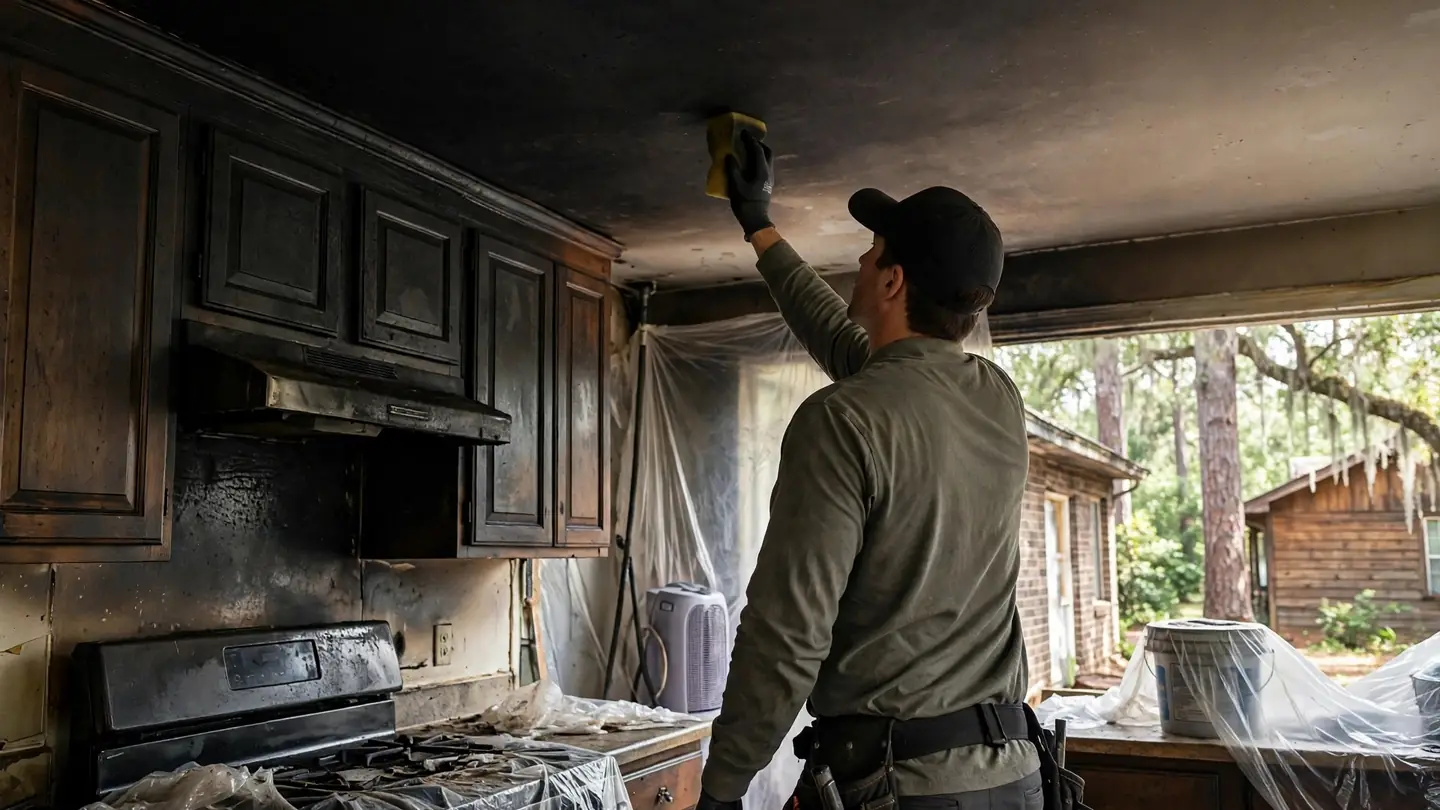
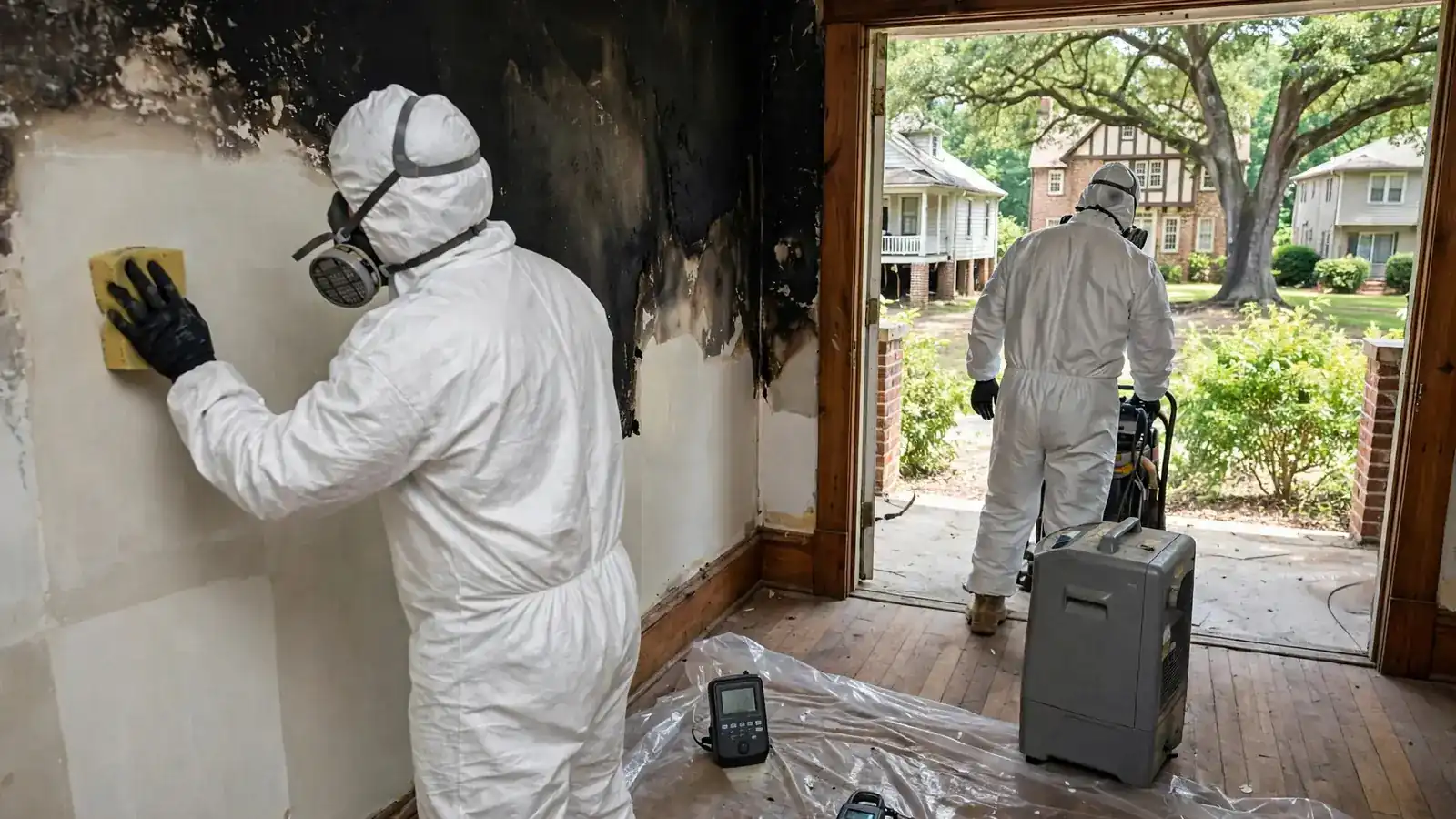
A crew usually begins by confirming the house is safe and released by the fire department [4]. Next they set up containment and HEPA air scrubbers, then lift loose soot with HEPA vacuums and dry chemical sponges. Washing comes only after the dry pass.
Surfaces that still show a shadow after careful cleaning may later be sealed and painted. That decision comes after the early work. For how soot fits into the first night overall, see emergency fire damage restoration.
Charlotte factors
Charlotte houses and soot in the first days
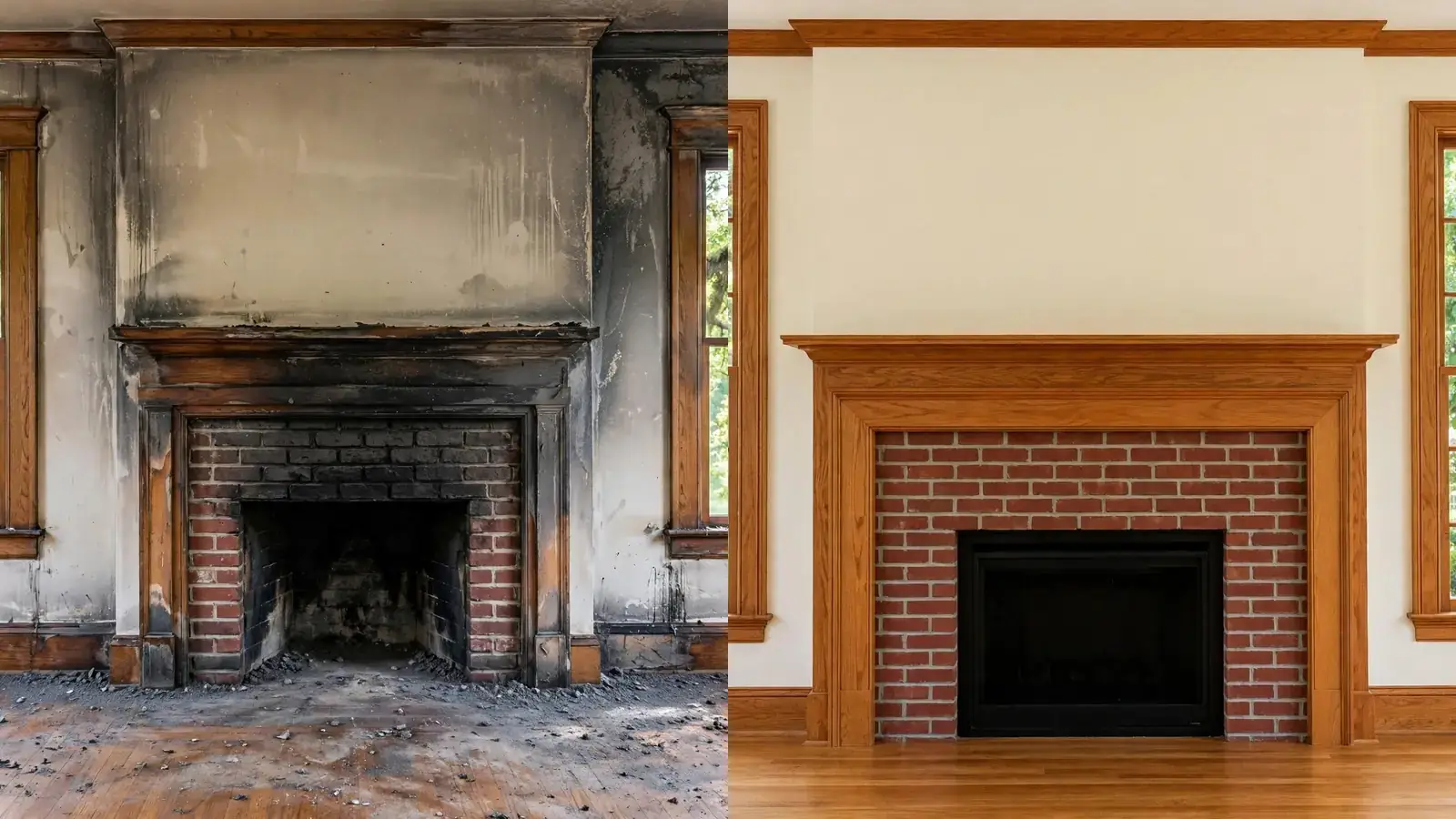
Older Charlotte homes have brick fireplaces, plaster and heart pine floors that reward low-moisture cleaning. Brick and stone hold soot in their pores. A local example of this work is on the page about soot removal in Dilworth.
Mid-century ranch houses often have wood paneling and brick accent walls. Finished paneling usually cleans well, while bare wood soaks up soot. For homes like that, read about soot removal in SouthPark.
Newer homes are full of plastic fixtures, vinyl windows and painted drywall. Plastics discolor quickly under acidic soot, so early attention to frames, outlet covers and appliance fronts shows.
Dry first
Why the first pass is always dry
Dry chemical sponges and HEPA vacuums pick up loose soot without pushing it into the surface. On painted walls, the sponge is drawn in one direction with light pressure.
Only when the loose layer is gone does the crew test a mild wash on a small area. That order is what keeps a soot job from turning into a streaky repaint.
Soot webs
Black strands in ceiling corners
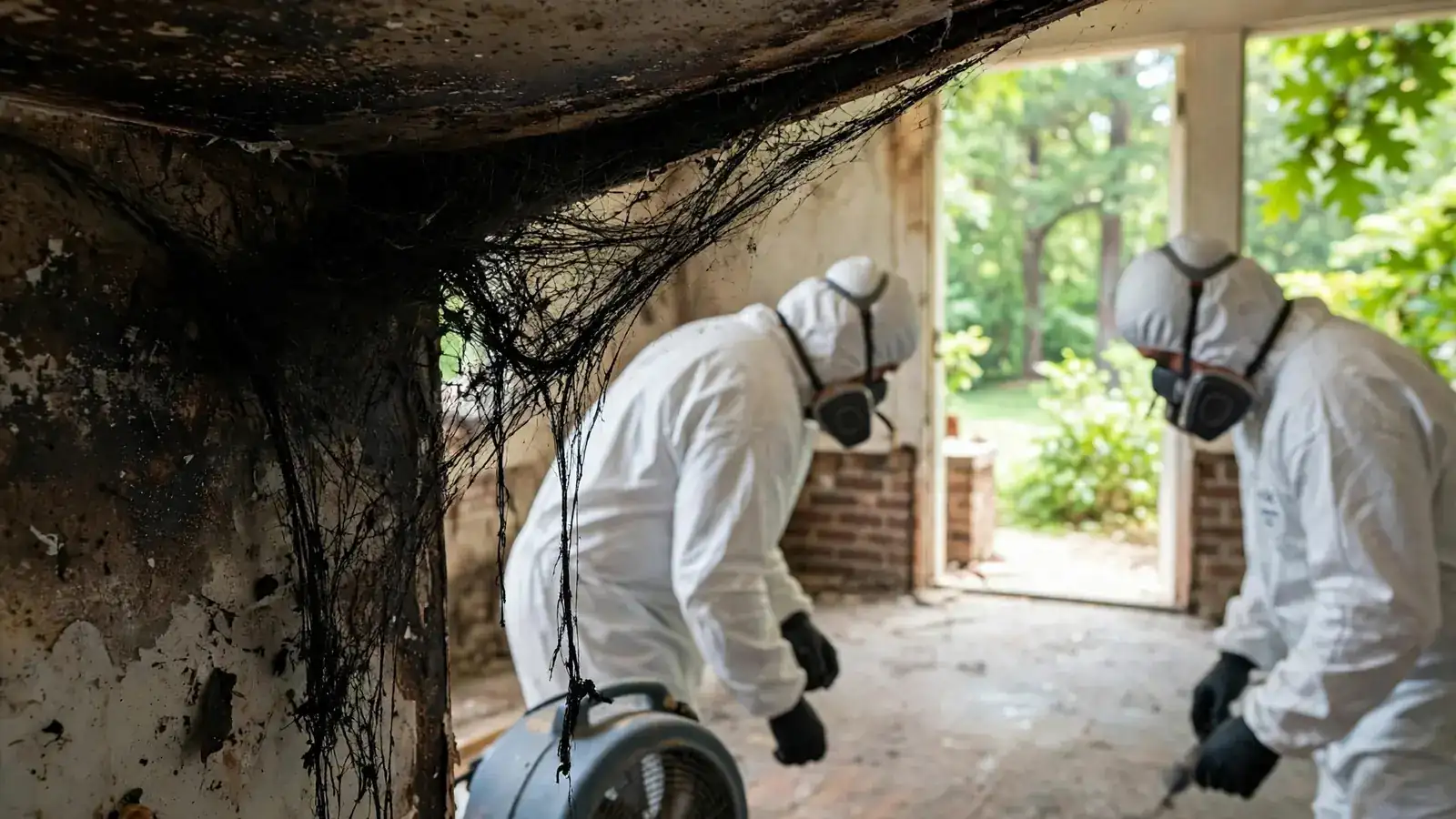
Dark strands hanging from corners look like old cobwebs, but they are chains of soot particles that formed along charged air currents. Pulling them down by hand smears them.
Crews vacuum them carefully with a HEPA vacuum, working from the top of the room down so nothing falls on cleaned areas. For a longer look at stained surfaces, read soot on walls and ceilings.
Have ready
What to tell the crew about the soot
- Which rooms have heavy black soot and which have light film
- Whether the fire was in the kitchen, a fireplace or a furnace
- The rough year the house was built
- Whether ceilings are smooth or textured
- Whether the heating or cooling system ran
- Which belongings are still in the sooty rooms
Over the next week
From first soot pass to finished surfaces
After the dry pass, the crew works through each room with the right method for each surface. Painted walls are washed gently, brick and stone may get a masonry cleaner, and finished wood is cleaned with products that will not strip it.
Some surfaces will still show a faint shadow. At that point, more scrubbing tends to wear the finish without removing the last of the stain. A shellac-based or specialty primer can lock it in so fresh paint does not bleed.
The heating and cooling system is part of the job. If the blower ran, soot is likely in the ducts and on the coil, and it will drift back out unless that system is cleaned too.
Before any sanding or scraping, the crew should confirm whether lead paint or asbestos is present in an older home. Ask about that early so testing does not hold up the work later.
Common missteps
Soot mistakes that make the job bigger
Most soot problems get worse through good intentions in the first hours.
Reaching for the shop vacuum
Standard shop and household vacuums push fine carbon out of their exhaust and coat the room again.
Painting straight over soot
Fresh paint over soot often lets stains bleed through and peels later. Soot has to be removed, and sometimes sealed, first.
Brushing soot off upholstery
Brushing grinds particles into the fibers. Sofas and chairs are better left for cleaning with the right tools.
Touching walls and door frames
Hands pick up soot and leave prints that set into paint. Keep hands off sooty surfaces until the crew has done the dry pass, and ask family members to do the same.
FAQ
Emergency soot removal questions
Is it okay to vacuum soot off the carpet tonight?
Not with a household vacuum. Its exhaust blows fine soot back into the air. Leave the carpet alone until a HEPA vacuum can be used.
Why are there black strings hanging from my ceiling?
Those are soot webs, chains of particles that formed in the smoke. They smear if grabbed, so leave them for vacuuming.
Can soot from my furnace count as an emergency?
It can. A puffback can coat a whole floor with fine soot. Turn the system off and call to talk through next steps.
Can I call about heavy soot after midnight?
Yes. Calls are answered 24/7 and connect to an independent local contractor who speaks with you on that call.