
How fast does water from fire hoses have to be dried out?
Within about a day or two. EPA advises drying wet materials in 24 to 48 hours to help prevent mold [1]. Hose water also carries soot and ash, so it is handled as dirty water. Calls are answered 24/7 to talk through extraction and drying.
Key facts: Emergency Water Damage
- EPA advises drying water-damaged materials within 24 to 48 hours to help prevent mold growth [1].
- Fire hose water mixes with soot and ash, so cleanup crews usually treat it as contaminated rather than clean water.
- Wiring and outlets that got wet should be checked by a qualified electrician before the power goes back on [2].
- CDC advises protective gear such as gloves and a respirator when cleaning up after water damage that may involve mold [3].
Right now
First moves when fire hose water is still in the house
- 1
Wait for release
Stay outside until the fire department hands the house back. Wet ceilings and floors can be weaker than they look.
- 2
Keep the power off
Do not turn on lights, fans or appliances in wet areas. Leave the main breaker off if you were told to [2].
- 3
Stay away from sagging ceilings
Drywall that bulges or drips may be holding water and can fall without warning.
- 4
Take photos of the water
Photograph standing water, stained ceilings, wet carpet and the crawl space entrance before anything is removed.
- 5
Lift what you can reach
If it is safe, raise rugs, papers and small furniture off wet floors to slow the damage.
- 6
Call about extraction
Tell the contractor where the water is, whether it reached the crawl space and if anything is still dripping.
When it is urgent
Water problems that cannot sit until Monday
Hose water left in place spreads damage into materials that could have been saved.
Water standing on floors
Hardwood cups and subfloors swell the longer water sits on them.
A dripping or bulging ceiling
Ceiling drywall holding water can collapse and soak the room below.
A wet crawl space
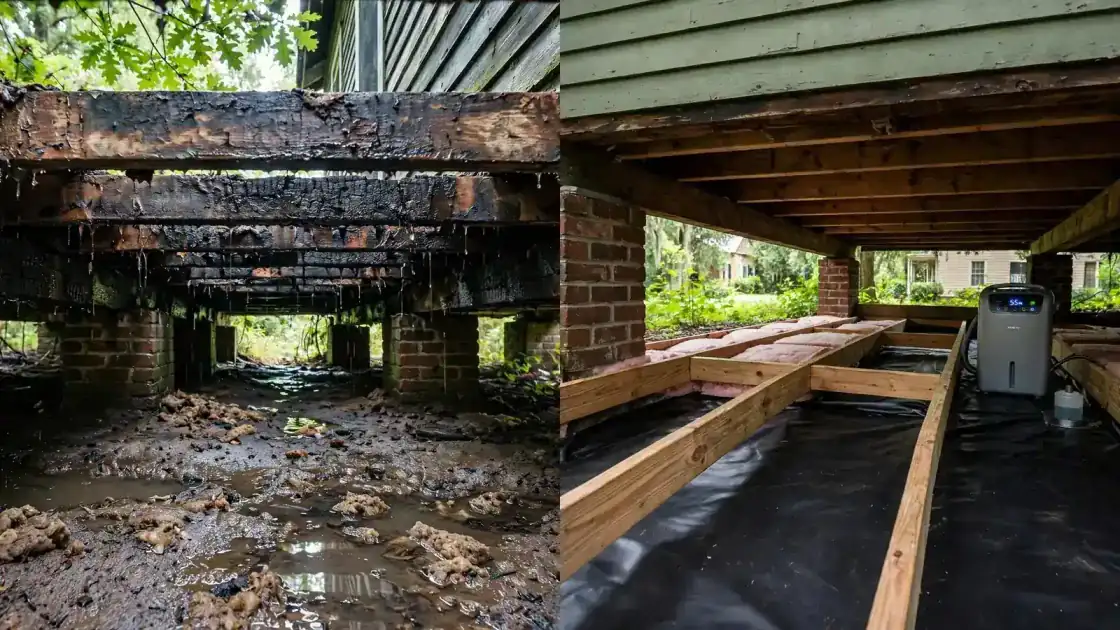
Water under the house soaks insulation and joists and dries very slowly on its own.
Soaked carpet and pad
Carpet pad holds water like a sponge and usually needs to come out to dry the floor below.
Warm, humid weather
Mold grows faster in warm damp air, and the 24 to 48 hour window gets tight [1].
When you call
From your call to the first drying setup
In Charlotte, calls about emergency water damage are answered 24/7; your own call reaches an independent Charlotte contractor who talks it through with you.
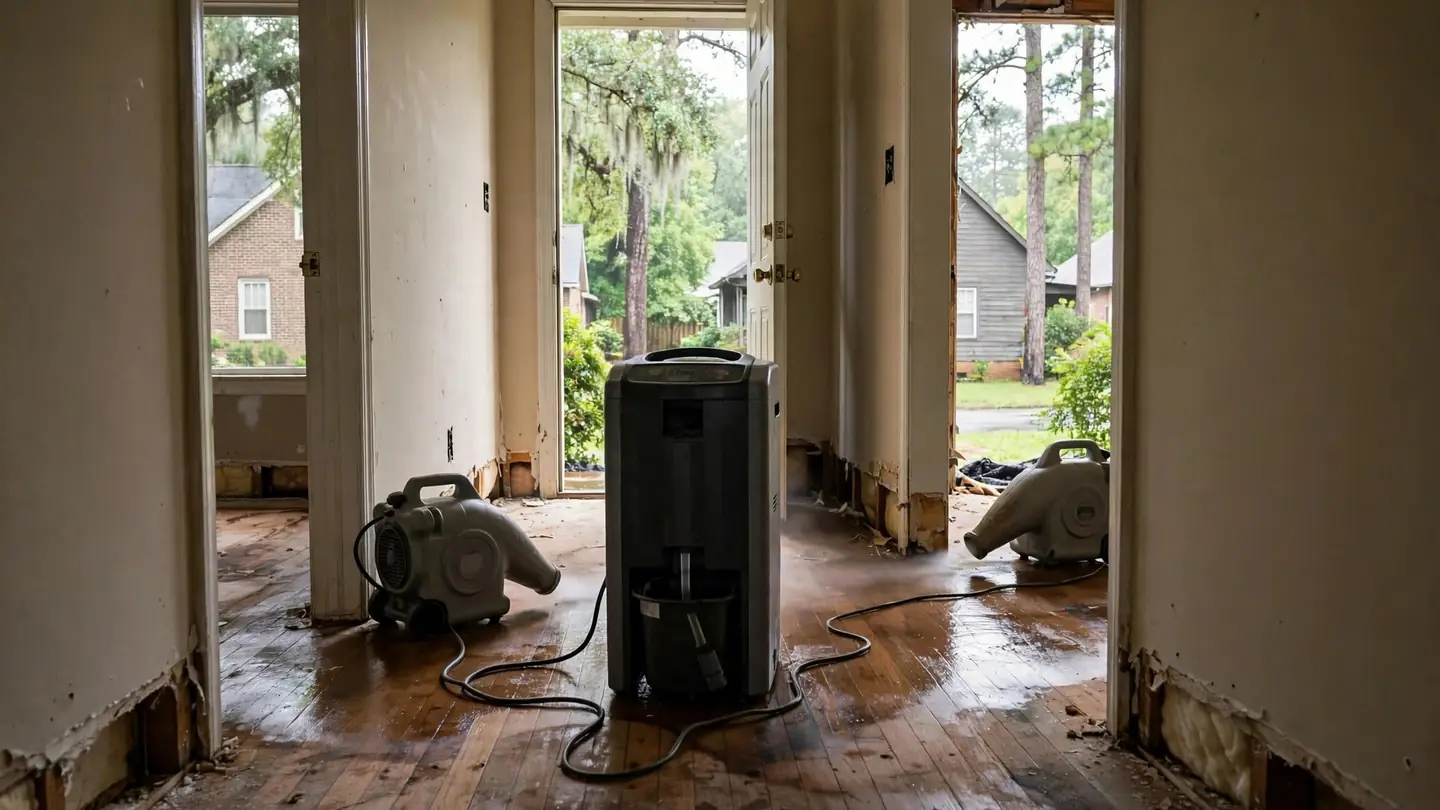
On arrival, crews usually pump or extract standing water first. They pull up soaked carpet pad, open wet ceilings that are holding water and take out sodden insulation. Then they set up dehumidifiers and air movers and close the house so the equipment controls the air.
Moisture readings are taken and logged each day until materials reach dry targets. Those logs help your claim. If the roof or windows are still open, covering them comes first, as the emergency fire damage restoration page explains.
Charlotte factors
Crawl spaces and humidity in Charlotte drying jobs
Many Charlotte homes, from 1920s bungalows to 1990s subdivisions, sit on vented crawl spaces. Fire water that drains through the floor ends up there, on the vapor barrier and in the insulation. A local example is on the page about firefighting water damage in Myers Park.
Charlotte summers are warm and humid. Opening windows on a muggy day can add moisture rather than remove it, which is why drying crews close the house and let dehumidifiers do the work.
Newer townhomes and two-story houses often have finished upper floors over living spaces, so water from a second-floor fire can soak ceilings below. For that kind of home, read about firefighting water damage in University City.
Under the house
Pumping and drying the crawl space
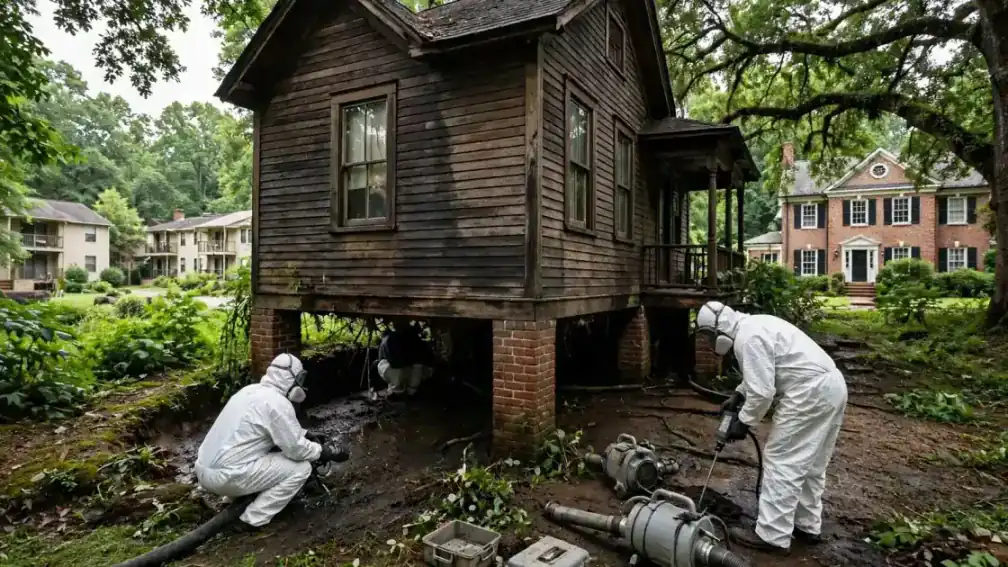
Standing water under the house is pumped out first. Soaked insulation is pulled down from between the joists, and debris is cleared so air can move.
Dehumidifiers then run with the foundation vents closed. A dried crawl space helps keep musty odor and mold out of the rooms above.
Measuring
Why touch is not enough to judge dryness
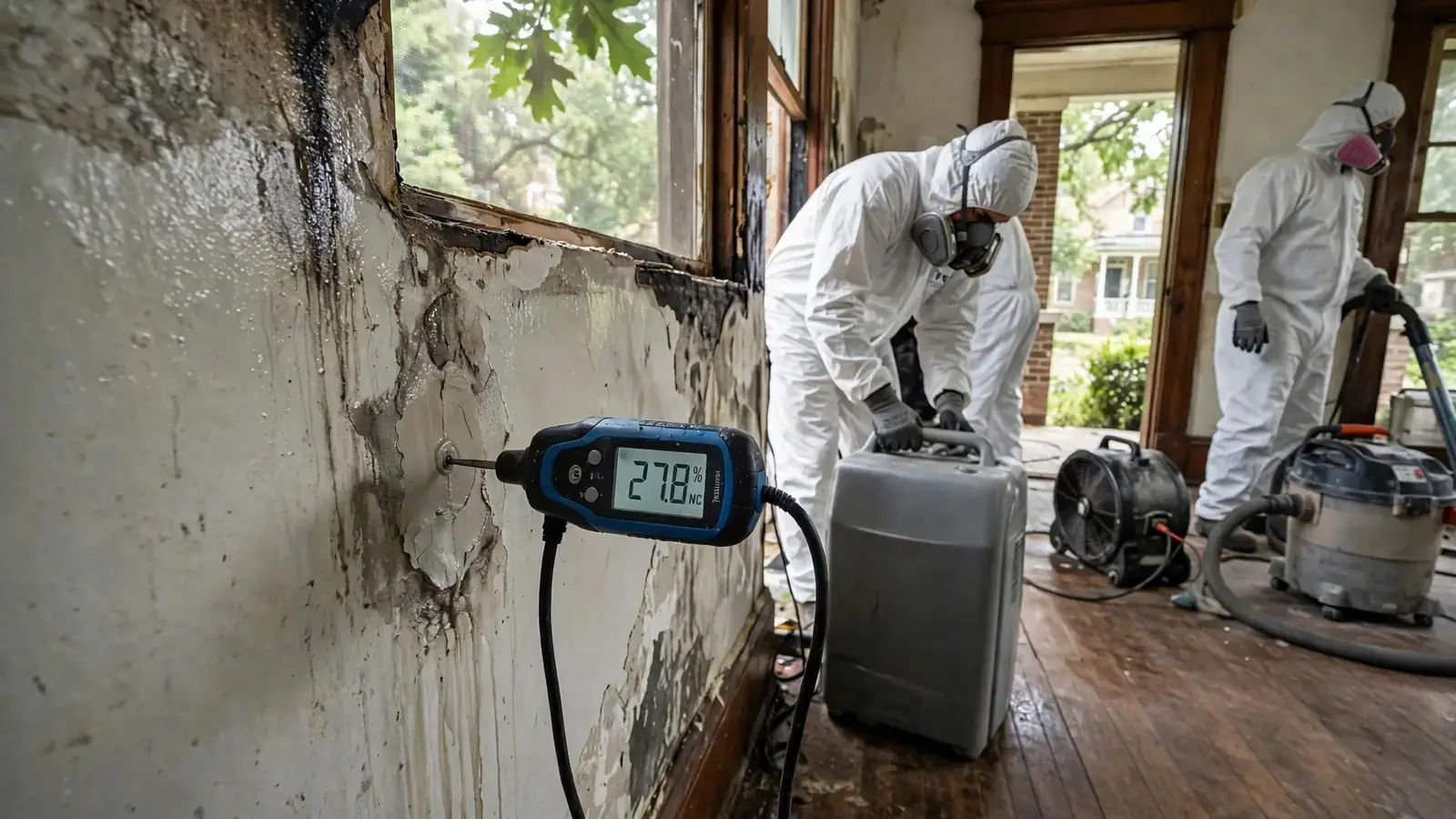
Walls and floors can feel dry on the surface while still holding moisture inside. Moisture meters show what the hand cannot.
Readings are logged over several days until each material reaches its dry target. If you are wondering whether to stay in the house meanwhile, read is it safe to stay after a fire.
Over the next week
What the drying days look like
Drying equipment usually runs around the clock for several days. It is loud, and it uses a fair amount of power once the electrician clears the system. Leave doors and windows closed unless the crew says otherwise, because outside air can slow the work in humid weather.
The crew returns to take readings and move equipment as areas dry. Some materials, such as soaked carpet pad, wet insulation and sagging ceiling drywall, are removed rather than dried. Wood floors and framing are usually dried in place and watched closely.
Once readings reach dry targets, the crew records the final numbers. That record helps show the adjuster that drying was finished before walls are closed up and repairs start.
If a musty smell appears or a stain spreads during these days, mention it on the next visit. It can point to a pocket of moisture that the equipment has not reached yet.
Common missteps
Drying mistakes that slow recovery
These are the choices that most often turn a drying job into a mold job.
Opening every window on a humid day
Muggy outside air carries moisture in, so the house may stay wet longer instead of drying faster.
Leaving soaked carpet pad in place
Pad traps water against the subfloor. Pulling it up lets air and equipment reach the floor below.
Ignoring the crawl space
Water that drained under the house can sit for weeks and feed mold on the joists if nobody checks it.
Painting a stained ceiling right away
A water stain on drywall often means the material is still wet above. Painting it hides the problem without drying it.
FAQ
Emergency firefighting water questions
Do I really need a crew if the water is mostly gone by morning?
Usually yes. Water that soaked into walls, subfloors and the crawl space keeps them wet even when floors look dry, and mold can start in a day or two [1].
Can I run my own fans to dry the house?
Fans alone often spread moisture without removing it, and wet outlets are a hazard. Closed-house drying with dehumidifiers works better.
Is the water from the fire hoses dirty?
Yes. It picks up soot, ash and debris, so crews treat it as contaminated water and remove soaked materials that cannot be cleaned.
Can I call at night about water from the fire?
In Charlotte, calls about emergency water damage are answered 24/7; your own call reaches an independent Charlotte contractor who talks it through with you.